
Original: World Daily (Korea), Written by Jeong Seong-su, Religious Affairs Specialist Reporter, July 12, 2026, [Religious Column]
On the 10th, the special prosecution team led by Min Joong-ki sought a 13-year prison sentence for Dr. Hak Ja Han, President of the Family Federation for World Peace and Unification. This breaks down to 5 years for violations of the Political Fund Act and an additional 8 years for the other charges. It is an unusually heavy sentence rarely seen in our society. The shock was surely felt not only by Dr. Han herself, but by countless believers at home and abroad who are enduring with heavy hearts the harsh reality now facing their religious organization.
Coincidentally, the founder of the Family Federation, President Sun Myung Moon, also endured unjust imprisonment under a past communist regime. Though the times and systems differ, it is precisely when a religious leader stands in court that the judiciary must render judgment based on the strictest possible evidence and legal principles. This is also why the judiciary in a liberal democracy must be clearly distinguished from that of an authoritarian regime.
However, a requested sentence is nothing more than the prosecution’s hope — it is not the court’s verdict. The body that ultimately determines guilt or innocence and the sentence is the court. The judicial panel will comprehensively examine the prosecution’s arguments, the defense’s rebuttals, the submitted evidence, and all sentencing factors before reaching an independent judgment. This is a fundamental principle of South Korea’s criminal justice system.
In this case, the special prosecution repeatedly emphasized the seriousness of the matter using grandiose terms such as “collusion between politics and religion,” “undermining democracy,” “ultimate beneficiary,” and “final decision-maker.” Yet for a 13-year sentence to carry such weight, the evidence must be equally solid and detailed. The special prosecution offered plenty of flamboyant rhetoric, but the content disclosed at the sentencing hearing still failed to present sufficient direct evidence. For more than two years, the special prosecution and other investigative agencies have conducted sweeping investigations into the Family Federation, including multiple raids, account tracing, communication analysis, and questioning dozens of individuals. Nevertheless, objective evidence that Dr. Han directly ordered or conspired in the delivery of political funds or the provision of gifts to First Lady Kim Keon-hee has yet to emerge from the fog.
The special prosecution labeled Dr. Han the “final decision-maker” and “ultimate beneficiary” and sought to hold her accountable. This is a classic case of “comprehensive responsibility theory,” inferring criminality based solely on one’s position and circumstances within an organization. However, modern criminal law punishes specific criminal “acts”; it does not condemn a person’s “status” or “existence” itself. The logic that holds a leader responsible merely for the outcomes of actions taken by subordinates is merely a modern variation of pre-modern guilt-by-association or strict liability. When concrete proof of specific acts is lacking, those in power routinely resort to grand narratives and symbols to inflate the sentence.
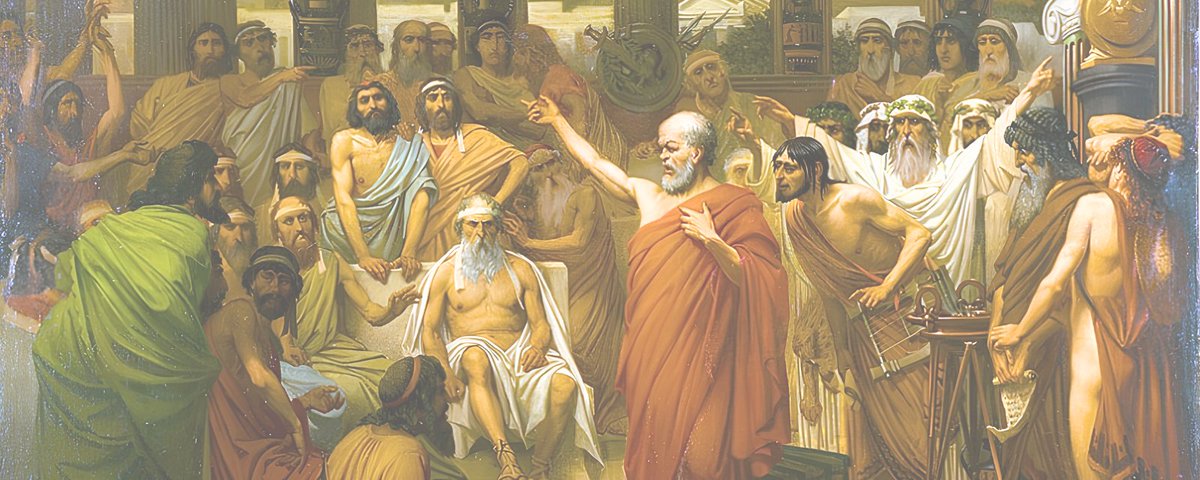
The trial of Socrates in 399 BC — widely regarded as one of history’s most infamous cases of judicial murder — was exactly this. The accuser Meletus could not specifically prove whom Socrates had harmed or which law he had broken. Instead, he imposed a vast and vague frame: “corrupting the youth and not believing in the gods of Athens.” It was purely on the circumstantial charge that Socrates the giant’s “existence” and his influence on society were uncomfortable that the excessive sentence of death was imposed.
The special prosecution’s sentencing request in this case similarly evokes the Socrates trial the moment it relies more on symbols and status than on concrete actions. When direct evidence linking actual criminal conduct is insufficient, investigative agencies attack the defendant’s position using abstract grand discourses such as “political-religious collusion” or “undermining democracy.” The French Reign of Terror’s “Law of Suspects,” which permitted punishment based merely on circumstances and speech without concrete acts, operated on the same principle. A judiciary that convicts on the basis of “given the position and circumstances, one cannot but be a criminal” without sufficient evidence easily becomes the sword of dictatorship disguised as democracy. In the history of justice, whenever “suspicion” outpaces “proof,” a dark chapter of judicial abuse is invariably written.
Evaluations of Dr. Han will continue to be divided. Some will remember her as a religious leader who guided an era, while others will view her as a target of criticism. The trajectory of her life — traveling across the world for decades, convening numerous international conferences on interfaith harmony, global peace, family values, and peace on the Korean Peninsula as a chosen nation, and engaging with world leaders — remains an undeniable historical fact. Whatever conclusion the court reaches, it must be grounded in evidence and legal principles.
In her final statement at the sentencing hearing, Dr. Han declared, “I have lived my entire life serving Heaven for the sake of humanity’s peace and the realization of one family,” and “I have never sought power with money.” She also expressed deep apology for the current outcome caused by those she trusted and entrusted, while affirming her resolve to continue walking the path toward a world of peace.
This article is an English translation of a piece originally published by World Daily (Korea). All credits and copyrights belong to World Daily.
Original article : World Daily https://www.segye.com/newsView/20260712508315?OutUrl=naver