

SEOUL — As of today, Dr. Hak Ja Han Moon—an 83-year-old great-grandmother revered by millions worldwide as the “Mother of Peace”—has spent 143 days in South Korean government custody. She is currently in a hospital on temporary release, receiving treatment for pre-existing health conditions that have likely worsened during nearly five months of detention in a 70-square-foot cell at Seoul Detention Center, where she slept on the floor through the Korean winter.
She is nearly blind from glaucoma. She suffers from arrhythmia that carries the risk of cardiogenic shock or stroke. She has fallen multiple times in detention. She requires a wheelchair to move and assistance to eat. Georgetown University professor Alexandre Mansourov has called her imprisonment a “death sentence.”
And the prosecution’s case against her—after all these months—still rests on aide testimonies and organizational flowcharts. No financial records, no direct communications, no physical evidence linking her to the alleged crimes has been presented in court.
But Dr. Han’s ordeal is not an isolated case of overzealous prosecution. It is one chapter in a rapidly accelerating story of democratic erosion under President Lee Jae-myung’s administration: the selective targeting of conservative religious leaders, the proposed dissolution of churches by government decree, the packing of courts, the creation of a “fourth instance” judicial override, the dismantling of independent prosecution, and the criminalization of anti-China speech. Taken together, these actions represent one of the most alarming rollbacks of civil liberties in any U.S.-allied democracy in recent memory.
Who Is Dr. Hak Ja Han Moon?
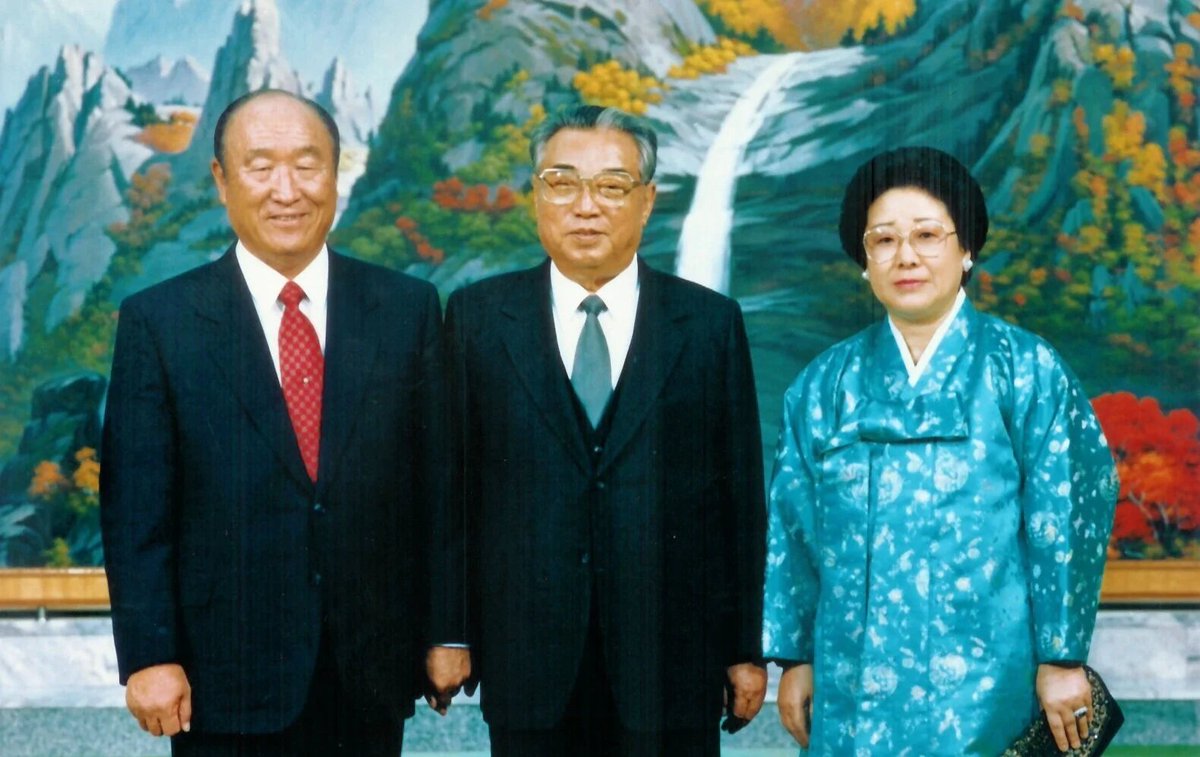
Born in 1943 in what is now North Korea, Dr. Han co-founded the Family Federation for World Peace and Unification (formerly the Unification Church) alongside her late husband, Rev. Sun Myung Moon. She is the mother of 14 children and a great-grandmother. Over more than six decades, she has met with heads of state, addressed the United Nations, and in 1991 traveled to Pyongyang to meet North Korean leader Kim Il-sung in pursuit of Korean reunification. The Universal Peace Federation, which she co-founded, is a recognized UN NGO that routinely hosts conferences with leaders from over 160 countries.
Today, she lies in a hospital under strict court-ordered restrictions—her second temporary release in 143 days. The Seoul Central District Court suspended her detention until February 21 after her defense team cited deteriorating health from recent falls and concerns over cardiovascular shock. She is prohibited from contacting anyone other than medical personnel, her attorneys, and caregivers. She must remain on hospital premises.
The Case Against Her—and What’s Missing
Prosecutors allege Dr. Han orchestrated bribes using church funds to influence the administration of former President Yoon Suk-yeol. The alleged scheme involved luxury gifts to former First Lady Kim Keon-hee—Chanel bags, a diamond necklace valued at approximately $57,900—and cash payments to lawmakers. The favors she allegedly sought included assistance with a development project in Cambodia, the acquisition of Korean news channel YTN, and a seat at the presidential inauguration.
None of these alleged objectives materialized.
The Family Federation has maintained that these were the personal actions of a former executive named Yun Young-ho, who has since been terminated and is himself in detention. The church denies organizational involvement.
After five months of investigation and 143 days of pre-trial detention, the prosecution’s evidentiary foundation remains troublingly thin. Court records show the case relies overwhelmingly on aide testimonies and organizational flowcharts—not financial records, wire transfers, direct communications, or any physical evidence linking Dr. Han directly to the alleged crimes. As her grandson Shin Chul Moon told The Washington Times: “There’s no evidence that she herself ordered any or even had the intention of lobbying.”
The January 29, 2026, verdict on aide Yun Young-ho confirmed that Dr. Han instructed the necklace gift—but again, the evidence cited consisted of flowcharts and testimonies rather than direct proof.
Further undermining the prosecution’s credibility: Yun Young-ho has claimed he also provided funds to Democratic Party lawmakers during the Moon Jae-in administration—naming as many as 15 politicians. The special counsel announced these allegations “fall outside” its mandate, which focuses exclusively on the opposition People Power Party. Critics have accused special counsel Min Joong-ki of conducting a “selective investigation.”
The Human Toll: “A Death Sentence”
The conditions of Dr. Han’s detention have been widely condemned. For 143 days, an 83-year-old woman with severe health conditions has been confined to a 70-square-foot cell, sleeping on the floor in winter. She is allowed only five visitors for a total of ten minutes per day. Her attorneys report interrogation sessions lasting 10 to 12 hours.
Temporary releases have been grudging and minimal: three days in November 2025 for eye surgery, and ten days beginning February 11, 2026, for fall-related injuries and cardiovascular concerns. Authorities have consistently denied house arrest or bail, citing “evidence destruction” fears—regarding a woman who cannot walk without assistance and whose passport was confiscated months before her arrest.
“A religious leader of global stature is kept in horrible conditions,” Mansourov stated. “She may become a martyr.” Even critics of the Unification Church have called the conditions “inhumane.” The treatment appears not merely negligent but potentially intentional—consistent with President Lee’s repeated public calls for the dissolution of the church.
Pastor Son Hyun-bo: Imprisoned for Preaching
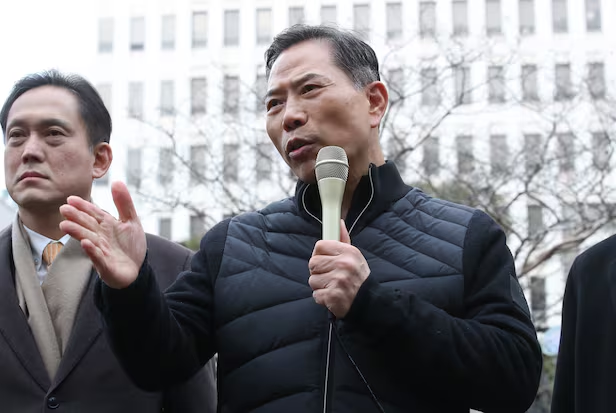
Dr. Han’s case does not stand alone. Rev. Son Hyun-bo, 62, head pastor of Segeroh Presbyterian Church in Busan—a congregation of over 10,000 members—endured 143 days in detention at Busan Detention Center before receiving a suspended six-month sentence on February 3, 2026.
Son’s crime: violating the Public Official Election Act by allegedly using his pulpit and YouTube to rally support for conservative candidates and opposing President Yoon’s impeachment. A former special forces soldier and one of the most influential Christian leaders in South Korea, Son helped mobilize a historic Reformation Sunday gathering on October 27, 2024, opposing the Comprehensive Anti-Discrimination Law—which conservatives view as restricting religious speech on matters of sexuality and family.
His case attracted attention at the highest levels of the U.S. government. Vice President JD Vance raised concerns during a White House meeting with South Korean Prime Minister Kim Min-seok. Son’s family was invited to the White House, where Secretary of State Marco Rubio and Vice President Vance listened to their story. An estimated 10,000 American pastors advocated for his release.
Upon his release, Son stated: “Separation of church and state means the state cannot interfere with a church’s worship and faith, not that it can silence the church. This is a matter of freedom.” He has vowed to appeal.
Son’s case and Dr. Han’s share a common thread: under the Lee Jae-myung administration, prominent conservative religious leaders—whether accused of financial influence in politics (Dr. Han) or of political preaching from the pulpit (Pastor Son)—face aggressive prosecution and extended detention, raising concerns about selective targeting of conservative faith communities.
The Hypocrisy of “Separation of Church and State”
President Lee Jae-myung has repeatedly invoked “separation of church and state” to justify his crackdown. At a December 2, 2025, Cabinet meeting, he declared: “There have been cases in which religious foundations, in violation of the principle of separation of religion and state, intervened in politics in an organized and systematic way. This is a constitutional violation.” He instructed the Ministry of Government Legislation to review dissolution orders modeled on Japan’s dissolution of the Unification Church, warning that failure to act could lead to “something similar to a religious war.”
Then, 41 days later, he did the opposite of separation.

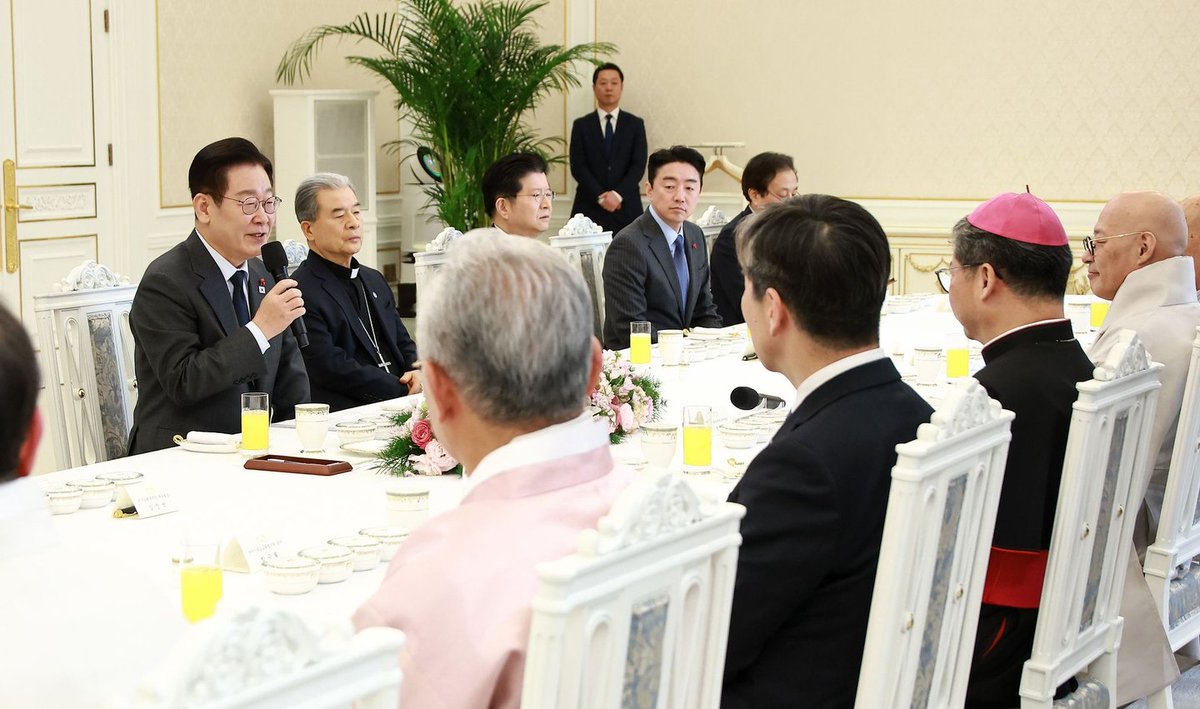
On January 12, 2026, President Lee convened a meeting with leaders of seven major religious communities—Buddhists, Protestants, Catholics, and others—and agreed with their call to dissolve “illegitimate, heretical religious organizations,” specifically naming the Unification Church and Shincheonji. The religious leaders urged the government to “dissolve religious groups that harm the nation and its people” and to use their seized assets “to support victims of pseudo-religions.” Lee agreed, stating that “the harm to our society has been neglected for too long, leading to enormous damage.”
Prime Minister Kim Min-seok reinforced the message with language that would be alarming in any democracy: “Pseudo-religions are social evils that need to be eradicated.”
In his January 21, 2026, New Year’s press conference, Lee went further still, likening religious involvement in politics to “armed rebellion” and a cause of “national downfall.” He stated: “The current level of punishment seems far too weak,” and called on all political parties to rally against the Unification Church and Shincheonji as an “opportunity” to “root out” religious involvement in politics entirely.
This is the antithesis of separation of church and state. The classical meaning of the principle—enshrined in democratic constitutions worldwide—is that the state must not interfere in religion. What President Lee has done is the precise opposite: he has enlisted favored religious leaders to help the government decide which faiths are “acceptable” and which should be destroyed. He selectively targets conservative religious movements while courting mainstream denominations for political legitimacy.
As Human Rights Without Frontiers noted: “The anti-heresy witch hunt, once the domain of Christian fundamentalists and now seemingly embraced by the President, is incompatible with Korea’s obligation to respect religious liberty under the ICCPR.” CAP-LC, in a formal statement to the UN Human Rights Council, called the rhetoric from South Korea’s highest officials—speaking of “heretics,” “pseudo-religions,” and “eradication”—“a dangerous drift toward state-endorsed religious discrimination.”
Dismantling the Guardrails: South Korea’s Authoritarian Playbook
The persecution of religious leaders is only one front in a broader campaign to concentrate power and dismantle institutional checks. Under President Lee, the Democratic Party of Korea has advanced a series of measures that, taken together, represent a systematic dismantling of South Korea’s democratic safeguards.
Packing the Supreme Court: From 14 to 26 Justices

The Democratic Party has advanced a bill through the National Assembly’s Legislation and Judiciary Committee to amend the Court Organization Act, expanding the Supreme Court from its current 14 justices to 26. Under the proposal, four new justices would be added each year over three years—a total of 12 new seats, all appointed by President Lee with the consent of the Democratic Party-controlled Assembly.
The bill has passed committee stages but has not yet been enacted into full law; it still requires approval in the full National Assembly and promulgation. But the implications are unmistakable. Under current law, the number of Supreme Court justices is set by statute—not by the Constitution—meaning it can be changed by a simple legislative majority. And President Lee already holds that majority.
If fully enacted, the Supreme Court would operate at nearly double its current size by 2029. The Korea Herald has reported that President Lee could appoint as many as 22 of the court’s 26 justices by the end of his term, including replacements for current justices set to retire by 2030. Opposition spokeswoman Ham In-kyung warned: “This is not about numbers. It is about power.” Chief Justice Cho Hee-dae publicly objected, calling it “an issue that will affect the country’s future over the next 100 years.”
We have seen this playbook before. When a ruling party seeks to reshape the highest court by flooding it with sympathetic appointees, it is court-packing—regardless of the democratic language used to justify it.
The “Fourth Instance”: Overriding Final Judgments
Perhaps even more alarming is the companion bill—a proposed revision to the Constitutional Court Act that would allow constitutional complaints against final court rulings. In practical terms, this means the Constitutional Court could review and override Supreme Court decisions after a case has already been resolved through Korea’s three-instance trial system.
Critics call it a de facto “fourth instance”—a mechanism that effectively eliminates the finality of judicial rulings and creates a pathway for political forces to relitigate outcomes they find inconvenient. Currently, Supreme Court decisions on cases are final and immune from constitutional review—a safeguard designed to preserve judicial independence. This bill would destroy that safeguard.
This bill, like the Supreme Court expansion, has already passed the Legislation and Judiciary Committee. Chief Justice Cho warned the changes could cause “enormous harm” to the public and “disrupt the constitutional order.” The opposition People Power Party has condemned both measures as “a fatal blow to the separation of powers.”
As recently as today, February 12, 2026, PPP floor leader Jang Dong-hyeok boycotted a planned meeting with President Lee in protest of the bills’ passage through committee, calling it “a political ambush.” The Korea Times reported that Jang stated: “Immediately after proposing the meeting, the DPK unilaterally pushed through bills that even the chief justice of the Supreme Court has expressed serious concerns about.”
The “Church Dissolution Act”: The State Decides Which Religions Survive
On January 9, 2026, following personal directives from President Lee, Rep. Choi Hyuk-jin submitted Civil Code Amendment Bill No. 2215932 to the National Assembly. If enacted, it would grant the state unprecedented authority to audit, suspend, and dissolve religious corporations—and absorb their assets into public ownership.
While explicitly targeting the Unification Church and Shincheonji, the law is drafted so broadly that it could be applied to any religious body whose teachings or political views displease the administration. International legal scholars have condemned the bill as violating Article 18 of the ICCPR. Its grounds for dissolution are imprecise and unforeseeable; “political involvement” is not a recognized basis for restricting religious freedom under international law; and dissolving an entire religious corporation while confiscating its assets is grossly disproportionate to any alleged individual misconduct.
As Bitter Winter’s Massimo Introvigne wrote: “The proposed law gives the state the authority to decide which religions may continue to exist.”
Dismantling Independent Prosecution
In October 2025, the National Assembly voted 174–1 to dismantle the Prosecutor’s Office entirely, splitting its powers between newly created agencies. The Lee administration has announced plans to abolish the Supreme Prosecutors’ Office by 2030. This eliminates the last independent institution capable of investigating political corruption at the executive level—a move critics see as removing any remaining check on the administration’s power.
Criminalizing Anti-China Speech: The “CCP Out” Crackdown
The erosion of civil liberties extends beyond religion. According to The Washington Times, President Lee has ordered crackdowns on anti-China rhetoric and street protests, citing anti-hate laws enacted in other democracies. A ruling party legislator proposed in October 2025 banning the “CCP Out” movement’s anti-China slogans and songs, with violators facing up to five years in prison.
The “CCP Out” movement—comprising military veterans, Protestant churchgoers, supporters of former President Yoon, and the conservative youth group Free University—has held growing protests against Chinese Communist Party influence in South Korea, drawing as many as 10,000 participants. According to Pew Research, 60% and 62% of South Koreans feel threatened by China in terms of economic and national security respectively—more than any other Asian nation surveyed.
The government’s response has been to suppress the movement. The Chinese Embassy lodged a complaint with Seoul; the central government barred rallies near the embassy. Protest organizers report being investigated by police for tearing a Chinese flag. After President Lee officially condemned the marches on September 9, 2025, organizers say they were blocked from protesting in the Myeongdong district. These restrictions continued through Lee’s two summits with Chinese President Xi Jinping—at the APEC forum in November 2025 and in Beijing in January 2026—and remain in effect.
At the APEC summit, Xi offered Lee a gift of Chinese-made smartphones. “Are they safe?” Lee quipped on camera. Xi gestured: “You can check for back doors.” The moment drew laughter between the two leaders—but not from the South Korean citizens being arrested for saying “CCP Out.”
Raids on Sacred Ground
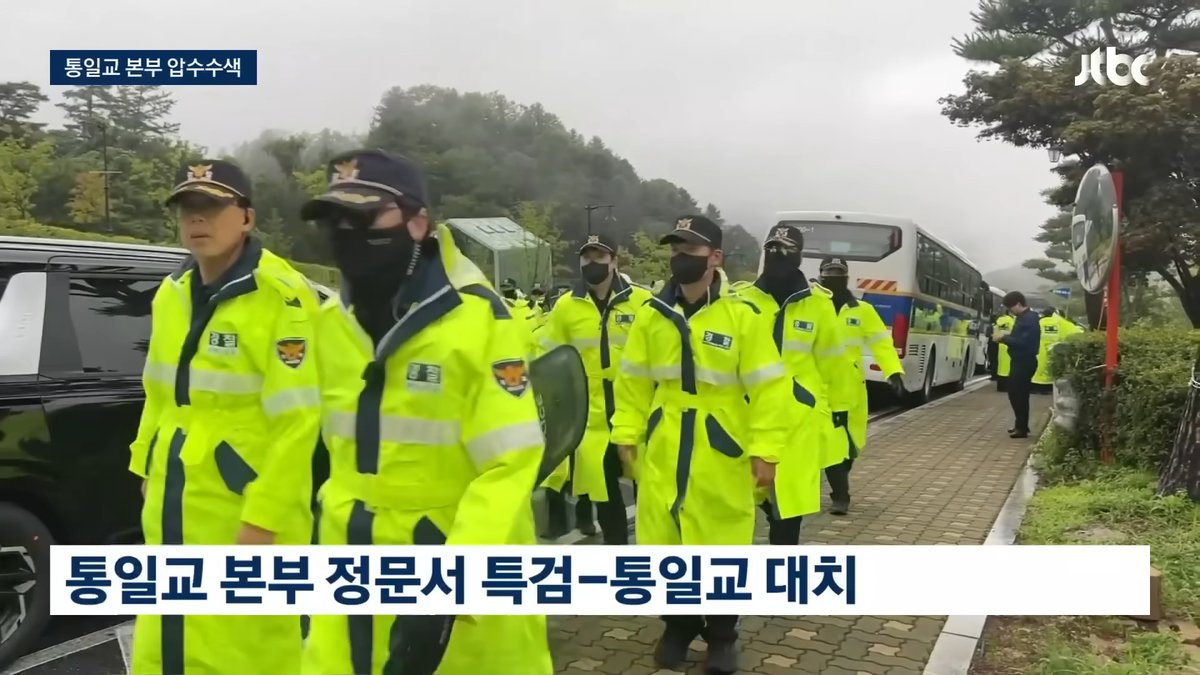
The targeting of conservative religious institutions has involved more than arrests. Military-style raids have been conducted on the Family Federation’s main premises and most sacred grounds. The Yoido Full Gospel Church—the world’s largest megachurch—was raided by special prosecutors. Rev. Jang Hwan “Billy” Kim, the legendary translator for Rev. Billy Graham and chairman of the Far East Broadcasting Company, was subjected to investigation.1
President Trump directly confronted President Lee about these raids at the White House on August 25, 2025, describing them as “very vicious” and questioning whether a “purge or revolution” was underway. Lee’s staff had feared what they called a “Zelenskyy moment.” Lee told U.S. officials the prosecutors were acting independently.
Jan Figel, president of the Forum for Religious Freedom Europe, summarized the situation plainly: “This is not anti-corruption. It is a purge.”
International Response
South Korea’s actions have drawn condemnation from across the international community. Former Secretary of State Mike Pompeo called the prosecution “lawfare” and “a betrayal of the democratic principles that South Korea is meant to espouse.” Former Speaker Newt Gingrich expressed outrage. Vice President Vance personally intervened in the case of Pastor Son.
The issue of religious liberty in South Korea was the last concern raised by the late Charlie Kirk, who called Secretary of State Rubio from South Korea just days before his death. At Kirk’s memorial, Rubio noted: “One of the last messages I received from him was just a few days before his passing, when he wrote to me from overseas: ‘I’m in South Korea. I have many concerns I want to share with you when I get back.’”
At the United Nations Human Rights Council, CAP-LC submitted a formal statement denouncing South Korea’s growing religious liberty crisis, noting that four UN Special Rapporteurs had already sharply criticized Japan’s dissolution of the Unification Church—the very precedent South Korea now invokes. CAP-LC concluded that South Korea’s case is “even more blatant than in Japan.”
Timeline: The Erosion of South Korean Democracy (2025–2026)
The following chronology draws from court records, The Washington Times, Korea Times, Korea Herald, Yonhap News, Bitter Winter, and statements by international human rights organizations.
May 23, 2025 - Travel Ban on Dr. Han Special prosecutors bar Dr. Han from leaving South Korea and confiscate her passport amid investigation into alleged luxury gifts to former First Lady Kim Keon-hee.
Jun. 3, 2025 - Lee Jae-myung Elected Lee wins presidency following Yoon’s impeachment. His Democratic Party already controls the National Assembly, consolidating executive and legislative power.
Jun. 5, 2025 - Supreme Court Expansion Bill Advanced Democratic Party advances bill to expand Supreme Court from 14 to 26 justices—12 new seats added at 4 per year over 3 years, all appointed by President Lee. Chief Justice objects publicly.
Jun. 2025 - Constitutional Court Act Amendment Democratic Party advances companion bill allowing constitutional complaints against final court rulings—a de facto “fourth instance” that would permit the Constitutional Court to override Supreme Court decisions.
Jul. 9, 2025 - Dr. Han Designated Suspect Special Prosecutors’ Office formally designates Dr. Han as a criminal suspect on charges including bribery, embezzlement, and interference.
Aug. 25, 2025 - Trump Confronts Lee at White House President Trump presses Lee about “very vicious” church raids. Trump questions whether a “purge or revolution” is underway. Lee’s staff had feared a “Zelenskyy moment.” Lee claims the prosecution is acting independently.
Sep. 8, 2025 - Pastor Son Arrested Rev. Son Hyun-bo arrested for violating the Public Official Election Act—essentially for preaching conservative positions from the pulpit.
Sep. 9, 2025 - Lee Condemns Anti-China Protests President Lee officially condemns “CCP Out” marches. Organizers report being subsequently blocked from protesting in Myeongdong.
Sep. 17, 2025 - Dr. Han Questioned 10 Hours Dr. Han, 82, questioned by special prosecutors for nearly 10 hours. Appears in wheelchair post-heart procedure. Denies all involvement.
Sep. 22–23, 2025 - Dr. Han Arrested and Detained Seoul Central District Court issues arrest warrant. Dr. Han confined to 70-sq-ft cell at Seoul Detention Center. Bail denied despite health; prosecutors cite “evidence destruction” fears.
Oct. 9, 2025 - Prosecutor’s Office Dismantled National Assembly votes 174–1 to dismantle the central Prosecutor’s Office, splitting its powers between new agencies.
Oct. 10, 2025 - Dr. Han Indicted Special prosecutor Min Joong-ki indicts Dr. Han on charges of bribery, embezzlement, illegal political funding, and evidence destruction. No physical or conclusive evidence presented.
Oct. 2025 - Anti-China Bill Proposed Ruling party legislator proposes banning “CCP Out” slogans and songs, with violators facing up to 5 years in prison.
Nov. 4, 2025 - 1st Temporary Release (3 Days) Court grants 3-day release for eye surgery. Extension denied; Dr. Han returned to cell.
Dec. 1, 2025 - Trial Begins Prosecution portrays Dr. Han as “absolute power holder.” Defense argues no direct evidence. Case relies on aide testimonies and flowcharts.
Dec. 2, 2025 - Lee Calls for Church Dissolution At Cabinet meeting, Lee references Japan’s dissolution of the Unification Church and instructs legal review. States: “If a corporation commits acts that violate the Constitution, it should be dissolved.”
Jan. 9, 2026 - “Church Dissolution Act” Filed Bill No. 2215932 submitted to National Assembly at Lee’s direction. Would grant state power to audit, suspend, and dissolve religious corporations and seize their assets.
Jan. 12, 2026 - Lee Meets Religious Leaders Lee agrees with 7 major religious groups’ call to dissolve “pseudo-cult religions.” PM Kim Min-seok: “Pseudo-religions are social evils that need to be eradicated.” Denounced at UN Human Rights Council.
Jan. 21, 2026 - Lee’s New Year’s Address Lee likens religious political involvement to “armed rebellion” and “national downfall.” Calls for using investigation as opportunity to “root out” religious involvement in politics.
Jan. 29, 2026 - Aide Verdict Court confirms aide Yun’s account that Dr. Han instructed the necklace gift, but evidence remains testimonial, not physical.
Feb. 3, 2026 - Pastor Son Released Son receives suspended sentence after 143 days. Thanks Rubio and Vance. Vows to appeal. Dr. Han remains detained.
Feb. 11, 2026 - 2nd Temporary Release Court suspends Dr. Han’s detention until Feb. 21 for medical treatment. Pre-existing conditions have likely worsened during 143 days of detention.
Feb. 12, 2026 - Opposition Boycotts Over Judicial Bills PPP floor leader boycotts planned meeting with Lee in protest of DPK’s unilateral passage of Supreme Court expansion and Constitutional Court override bills through committee.
The Bigger Picture: A Dangerous Precedent
South Korea’s trajectory sets a dangerous precedent for democracies worldwide. When a government can detain an elderly religious leader for nearly five months without substantial physical evidence; pack the courts with sympathetic justices; create a mechanism to override final court rulings; dismantle independent prosecution; propose laws allowing the state to dissolve religions and seize their assets; enlist favored religious leaders to legitimize the targeting of disfavored ones; and criminalize citizens for protesting a foreign government’s influence—the foundations of democratic governance have been fundamentally compromised.
The International Covenant on Civil and Political Rights is unambiguous. Article 25 guarantees every citizen the right to engage in public affairs without discrimination, including discrimination based on religion. Article 18 protects the right to express beliefs publicly. These protections apply equally to Catholics, Protestants, Buddhists, Muslims—and to the Unification Church and Shincheonji. In democracies around the world, religious communities engage in political life. American churches mobilize on issues from abortion to immigration. European Christian Democratic parties are built on religious social teachings. Israel’s religious parties are integral to its parliamentary system.
A government that claims the right to silence religious voices it finds inconvenient is not enforcing neutrality. It is enforcing conformity.
The U.S.–South Korea alliance is rooted in shared values of freedom, democracy, and human rights. Nearly 37,000 Americans gave their lives to defend South Korea. Today, that legacy is being tested not by foreign enemies but by the erosion of fundamental freedoms within South Korea itself.