

SCIENCE & LAW | A peer-reviewed verdict on the "brainwashing" claim courts keep making

The Tokyo High Court's March 2026 decision to dissolve the Unification Church rests heavily on a specific legal claim: that the organization used "psychological influence" to "restrict" and ultimately "suppress" the free will of its members, placing them in a state where they could no longer make "appropriate judgments." It is a striking assertion. It is also one that mainstream neuroscience, psychology, and jurisprudence have spent decades systematically dismantling.
This article is not a defense of the Unification Church. It is a question about science. When a court claims that a religious organization suppressed the free will of thousands of adult members through psychological means alone — no captivity, no chemical agents, no surgical intervention — is that claim grounded in anything the scientific record actually supports?
The short answer is no. But the longer answer is more interesting.
Where "Brainwashing" Came From — and Why It Was Never Science
The word "brainwashing" entered English in 1950 through a journalist named Edward Hunter, who worked with CIA intelligence connections and used the term to explain why some American POWs cooperated with Chinese captors during the Korean War. It was not a clinical term. It was not derived from empirical research. It was coined in a newspaper column and amplified through Cold War anxieties.
Social psychologist Edgar Schein, one of the most serious early researchers on the subject, preferred the more precise phrase "coercive persuasion" — and was careful to apply it only in conditions of physical captivity, severe deprivation, and systematic isolation from outside contact. Robert Jay Lifton, a Yale psychiatrist who interviewed Korean War prisoners directly, documented patterns of "thought reform" but similarly grounded his analysis in extreme totalitarian environments involving imprisonment and physical control. Neither Schein nor Lifton claimed their findings applied to free-living adults voluntarily attending religious services or making financial donations.
Anti-cult activists in the 1970s attempted to retrofit the brainwashing concept onto new religious movements, arguing that organizations like the Unification Church used covert psychological techniques to override consent. These claims gained media traction but failed under scientific scrutiny. In 1987, the American Psychological Association convened a task force (DIMPAC) to evaluate whether such models had scientific validity. The APA's Board of Scientific Affairs ultimately rejected the task force's report, finding it did not meet the association's standards for scientific evidence.
The decisive legal moment came in 1990 in United States v. Fishman, when a federal district court evaluated expert testimony on "coercive persuasion" in a religious cult case. The court held that theories of coercive persuasion practiced by religious groups were "not sufficiently established to be admitted as evidence in federal courts of law." The court applied the Frye standard — requiring general acceptance within the relevant scientific community — and found that the brainwashing model failed it entirely. The European Court of Human Rights reached a parallel conclusion in 2010, noting explicitly that "there is no generally accepted and scientific definition of what constitutes 'mind control.'" Italy had already abolished its equivalent statute — the crime of plagio, or psychological enslavement — in 1981, with its Constitutional Court ruling it incompatible with both scientific knowledge and religious liberty.
What Neuroscience Says About Free Will
To evaluate whether free will can be "suppressed" by psychological influence, it helps to understand what neuroscience has actually established about how voluntary decisions are made.
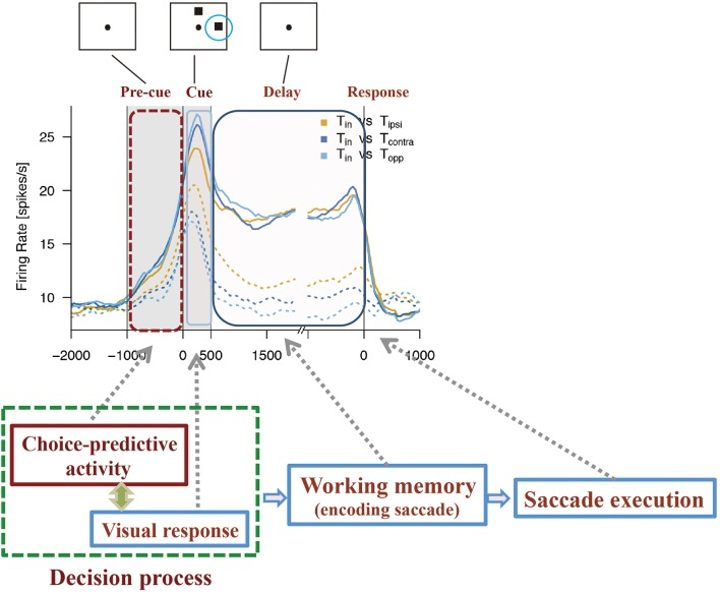
Voluntary action is primarily coordinated by the prefrontal cortex — specifically the dorsolateral prefrontal cortex (dlPFC) and medial prefrontal regions including the pre-supplementary motor area (pre-SMA). Research published in Frontiers in Neuroscience (Funahashi, 2017) confirms that the prefrontal cortex governs executive function: planning, judgment, decision-making, and the capacity to inhibit impulses in favor of reflective choice. Damage to these regions produces measurable deficits in judgment — but such damage requires physical insult to brain tissue, not exposure to religious teachings or fundraising requests.


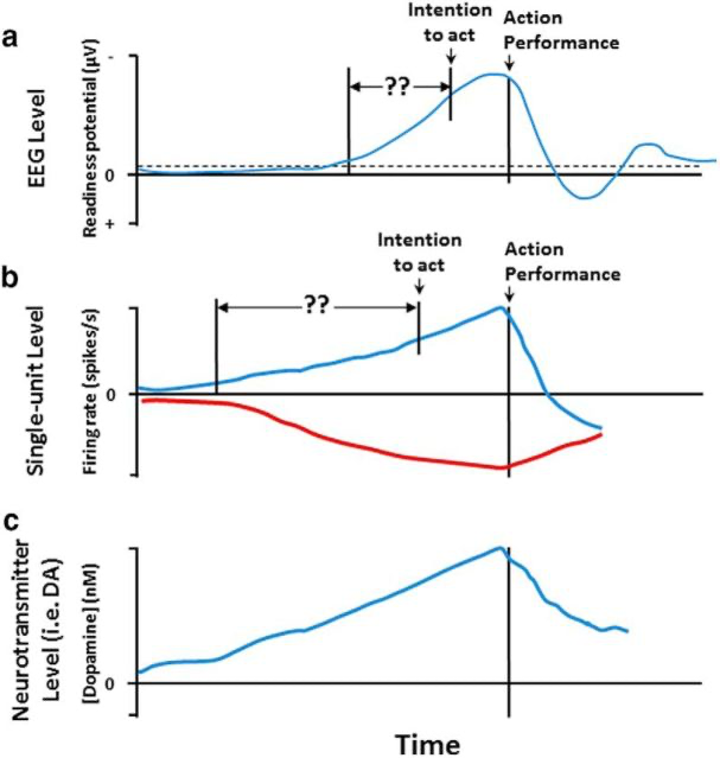
Neuroscientist Benjamin Libet's landmark experiments in the 1980s — replicated and extended in subsequent fMRI studies — showed that unconscious brain activity precedes a person's conscious awareness of an intention to act by several hundred milliseconds. Some interpreted this as evidence against free will. But Libet himself noted what he called the "veto power": the prefrontal cortex retains the capacity to inhibit or cancel an action even after unconscious preparatory signals begin. As reviewed in PMC (2016), this inhibitory capacity operates through distinct neural circuitry from the circuits driving action initiation — and it remains intact in healthy adults absent neurological injury, pharmacological disruption, or extreme physiological stress.

In short: the neuroscience of voluntary action identifies no mechanism by which persuasion, rhetoric, group belonging, or shared belief could override the executive function of the prefrontal cortex in an otherwise unimpaired person.
What Extreme Coercion Actually Does — and Doesn't Do
The most credible scientific evidence for psychological influence on cognition comes not from studies of religious groups but from research on torture, extreme captivity, and military stress exposure. That research is instructive — precisely because it shows the limits of even the most brutal attempts at mental override.
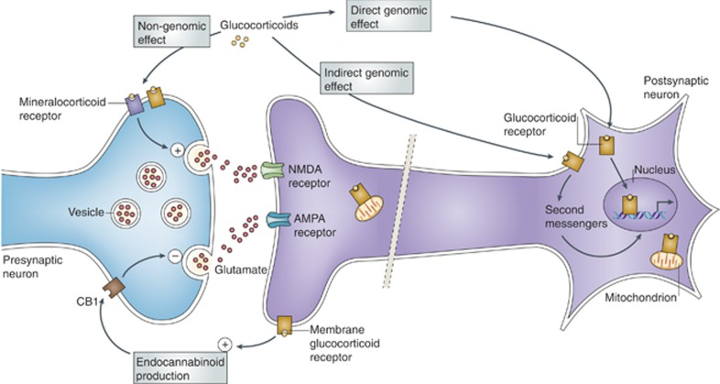
Professor Shane O'Mara, a neuroscientist at Trinity College Dublin, published findings in Trends in Cognitive Science (2009) demonstrating that extreme and sustained stress — including the interrogation techniques used by intelligence agencies — damages rather than controls the brain. Neurochemical studies show that the hippocampus and prefrontal cortex, both critical to memory and decision-making, are densely packed with receptors for stress hormones. Under prolonged extreme stress, these hormones impair the biological processes that support memory retrieval and coherent judgment. O'Mara's conclusion was blunt: coercive interrogation techniques "cause severe, repeated and prolonged stress, which compromises brain tissue supporting both memory and decision making." They do not produce reliable confessions or belief conversion. They produce cognitive breakdown.


Research on trauma more broadly confirms this pattern. Torture survivors show reduced hippocampal volume, dysregulated cortisol and norepinephrine responses, and decreased prefrontal function — structural, measurable changes that persist long after the original experience. The amygdala, the brain's fear-processing center, becomes chronically hyperactive. The result is not a person whose will has been "captured" and redirected — it is a person whose capacity for coherent agency has been impaired.


This matters for the Tokyo High Court's argument in a specific way: even under the most extreme forms of physical and psychological coercion documented in scientific literature, the outcome is cognitive damage — not reliable belief control. If torture cannot dependably reprogram a person's values and loyalties, the idea that tithing appeals and religious lectures can "suppress free will" has no biological grounding whatsoever.
Social Influence Is Real — But It Isn't Suppression
The strongest scientific case for psychological influence on behavior comes from classic social psychology experiments — and it is worth taking seriously, because it is real.
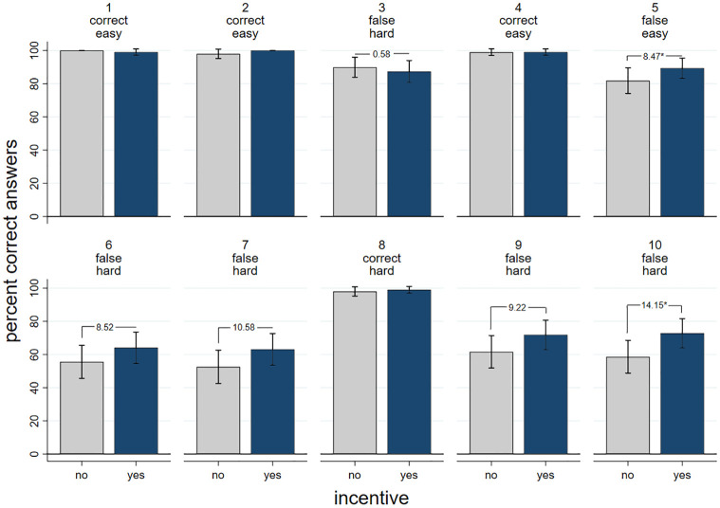
Solomon Asch's conformity experiments in the early 1950s demonstrated that when surrounded by unanimous group consensus giving an obviously incorrect answer, roughly 75% of participants conformed on at least one trial. Stanley Milgram's obedience experiments in the 1960s found that 65% of ordinary participants administered what they believed to be potentially lethal electric shocks when instructed by an authority figure. These findings are robust, replicated across cultures, and genuinely disturbing.
But notice what they prove — and what they don't.
They prove that social pressure, authority, and group norms can strongly influence behavior in specific, constrained conditions. They do not prove that this influence constitutes suppression of free will. Crucially, Milgram's own follow-up experiments revealed the precise conditions under which conformity dissolves: when two other participants openly refused to comply, 36 out of 40 subjects followed their lead and defied the authority. Peer dissent, not some mysterious counter-technique, immediately restored independent judgment. The influence was situational, not structural — it operated through perceived legitimacy and social pressure, not through any neurological override. Once the social conditions changed, agency reasserted itself.
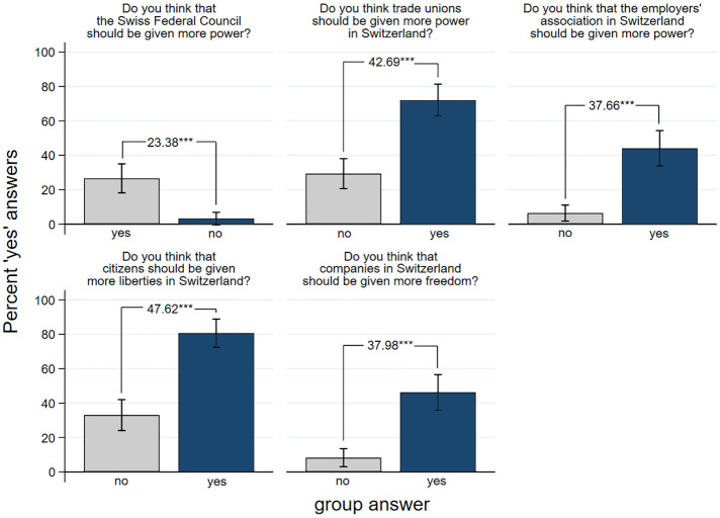
More importantly, Asch and Milgram's findings apply universally to human beings — including, presumably, members of every mainstream religion, every corporate hierarchy, and every family unit. If the social psychology of conformity is sufficient to establish "free will suppression" in the Unification Church, the same logic would dissolve the voluntariness of every Catholic pledge, every corporate donation to a foundation, and every act of deference to a credentialed expert. The court's framework, applied consistently, would criminalize persuasion itself.
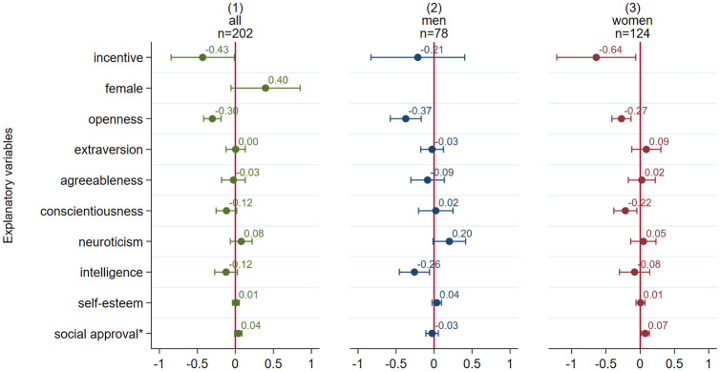
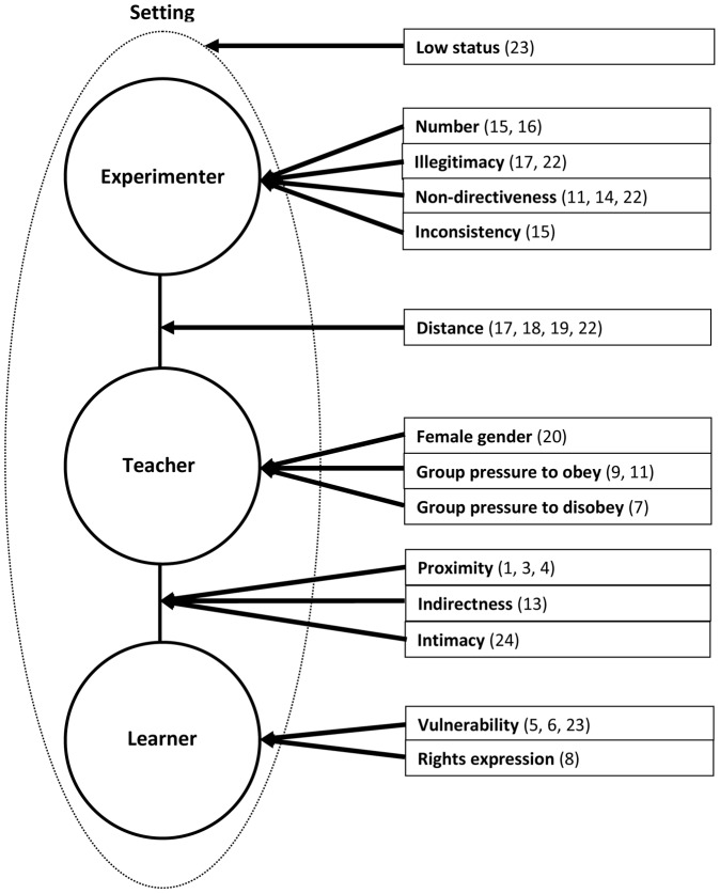
A 2012 paper in PLoS Biology (Haslam & Reicher) reanalyzed Milgram and Zimbardo's findings and argued that conformity in those experiments was conditional on participants identifying with the authority's goals and believing those goals to be legitimate — not on any irresistible coercive force. When legitimacy was questioned, obedience broke down. This is not a portrait of suppressed agents. It is a portrait of human beings making contextual judgments about trust and authority — which is what religious commitment looks like from the inside.
The Asymmetry Courts Will Not Acknowledge
There is a fundamental asymmetry embedded in how courts like Tokyo's apply the manipulation framework. Mainstream religions encourage generous financial giving — sometimes in explicit, theologically grounded, emotionally urgent terms. Catholic appeals to the "Peter's Pence," evangelical tithing culture, Buddhist temple fundraising drives, and Shinto offering rituals all involve what could easily be characterized, using the High Court's language, as "psychological influence" designed to make giving feel spiritually necessary. No court pathologizes these practices. The difference is not methodological. It is ideological.
When a court cannot explain why a person would freely choose to belong to a minority religion it finds distasteful, it reaches for manipulation as the answer. The logic is circular: the belief must be the product of coercion, because no rational person would hold it; therefore the coercion must have occurred, because the belief exists. This is not jurisprudence grounded in science. It is prejudice laundered through psychological vocabulary.
Forensic psychologist Dick Anthony, writing in Misunderstanding Cults (2001), argued that the brainwashing framework functions primarily as an ideological weapon rather than a scientific theory — one that allows courts and anti-cult organizations to rationalize intervention into religious communities while maintaining the appearance of clinical neutrality. The scientific record, he concluded, does not support the framework's core claim that religious participation involves a qualitatively different kind of influence than ordinary socialization.
What a Scientifically Honest Standard Would Require
If a court wanted to make a scientifically credible claim that an organization suppressed the free will of its members, the evidentiary standard would need to include, at minimum:
Physical confinement or its equivalent — the ability to leave must have been meaningfully restricted. Schein and Lifton's coercive persuasion models were developed in the context of prison camps, not voluntary religious affiliation.
Documented neurological or physiological impairment — measurable damage to the prefrontal cortex, hippocampus, or limbic systems through sustained extreme stress, sleep deprivation, malnutrition, or pharmacological agents. Normal religious community life does not produce these outcomes.
Behavioral evidence of suppressed agency at the individual level — not general patterns of giving, but specific demonstration that individual members attempted to leave or dissent and were physically or materially prevented from doing so.
The Tokyo High Court provided none of this. It cited patterns of generous donation and strong theological commitment as self-evident signs of manipulation — which, by the same logic, would condemn every intense religious community on earth. It used the language of "psychological influence" without defining it, without distinguishing it from ordinary religious practice, and without referencing a single peer-reviewed study establishing its proposed mechanism.
Conclusion
The science is clear on what it takes to genuinely override human agency: extreme physical stress, captivity, neurological injury, or chemical intervention. Religious persuasion, theological teaching, community belonging, and appeals to spiritual duty do not constitute these things. The decades-long scientific consensus — reflected in U.S. federal courts, the European Court of Human Rights, and the majority of academic literature on new religious movements — is that brainwashing as applied to voluntary religious participation is a pseudoscientific construct, not an empirically validated phenomenon.
Courts that rely on it are not drawing on science. They are drawing on the same ancient logic that accused the early Christians of using sorcery to ensnare converts, that labeled 19th-century Mormons victims of mesmerism, and that branded every unfamiliar religious movement as a factory of mindless followers. The vocabulary has been updated. The scientific foundation has not materialized.
When a legal system dissolves a religious organization on the grounds that its members cannot think freely — without evidence of captivity, without neurological documentation, without a single peer-reviewed definition of the mechanism being alleged — it has not applied science. It has borrowed science's authority to do something science has never endorsed.
Sources
· O'Mara et al., "Torturing the Brain," Trends in Cognitive Science (2009)
· Funahashi, "Prefrontal Contribution to Decision-Making under Free-Choice Conditions," Frontiers in Neuroscience (2017). PMC5526964
· Menon & D'Esposito, "The role of prefrontal cortex in cognitive control and executive function," Neuropsychopharmacology (2021). PMC8617292
· Bhatt et al., "Readiness Potential and Neuronal Determinism: New Insights on Libet Experiment," Journal of Neuroscience (2019). PMC6596234
· Schurger et al., "What Is the Readiness Potential?" Trends in Cognitive Sciences (2021). PMC8192467
· Kim et al., "Stress effects on the hippocampus: a critical review," Learning & Memory (2015). PMC4561403
· McEwen et al., "Stress Effects on Neuronal Structure: Hippocampus, Amygdala, and Prefrontal Cortex," Neuropsychopharmacology (2016). PMC4677120
· Loy et al., "The power of social influence: A replication and extension of the Asch experiment," PLoS ONE (2023). PMC10686423
· Haslam et al., "Meta-Milgram: An Empirical Synthesis of the Obedience Experiments," PLoS ONE (2014). PMC3976349
· Haslam & Reicher, "Contesting the 'Nature' of Conformity," PLoS Biology (2012). PMC3502509
· Richardson, "Brainwashing and Mental Health: An Update," Mental Health, Religion & Culture (2014)
· United States v. Fishman, 743 F. Supp. 713 (N.D. Cal. 1990)
· European Court of Human Rights, Jehovah's Witnesses of Moscow v. Russia (2010)
· Libet et al., "Time of Conscious Intention to Act," Brain (1983)
· Taylor, Brainwashing: The Science of Thought Control, Oxford University Press (2004)
· Anthony & Robbins, "Negligence, Coercion and the Protection of Religious Belief," Journal of Church and State (1995)