

Marx’s idea, and the stage theory that came later

In the nineteenth century, Karl Marx and Friedrich Engels did not draw a strict line between “socialism” and “communism.” What they cared about was this: factories, land, and machines, the means of production, should not be privately owned. Society should own them. The end point was a society with no classes and no state, where each person works according to ability and receives according to need.
Even the “dictatorship of the proletariat” in the middle was meant as a transition. The working class as a whole would hold down the old ruling class. It was not a design for a permanent one-party rule by professional revolutionaries.
Marx wrote little about how to build a state in practice.
The two-stage theory that later became common is mainly a Lenin-era reading. Drawing on Marx’s Critique of the Gotha Programme (1875), the usual textbook split looks like this.
Marx’s definition
First phase of the society after capitalism: the means of production are held in common. Goods are distributed according to work. Differences in ability still show up as differences in income.
Higher phase: after productive power is high enough, classes disappear. Goods go according to need.
Marx did not call the first phase “socialism” and the higher phase “communism.”
Lenin’s definition, and what came after
Socialism (lower stage): Marx’s first phase, renamed. Later writers added that the state remains in this stage, and they folded Marx’s separate idea of the dictatorship of the proletariat into it.
The Soviet Union said it was building this. China still says it is only in the primary stage of socialism, not a finished socialist society.
Communism (higher stage): Marx’s higher phase, renamed. Later writers added that the state withers away and money exchange ends. No country has ever reached it.
In everyday speech, socialism often means welfare and redistribution, and communism often means one-party planned economies. In the theory, the core questions are how complete equality is, and whether the state, classes, and private ownership remain or vanish.
What history actually produced was not the ideal, but Leninist dictatorship

Marx’s end point was never reached.
The people who built states were Lenin and those after him. A small vanguard party, democratic centralism inside the party, a secret police, and the crushing of opposition: that is where “the dictatorship of a class” became “the dictatorship of a party.” Stalin completed that party dictatorship. The state did not fade. It grew.
So the regimes later called communist states were not Marx’s destination. They froze a transition that was supposed to be temporary. They called themselves socialist states. The system was a party standing above the state. China belongs to this line.
What China says officially

The Chinese Communist Party’s constitution still names communism as its highest ideal and final goal. At the same time it says China is in the “primary stage of socialism,” that this stage will last a long time, and that markets and private firms are allowed in order to develop productive forces.
It calls this “socialism with Chinese characteristics” and a “socialist market economy.”
Under Xi Jinping, communism is still restated as the highest ideal, but the near-term goals are basic socialist modernization by 2035 and a “great modern socialist country” by mid-century. “Common prosperity” is also a slogan, with the repeated caveat that it does not mean uniform equality.
China itself admits it is not communist yet, and that even its socialism is immature.
It still does not meet Marx’s ideal
The “primary stage” label cannot hide what is missing. Private firms and privately owned homes are back, and so are many billionaires. Official Chinese figures still put the private sector above 60 percent of GDP.
In 2025, disposable income per person was about 103,778 yuan in the top group and about 10,150 yuan in the bottom group, a gap of about ten times. Extreme poverty fell, but through growth that let some get rich first, not through a classless order. What remains is a deep economic divide.
The state is stronger, not fading. Party rule is in the constitution, and elections cannot change who holds power. Churches, mosques, and temples that will not submit to the Party are restricted, raided, or driven underground.
Under Mao, political campaigns and the Great Leap Forward killed tens of millions. That record is the opposite of a state that was supposed to wither away.

Deng let some get rich first and output rose, but the result looks like capitalism under the Party. The Soviet Union kept the plan and fell. China used the market and survived. Neither ended classes or the state. That path is Lenin’s party dictatorship, not Marx’s communism.
What people call “socialism” or “communism” in the United States and South Korea
Neither country has nationalized the economy or abolished elections. Private firms and private property remain. That does not make the direction harmless.
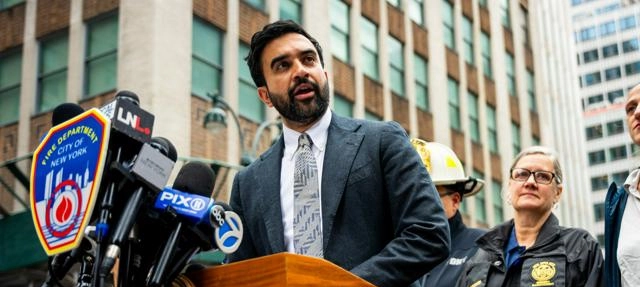
In the United States, Democratic Socialists already sit in Congress and run major city halls, and they use the word without apology.
They want the state to seize the commanding heights of health care, housing, energy, and industry, and to tax private wealth to fund that control.
Their platform also aims to abolish the Senate and fold the presidency and the courts under Congress. That is not full one-party rule yet. It is a plan to trap more of the economy and more political power inside the state, a trade that elsewhere raised costs and made government almost impossible to remove.
In South Korea the claim covers more than welfare. It includes rewriting the justice system, laws that favor the governing camp, tighter speech rules, and state pressure on religious groups treated as political problems.
Those now in office are using the legislature and the executive to change the courts, the press, and the churches that are supposed to limit power.
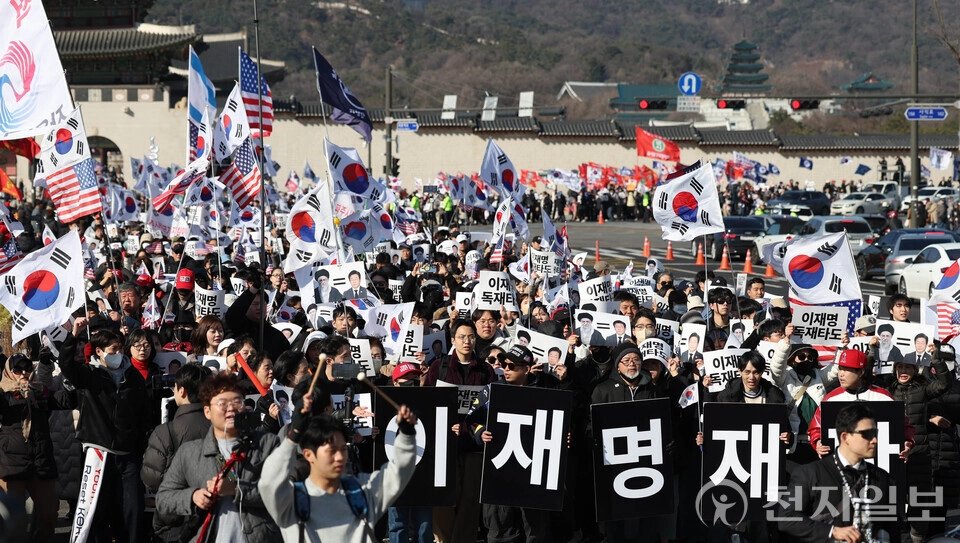
This is not Marx’s classless society. It is the older pattern: promise fairness, weaken the checks, leave more power in fewer hands. That is how the Soviet Union moved toward dictatorship, even though these countries still start from elections and markets.
Conclusion
For Marx, socialism was a transition: shared ownership of production, pay according to work. Communism was the end he wrote down: no state, no classes, no money, and goods according to need.
No government that took power in that name arrived there. Lenin built a party dictatorship. Stalin and the Chinese Communist Party made that “temporary” stage permanent.
China still calls itself the primary stage of socialism, while it keeps private capital, billionaires, and a stronger party-state. It meets neither of Marx’s tests.
In South Korea and the United States the same words do not mean shared property or the end of the state. Those in office, or those bidding for office, are trying to pull courts, law, speech, and religion under political control. The United States and South Korea are not one-party states. The risk is still the same pattern: weaker checks, more power in fewer hands.
People who praise the slogan often skip what followed it: dictatorship, famine, political killing, and the policing of faith and speech.