

Massimo Introvigne says the word carries a criminological charge, that "brainwashing" fails every evidentiary test, and that Tokyo's dissolution order should alarm democracies far beyond East Asia.

A word scholars once used without malice is now an instrument of state power. That is the argument Massimo Introvigne, of Turin's Center for Studies on New Religions, put to The 12 Gates, a religious-freedom channel hosted by a second-generation Unification Church member.
A Word That Changed

Max Weber and Ernst Troeltsch used "cult" for a young religion whose members joined as adults rather than inheriting the faith. The apostles were the paradigm case, and the word implied nothing about conduct. Cesare Lombroso's criminologists used it instead for groups suspected of serious crime, and by mid-century that meaning had won out.
The older sense survives as a defence: anyone sued for defamation retreats to Weber while having meant Lombroso.
Europe Draws a Line
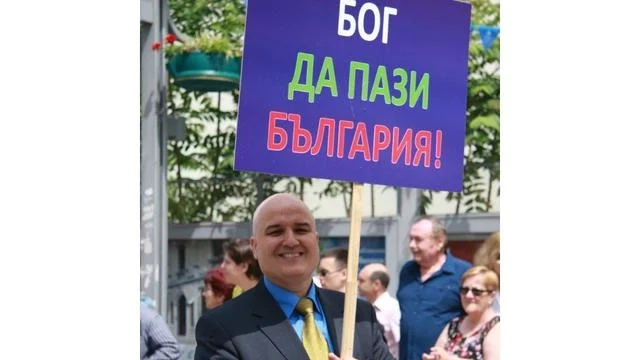
In Tonchev and Others v. Bulgaria, decided in December 2022, the European Court of Human Rights held that a campaign warning families away from Protestant churches violated religious freedom. Governments across forty-six member states are now on notice: to call a minority faith a cult alleges criminality, and officially to do so is discrimination.
The Brainwashing Evidence
The accusation must still be proved, and the evidence is poor. "Brainwashing" entered public vocabulary through Cold War messaging about American prisoners in Korea. Eileen Barker found that of hundreds attending Unification Church seminars, one or two percent joined, most leaving within three years.
Influence is real, in advertising, corporations and armies alike; what has never been shown is a break point where persuasion becomes something else. American courts said as much in United States v. Fishman in 1990.
None of which places religious organisations beyond the law. Rape, child abuse and terrorism remain prosecutable whatever the motive, and a systematically criminal group may properly be dissolved. The objection is narrower: to offences consisting in being a cult.
Tokyo and Seoul
That distinction matters because a state unable to prove a crime needs another ground for acting, and the cult category supplies one, converting a judgment about what a religion is into a reason to move against it.
Japan has done exactly that. When the Tokyo District Court ordered its dissolution on 25 March 2025, the Family Federation for World Peace and Unification became the country's first religious corporation dissolved on civil grounds alone. The earlier dissolutions of Aum Shinrikyo and Myokakuji followed criminal convictions. Here there were none. What justified the order was an accumulated picture of the organisation itself, the shape the word "cult" gives an argument.
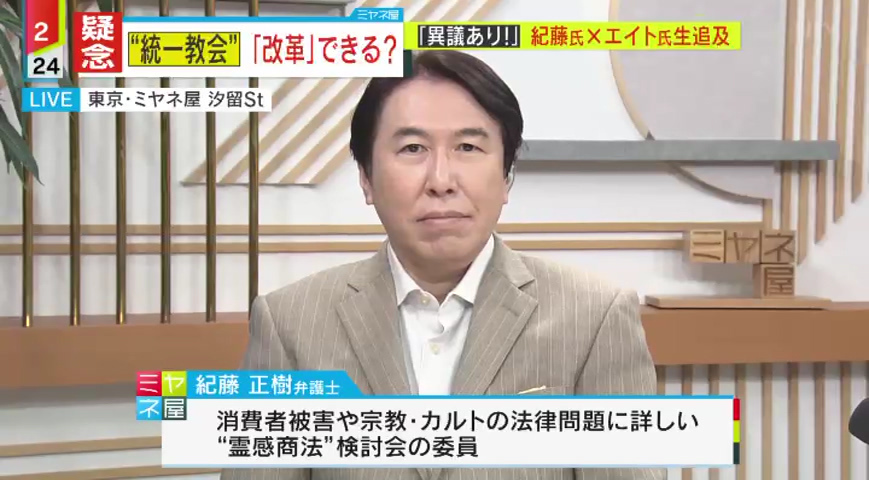
Korea is reaching comparable ground by another route, a bill in the National Assembly rather than the courts. The mechanism differs; the direction is the same. In both countries the question is no longer what a religious body has been convicted of, but what kind of body it is.
The Argument Moves Home
With the recruitment figures so unhelpful to it, critics in Japan and Korea now locate the coercion in the family, focusing on the children of believers. Told that Catholic and evangelical households do the same, proponents extend the claim to them rather than retreat. Japan's guidance on religious abuse of children accordingly reaches practices ordinary in mainstream Christianity, from discussing hell to limiting what children read.
Who Speaks for Ex-Members
Not everyone who leaves becomes a critic, and the sociologist David Bromley drew the line most coverage misses. The ordinary leave-taker walks away, allows there was good and bad in it, and gets on with life. The apostate leaves and then organises, building a public account of the group as harmful.
The second category runs at two to ten percent of departures from any group, the Catholic Church included, but they write the books and take the reporter's call, so the press meets almost no one else.

Leaving can be costly, Introvigne concedes, but marriages and employers create the same dependency, and so general a condition cannot be legislated against.
*For a more detailed analysis of former believers and apostates, see Bitter Winter, where Massimo Introvigne serves as Editor-in-Chief. https://bitterwinter.org/nisei-are-second-generation-apostates-from-the-unification-church-reliable-1-who-are-the-apostates/
Beyond East Asia
The pattern is not an Asian one. The reasoning barred in Strasbourg now works through American courtrooms, arriving as it did in Tokyo: not as a charge of crime but as an account of what a religious upbringing does to a child. After a raid on a Twelve Tribes community in New York State, prosecutors argued the children raised there would be handicapped as adults in the labour market, the reasoning used in Japan.
Preparing a five-year-old to compete for a corporate career, Introvigne answers, transmits a value system just as surely. What separates them is not evidence but preference, and a court asked to choose is ruling on how families raise children.
Which returns the question to the word. Admitted as a legal category, "cult" hands the state a power it was never granted: to decide which beliefs a child may be raised in. Europe has begun withdrawing it. Tokyo and Seoul are extending it.