

North Korean defectors and what communism looks like after decades in full control
— A record of people whose words, families, and inner lives were taken by the state

North Korea still advertises itself as a kind and equal country. Guided tours show monuments and smiling faces. But the people who live there keep leaving, even at the risk of being shot. If the poster were true, why would so few want to move in—and why would so many want to get out? A short visit is not the same as a life. Imagine staying.
A woman in Pyongyang, given the name Ji-yeon, went next door with water. No one answered. When the authorities opened the house, they found a family of three dead inside. The BBC reported this in 2023.
It happened in the capital, not in some remote village. A state that claims to care for everyone still let neighbors starve in silence. The reason is not only a lack of food. Speak too loudly, and your own family can be punished too. So people go quiet. Sometimes they go quiet to protect the people they love.
The first sentence written at school
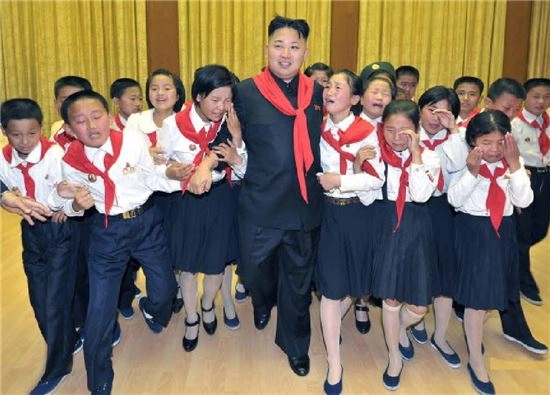
The first sentence a North Korean child writes at school is not their own name, and not a letter to their mother. It is “Thank you, dear General.” In the morning they say the same words before a portrait.
Once a week, in a session called “life review,” they must name their own faults and then the faults of a classmate. In a notebook a defector brought to South Korea, a child wrote that they had failed to follow the teachings—and then criticized a friend for wanting to go home early because the house was far away.
Children want to be praised. They also want to be kind to their friends. That natural wish is turned in another direction from the start.
To doubt is not an opinion. It is a crime. The words of Kim Il-sung, Kim Jong-il, and Kim Jong-un are placed first in daily life. If you believe children should be free to think and free to be friends, picture this classroom. Before speaking of an ideal, sit in that child’s seat.
Only those who stop thinking remain
Song Hee-suk (a pseudonym), who survived the famine of the 1990s, lost her husband, her son, and her mother-in-law to hunger—and still did not blame the system. She believed it was because “America had the country surrounded,” and she took the blame herself. Until she reached China, it did not occur to her that the state might be at fault. You cannot live, she said, unless you stop thinking.
A person can be broken not only by a blow. They can also be broken by being taught to blame the wrong one. When someone who has lost a family cannot question the state, it is not because they are cold. It is because, on top of that grief, they were taught, “You are the one at fault.”
Whose is the family?
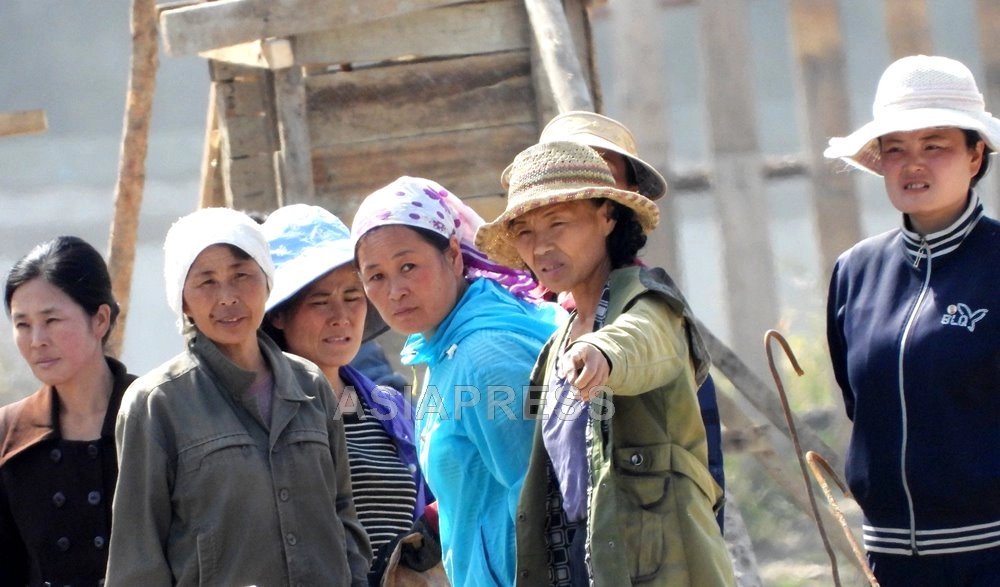
Neighbors are grouped into watch units of about twenty to fifty households, called inminban. In 2025 a woman still inside the country said officials come into the home every other day. There are cases of people being investigated simply for carrying in thirty kilograms of rice. There is also the story of a family expelled from Pyongyang after a grandfather, over drinks, said the equipment in a coal mine was dangerous. A friend’s father vanishes. No one is told why.
A home is meant to be a place where you can breathe. When the state walks that far inside, people stop trusting the neighbor. When trust dies, help has nowhere to go. In 2023 a fisherman, Kim Il-hyok, fled across the sea with nine members of his family. A worker who married a farm worker was required to move to the countryside.
Falsifying class status meant the risk of a labor prison. Birth and marriage decide even where you may live. Trying to protect a family can become a crime. Can a country where you cannot choose, with the person you love, where you will live still be called an ideal?
Why can a song from outside be punishable by death?
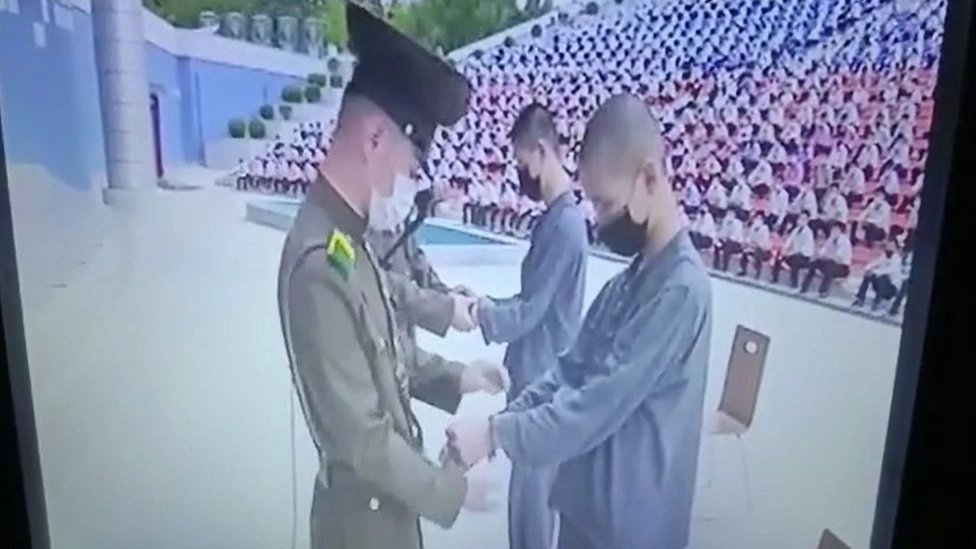
Spreading South Korean dramas or K-pop can bring not only a labor sentence but the death penalty. A UN special rapporteur noted that about 45 percent of the population is malnourished—yet the government is extremely afraid of South Korean culture. One defector said that watching Naruto was what first made them want to leave. Another saw a person who prayed publicly killed as a case of “superstition.”
People do not touch a song from outside only because they want to do something wrong. They touch it because they glimpse a small light: another kind of life might exist. That light is what the system fears most.
Once you know the outside, you can ask, “Is this really paradise?” So songs are sealed off, words are sealed off, screens are sealed off. Missiles are called a national treasure, and people’s stomachs come later. When rations stopped, unofficial markets kept people alive. It was not the stated ideology that saved them. It was the trade that was supposed to be forbidden that saved a neighbor’s dinner. What do we do with that fact?
Born in a camp, a child who was sold
Shin Dong-hyuk was born in a prison camp and, as a child, watched his mother and brother executed in public. When prisoners grew too weak, they were sent home on “sick leave,” and they died there. Former prisoners say this was a way to keep the number of deaths inside the camp from looking too high.
In 2025, Kim Eun-ju testified at the United Nations: at eleven her father starved to death; in China she was sold for less than three hundred dollars. Her sister suffered the same violence.
North Korea’s ambassador called them “human scum.” A society that calls those who fled scum is not protecting people. It is protecting the face of the system. Still, when these women give their names and speak, it is not only for revenge. It is also a plea: do not forget the people still inside.
Why people leave, and why they do not come in
Coming near the river is enough to be punished. In the first half of 2026, only 59 women and 4 men entered South Korea as defectors. Even so, Kim Il-hyok’s family—nine people, including a woman who was pregnant—crossed the sea at night. His wife said they went “from a dark sea to a sea of freedom.” If you think of a parent stepping into that water, what is there is not an ideology. It is the wish to keep a child alive.
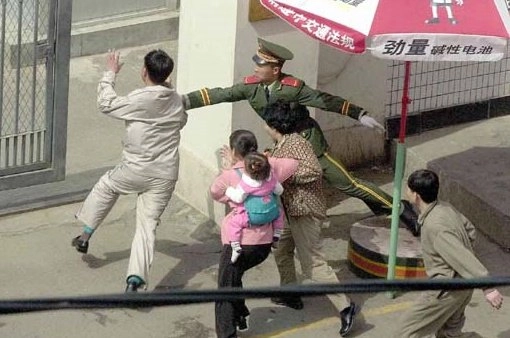

Imagine living there, not a short visit. Not a guided walk through a building. Days when you cannot speak to the world. A job assigned to you. No honest talk with a neighbor. Having to teach your child to criticize a friend. Watching a song from outside, and knowing your family could be pulled under. Would you want to live in a country on those terms? Coming to look and going home is not the same as staying.
A country people line up to enter and a country people leave even if they may be shot are not the same “equality.” The voices of defectors are a record of that difference, written on the body.
Scripture says, “You will know the truth, and the truth will set you free.” (John 8:32)
In North Korea, both truth and freedom have been taken away. Knowledge is what remains, and that is where people begin to leave the lie.
If you say socialism or communism is good, first imagine living there yourself.
What kind of society should human beings live in?