
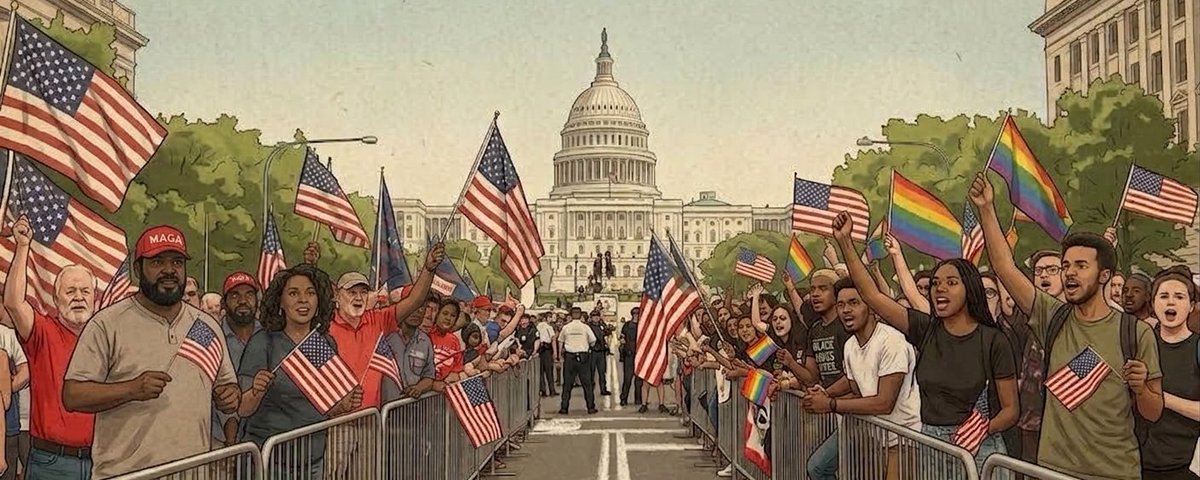
Watch American politics for a while and the same pattern keeps coming back. Inside every country there are people who make things of value. There are also people who receive what others have made.
The line between them is not drawn by income or by the kind of job a person holds. What draws it is where a person places the responsibility for their own results.
Defining the two groups
Makers.
They start businesses, hire people, and pay taxes. When something fails, they carry the loss themselves. Employees belong here too. Anyone who owns the results of their own work and raises their income by getting better at it stands on this side. What they share is a simple sense that their life improves by as much as they produce.
Takers.
They choose to draw from the system as their main way of getting by.
One point should not be misread here. A person who receives support because life got hard does not become a taker by doing so. Illness, job loss, and disaster reach everyone. Someone who takes help, recovers, and goes back to work is a maker.
The problem is the posture that treats support as a way of life instead of a stage to pass through.
The difference shows up in character first
Before this difference appears as a political opinion, it appears in personality.
How they feel about time.
Makers can hold off on what they want now in order to get something bigger later. Saving money, learning a skill, and building trust all take years before they pay off. Takers put a high value on the smaller gain they can have today.
Where they place the cause.
Do you see your situation as the result of your own choices, or as the result of your surroundings? People who choose the first answer believe that changing their behavior changes the outcome, so they change their behavior. People who choose the second believe nothing changes until the surroundings change, so they make demands of whoever can change them, which means the government.
How they take a loss.
Makers see profit as the payment for accepting the chance of a loss. Takers see the loss itself as unfair and expect someone else to cover it.
Where the right and the left split
By this point the link to political sides becomes clear.
The right, meaning conservatives, cares about personal responsibility, long time horizons, and protecting what has already been built. The left, meaning liberals and socialists, cares about closing gaps in outcomes, helping people quickly, and looking at the system rather than the person for the cause.
What separates the two is how they see human beings and how far ahead they look.
The same pattern shows up in other countries
Japan. Here the line runs between generations.
Pension and medi @cal benefits go mostly to older people, while the cost falls on those still working. Every election brings talk of cash payments and subsidies, and the question of who pays gets pushed back. Government debt is now well above twice the size of the economy. That bill is being handed to a generation that cannot vote yet.

South Korea. The same force is at work.
Cash payments for young people, more hiring in the public sector, and the sharp rise in the minimum wage carried out under the banner of income led growth. That last policy has been criticized for cutting jobs at small shops and small factories. Experts still disagree about the results. The thinking behind it is easy to follow. Move the money around first, and production will catch up later.

The behavior looks alike too.
In Korea, the number of young people who spend years preparing for civil service exams is talked about as a social problem. In Japan, a stable employer stays at the top of the list of places graduates want to work. In both countries, the share of young people who want to start a business is low by developed country standards.
This does not happen because people are lazy. In a society where the loss from failure falls on one person and no path back is built into the system, playing it safe is the correct call. People are responding honestly to the incentives the system gave them.
There is also a shared foundation. The population is shrinking.
When the number of people on the making side falls while the demands of the receiving side are locked into law, the math stops working.
The real danger comes when takers write the policy
For a politician, promising benefits is the cheapest way to buy votes. The money gets paid later and the votes come in now.
Repeat that trade enough times and more than half of all voters end up receiving more than they pay. Once a society reaches that point, any politician who says the system needs fixing loses the election. From the moment repair becomes politically impossible, decline stops being a choice and becomes the route the country is already on.
What Venezuela and Cuba showed
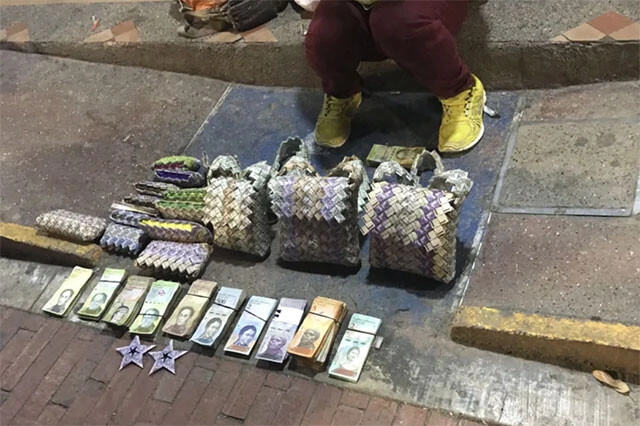
Venezuela went down that road. Oil money paid for larger handouts, and price controls and nationalization pushed the people who made things out of the country. Once the producers were gone, what remained was a state with nothing left to hand out. The economy shrank sharply over about ten years and millions of people left.
Cuba gave up the source of its growth in order to deliver equality. After the 1959 revolution, most companies and farmland were nationalized, and the room to decide anything on the producing side disappeared with them.
Sixty years later, the result shows up in the numbers. GDP in 2024 was more than 10 percent below its 2018 level, and blackouts lasting over twenty hours a day hit region after region. In 2024 alone, more than 250,000 people left, most of them of working age.
The Cuban government explains this as the result of US sanctions. Among researchers, the mainstream view points to the structure itself, a state that never let go of production.
Why people believe promises that sound too good

A sweet political promise is built the same way as an ad for a pill that melts the weight away.
There are three reasons.
First, people cannot sit through the long stretch between effort and result. Changing your body takes months. Not many are willing to take on the dull work of watching what they eat and exercising every day.
Second, the ad cuts out the hard part and shows only the result. Political promises do the same. The funding, the other choices being given up, and the side effects that show up after the program is locked in all stay off screen.
Third, the side making the promise loses nothing. The pill becomes profit for the company the moment it sells. The politician has already gotten what he wanted the moment he wins. When the promise fails, the one who pays for it is always the one who believed it.
Five questions to test a promise
Conclusion
A country has to make before it can hand out. This is not a matter of belief. It is a matter of arithmetic.
So one test is enough for judging a policy. Does it add to the number of people standing on the making side, or take away from it?
Politics that cannot answer that question will wear a country down, no matter how good the words sound at the start.