
Several years have passed since the assassination of former Prime Minister Shinzo Abe.
The "contradictions at the scene" that emerged immediately after the incident have not been resolved—if anything, they have grown more conspicuous.
A missing bullet, conflicting medical testimonies, and numerous unanswered questions.
On January 22, 2026, the "Association to Investigate the Truth Behind the Assassination of Former Prime Minister Abe" announcing criminal charges against the presiding judges.
Here, we organize the hidden "irregularities" once again.
(Note: This content represents information at the investigative stage and does not constitute confirmed facts.)
【Question ①】 Doctors and Police Reached Opposite Conclusions
This is the most perplexing aspect of the case.
The findings of Professor Hidekata Fukushima, who led the emergency medical treatment, and the autopsy results from the Nara Prefectural Police are almost completely contradictory.

Professor Fukushima stated at his press conference:
"Two gunshot wounds to the neck," "a large hole in the ventricular wall," and "death from blood loss due to damage to the heart and major blood vessels."
However, the police announcement the following day was entirely different.
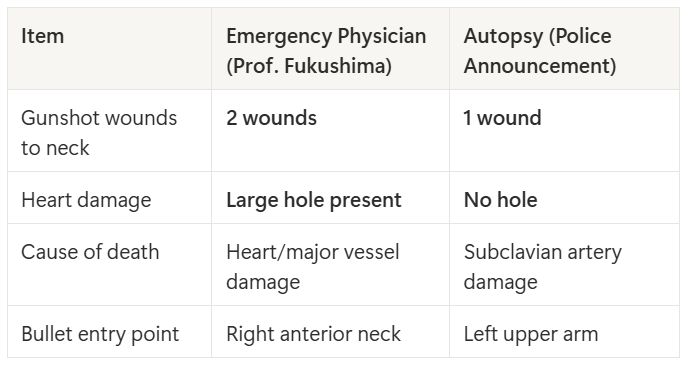
How could examining the same body lead to such drastically different conclusions?
【Question ②】 The Bullet Trajectory Angle Doesn't Add Up
According to the emergency physician's explanation, the bullet traveled "from the right side of the neck toward the heart."
Here's the problem.
The defendant Yamagami shot at Abe, who was on a platform, from below. Is it physically possible for a bullet fired from below to travel from the neck down toward the heart?

For a bullet to travel from the neck to the heart, it would need to be fired "from above downward."

If the emergency physician's findings are correct, the possibility emerges that someone other than Yamagami fired the shot.
【Question ③】 The Fatal Bullet Disappeared
Facts obtained by LDP House of Councillors member Shigeru Aoyama from senior National Police Agency officials:
A blind gunshot wound means the bullet entered the body but didn't exit—meaning the bullet should still be inside the body, yet it cannot be found.
Where did the bullet disappear to?
【Question ④】 Death from Blood Loss, Yet Almost Instantaneous Death
The official cause of death announced by police was "death from blood loss." However, death from blood loss typically takes time.
But Abe died almost instantly.
A physician who rushed to the scene attempted AED and cardiac massage, but the heart had already stopped.
Can this speed be explained by "death from blood loss"? Wouldn't it be more natural to assume his heart was directly shot through?
【Question ⑤】 Police Already Knew About the Security Risks
Three months before the incident, Constitutional Democratic Party leader Izumi requested to give a speech at the same location.
The Nara Prefectural Police's response: "Security from the rear would be difficult."
Izumi abandoned the plan.
In other words, the Nara Prefectural Police recognized that this location posed security problems. They themselves understood it was vulnerable to attacks from behind.
Why, then, was Abe's speech permitted?

【Question ⑥】 Preconceptions Given to the Autopsy Examiner
A physician's observation:
"In forensic autopsies, the examiner receives a briefing from police beforehand. They're told information like 'the shooting came from this direction' and 'the suspect is this type of person.'"
This could create preconceptions.
At the end of his press conference, Professor Fukushima stated:
"That's what we believe at this point, but specialists may see it differently."
Professor Fukushima himself suggested that conclusions could change after the forensic autopsy.
【Question ⑦】 The Crime Scene Investigation Was Far Too Late
A former prime minister was assassinated.
This was one of the most significant incidents in postwar Japan.
Naturally, an immediate crime scene investigation should have been conducted.
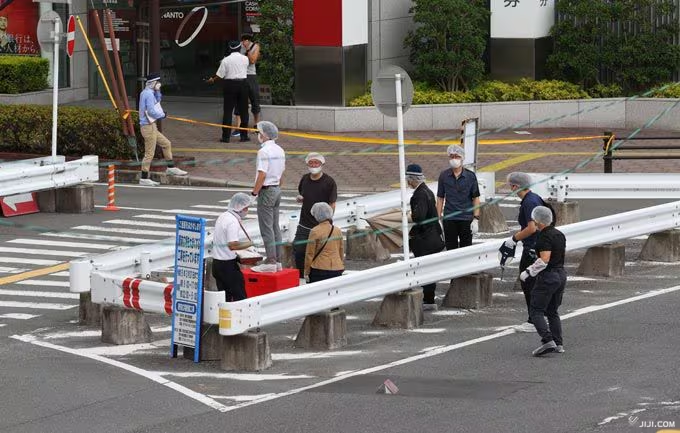
However, the crime scene investigation took place five days after the incident.
This is an unusually long delay for a major criminal investigation.
Why wasn't it conducted immediately?
【Experts Raised Their Voices】
In October 2025, the "Association to Investigate the Truth Behind the Assassination of Former Prime Minister Abe" was established.
The membership is approximately 1,000 people
—lawyers, physicians, former police officers, and former Diet members have assembled.
Their conclusion:
"The lone-gunman theory is scientifically impossible."
"This was a rigged outcome."
Three grounds for this assertion:
A significant statement from Mr. Yamaguchi:
"At the time of the incident, eight people including LDP affiliates were inside the zebra zone where Abe was speaking. However, the Nara Prefectural Police did not interview a single one of these eight people."
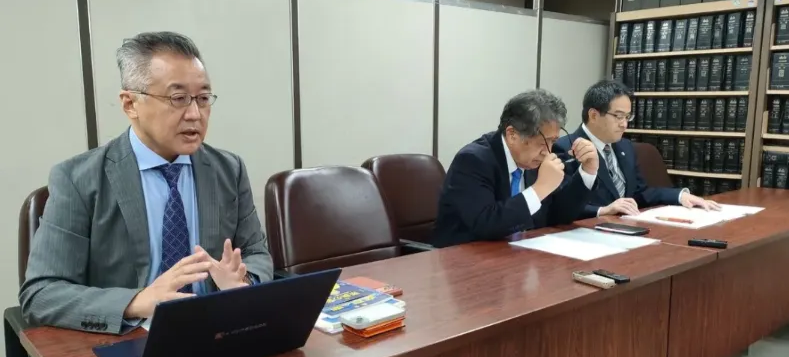
Mr. Yamaguchi interviewed all eight.
"All eight witnessed 'agonal breathing' from Abe immediately after he was shot. This is a phenomenon where air remaining in the lungs escapes after the heart has stopped. In other words, it wasn't death from blood loss—it was instant death from a shot through the heart.
Because these eight witnessed this, the police couldn't conduct interviews with them—that is our interpretation.
【The Official Trial Verdict】
On January 21, 2026, defendant Yamagami was sentenced to life imprisonment.
It was determined that "there is no contradiction in concluding the defendant's bullets struck the victim."
Regarding the discrepancy in medical opinions, some expert views suggest that "emergency physicians are not experienced in wound assessment."
【The Truth Remains Shrouded in Darkness】
Vice Chairman Kihara of the "Association to Investigate the Truth":
"Things that even laypeople would find strange have not been verified at all. Labeling such questions as 'conspiracy theories' is itself a conspiracy theory. No matter how long it takes, we want to uncover the truth."
That a precious life, along with the truth, is left in ambiguity is a matter that strikes at the foundation of a nation governed by law.
We must avoid being swept up in emotional arguments and continue to calmly observe objective data and testimony.