

In January 2026, an agreement reached between South Korean President Lee Jae-myung and leaders of major established religions sparked international concern. Far from being a mere domestic religious issue, this development represents a significant challenge to the freedom of thought.
This article delves deeper into the warnings presented in the original report and explores the implications of this controversial move.
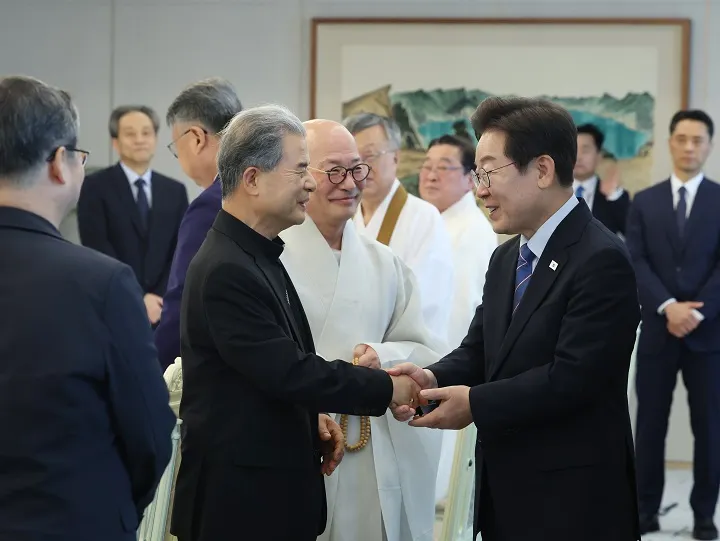
1. The Dangerous Collusion of Political Populism and Religious Authority
During a meeting on January 13, President Lee and leaders of prominent Buddhist and Christian denominations labeled groups such as the Family Federation for World Peace and Unification (formerly the Unification Church) and the Shincheonji Church of Jesus as "heretical."
A particularly striking aspect of this meeting was the use of "public support" as a justification to discuss the disbandment of specific groups and the seizure of their assets without following formal judicial procedures.
For politicians, attacking "easy targets" that lack broad public sympathy serves as a form of populism to boost approval ratings. For established religions, it offers an opportunity to eliminate emerging competitors using the power of the state. This "closed-door collusion" risks leading to extrajudicial measures that bypass the essential principle of due process.
2. Power, Not Theology, Distinguishes "Religion" from "Cult"
History shows that almost every religion considered "orthodox" today was once branded an "anti-social cult" during its infancy.


History proves that "what is labeled a cult in one era may become the state religion in the next." It is a profound historical irony that established religions, once the victims of persecution, are now mobilizing state power to suppress newcomers.
3. Double Standards: The "Dark Side" of Established Religions
The established religions that label new movements as "dangerous" often harbor their own severe historical or structural issues. The original article highlights the following examples to point out this hypocrisy:
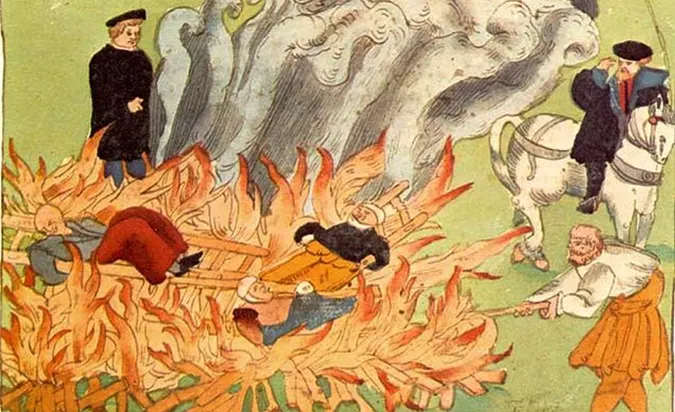


Critiques such as "destroying families" or "mind control" can, to varying degrees, be applied to almost any religious organization that demands fervent devotion.
4. The End of Religious Pluralism and the Risk of a "Negative Chain Reaction"
Currently, established religions in Korea face a crisis of rapidly declining memberships. As younger generations turn away from traditional faiths, turning to state power to stop the flow of believers to new religious movements is, in essence, a declaration of spiritual defeat.
Furthermore, if this "Korean Model"—where the state defines and eliminates heresy—becomes an international standard, it could trigger a terrifying global chain reaction:
Granting the state the right to restrict the freedom of others will eventually result in the restriction of one's own.
Conclusion: Freedom of Religion as the Bastion of Democra
The essence of religious freedom is not protecting what society deems "correct." It is about upholding the right to exist for those things we believe are wrong or find uncomfortable.
If Korea’s established religions choose to collaborate with power to annihilate minorities, they are destroying the very democratic foundation they helped build.
When a state acquires the power to screen "correct" religions and disband "distasteful" groups, the freedom of thought for all citizens dies.
The events of January 13 serve as a stark warning: we are witnessing a moment where the most fundamental right—freedom of conscience—is being bartered for political expediency and populist gain.