
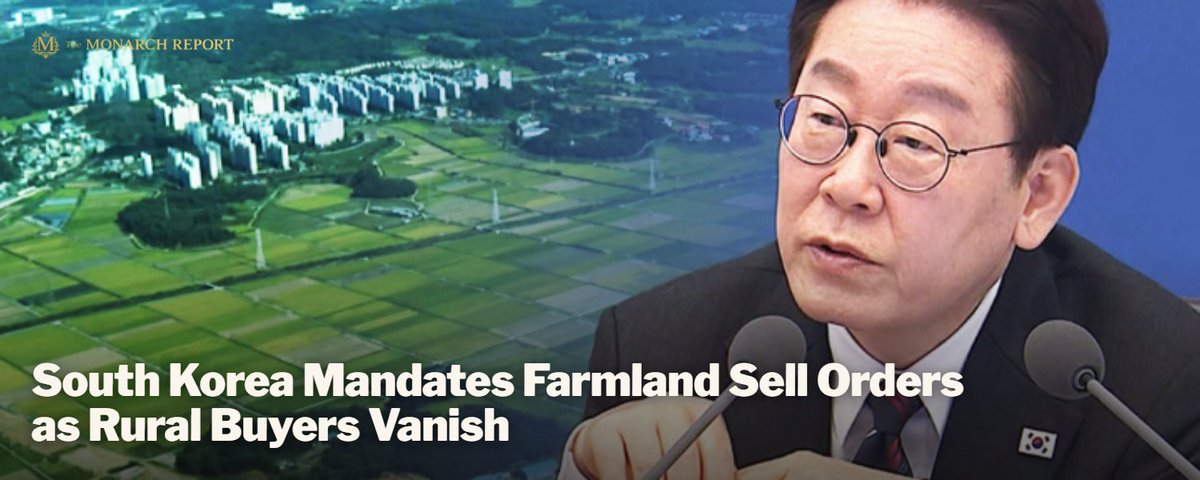
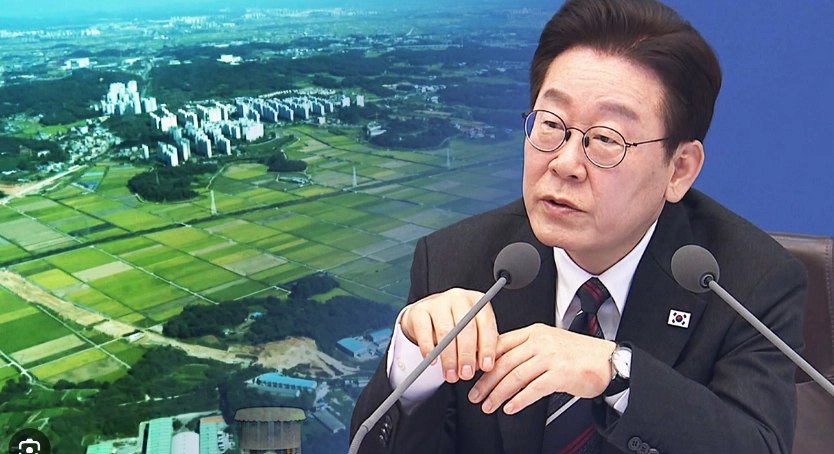
The fight in Seoul is over what to call it. The ruling party says a crackdown on farmland speculation. The opposition says the state is treating farmers as criminals for owning land they can no longer till.

In the countryside the argument is simpler. Many owners are too old to farm the field, and there is often no buyer. The state can still order a sale, and if the order is ignored, charge 25% of the land’s value every year.

Since August 28 that sell order is no longer a local official's choice. It is a legal duty. Seoul has already flagged 2.84 million parcels, more than one in four of the plots it just surveyed.

What the law now does

  • Disposal notice: one year to sell.
  • Then a formal order: six months more.
  • Ignore it without a justified cause: 25% a year of whichever is higher, the appraised value or the official land price.
  • A plot worth 100 million won: 25 million won a year, repeatable.
  • The 25% rate is from 2021. What 2026 changed is the exit. “May order” became “must order.” If a city will not issue it, the agriculture minister can.
  • The survey began with a February cabinet directive from President Lee Jae-myung. Farmland had become a speculation target, he said, and people who do not farm should not hold it.

    Lee said in February that inherited land and fields left fallow by age were not the target. Farmers say the survey did not read that way. Officials say suspicion is not a finding, and that the 25% charge applies only after an order is ignored. The countryside is reading the 25%.

    No buyers, then a sell order

    In the 2025 farm census, 44% of farm operators were 70 or older, and nearly 80% were 60 or older. Many inherited a field they cannot work. The same rules have already frozen rural sales. In the provinces there is often no qualified buyer at all. “Sell it” and “can sell it” are not the same sentence.

    That is why farmers rebelled, and why the ruling party flinched. Rural anger spread after the August enforcement date. Party officials began warning that farm households were peeling off from a president whose ratings were already falling, and that a holiday-season repair was needed.

    The opposition line is blunt. This is no longer “land to the tiller.” It is tilling as a condition of keeping what you already own.

    Nothing has been confiscated. The 2.84 million parcels are suspected, not confirmed, and this year's audit covers only land that changed hands after 1996. The title stays in the owner's name. That is the point. Property rights can be hollowed out long before a deed changes hands.

    Lee Jae-myung cited Syngman Rhee. Conservatives say he cited the wrong half.
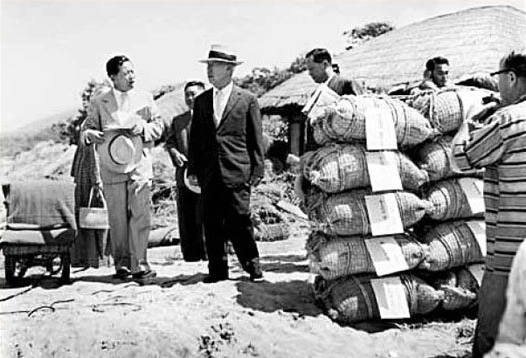
    Syngman Rhee was South Korea’s first president. When the Republic was founded in 1948, he rushed land reform to block communism. Farmland had to become the farmer's property, not a party slogan.

    In a December 1948 radio address he said the communist system did not give land to the people. The government took it, became the great landlord, and turned farmers into its tenants.
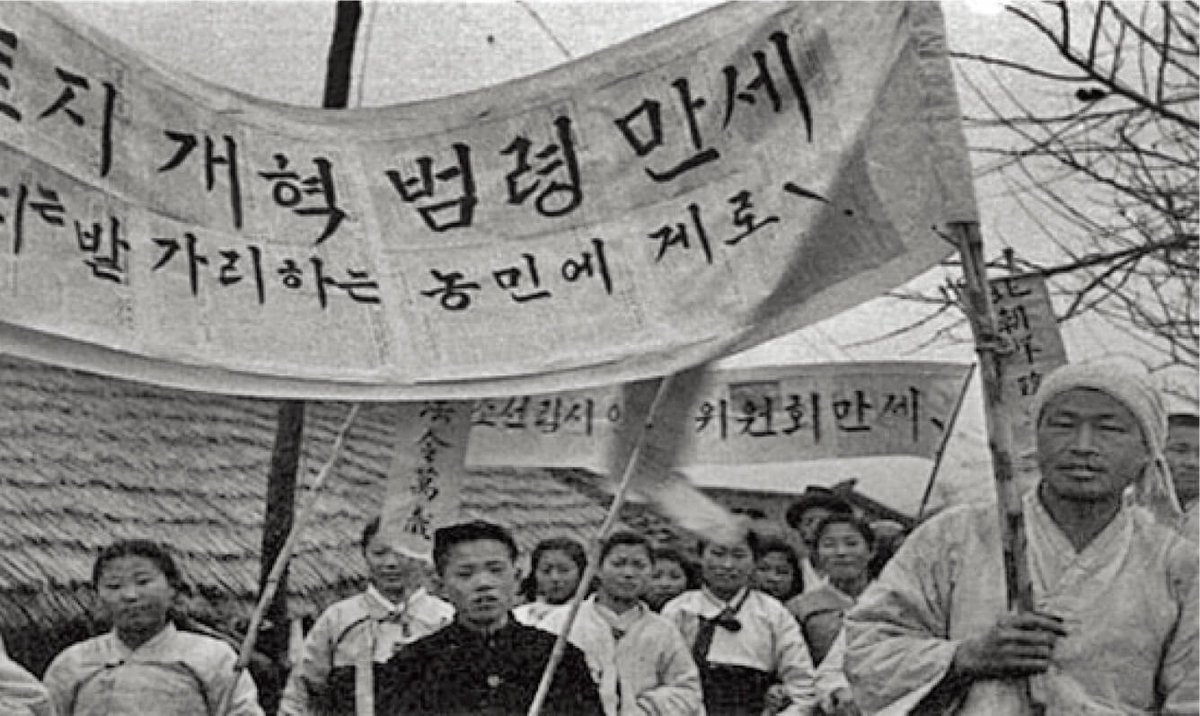
    That was the fork. In 1946 the North seized land without paying landlords and forbade sale, lease, or mortgage: a cultivation permit, later folded into collective farms. In the South the state bought land with compensation and sold it to the people who tilled it. They received title.

    Critics said the new sell order sounded like communism. Lee answered them himself in February. Anyone who calls this communism, he said, does not understand “land to the tiller,” and Syngman Rhee did the same thing. He took land from landlords who did not farm and gave it to farmers. The charge did not vanish.

    It moved from the word “communist” to the mechanism. Syngman Rhee created private owners. He did not build a standing machine in which the state keeps deciding who may hold land, orders a sale into a market with no buyers, and bills 25% a year if the sale does not close.

    The test

    A government may regulate how farmland is used. What it cannot do honestly is order a sale the market cannot complete, then levy a quarter of the land's value each year for failing. Relief drafted after rural anger hits the polls is not a design. It is a bandage.

    The question is whether any softening is written into statute, or left as guidance an administration can revise at will.

    Sources

    Law

  • Korea.kr, May 8, 2026. Amendment: disposal orders become mandatory; minister can issue them if a city will not. https://www.korea.kr/news/policyNewsView.do?newsId=148964082
  • KBS, May 7, 2026. Survey power and mandatory orders pass the Assembly. https://news.kbs.co.kr/news/view.do?ncd=8555273
  • Park & Jung. One year to sell, then six months, then 25% a year. Duty starts August 28. https://panoplia.tistory.com/109
  • Maeil Business, Sept. 15, 2026. Same sequence; 25% of the higher of appraisal or official price. https://www.mk.co.kr/news/columnists/12153450
  • Financial News, Sept. 11, 2026. The 25% rate is from 2021. https://www.fnnews.com/news/202609110744029688
  • Survey

  • Korea.kr briefing. 10.13 million parcels surveyed; 27% / 2.84 million flagged. https://www.korea.kr/briefing/policyBriefingView.do?newsId=156772806
  • Kyunghyang, July 30, 2026. Same count. This year: land that changed hands after 1996. https://www.khan.co.kr/article/202607302141005
  • Financial News, Sept. 11, 2026. Pre-1996 land is next year. https://www.fnnews.com/news/202609110744029688
  • Farminsight. February cabinet order. https://www.farminsight.net/news/articleView.html?idxno=16395
  • Lee in February

  • KBS, Feb. 25, 2026. Unused farmland should face sale orders. https://news.kbs.co.kr/news/view.do?ncd=8492870
  • Yonhap, Feb. 25, 2026. Inheritance and old-age fallow are not the target; “communist” critics misunderstand land-to-the-tiller; Rhee gave landlord land to farmers. https://www.yna.co.kr/view/AKR20260225026100001
  • Chosun Ilbo, Feb. 25, 2026. Same post. https://www.chosun.com/politics/politics_general/2026/02/25/W7EXQD5XGRHXDL7ASJJE2A36UI/
  • Aging owners, no buyers

  • 2025 farm census, via Financial News, April 28, 2026. Operators: 44.1% are 70+; 78.8% are 60+. https://www.fnnews.com/news/202604281008379692
  • SBS, April 28, 2026. Same census. https://news.sbs.co.kr/news/endPage.do?news_id=N1008536392
  • Financial News, Sept. 11, 2026. Rural land market frozen. https://www.fnnews.com/news/202609110744029688
  • Chosun Realty, Sept. 13, 2026. Provincial dump risk; Gangwon deep-survey share 38.8%. https://realty.chosun.com/site/data/html_dir/2026/09/11/2026091101557.html
  • Backlash

  • Dong-A Ilbo, Sept. 17, 2026. Chuseok repair; farm vote peeling off; Jang: “tilling as a crime.” https://www.donga.com/news/Politics/article/all/20260917/134685087/2
  • Kyunghyang, Sept. 17, 2026. Guidance period planned; Jeong: it started with one cabinet remark. https://www.khan.co.kr/en/article/202609171729017
  • SBS English, Sept. 18, 2026. Opposition: stop branding farmers as speculators. https://news.sbs.co.kr/english/article.do?news_id=N1008759859
  • Maeil Business, Sept. 17, 2026. Rural revolt after August 28. https://www.mk.co.kr/en/editorial/12155576
  • Syngman Rhee

  • Chosun Ilbo English, Dec. 6, 2025. Rhee rushed reform “to block communism.” 1948 radio address. North 1946: no sale, lease, or mortgage. https://www.chosun.com/english/travel-food-en/2025/12/06/PF5UZT2S7JGP3P4P4FZAKTHW7Q/
  • New Daily, Jan. 8, 2024. Rhee, Dec. 4, 1948: the state becomes the landlord; farmers become its tenants. https://www.newdaily.co.kr/site/data/html/2024/01/08/2024010800219.html
  • New Daily, April 15, 2013. Rhee, April 30, 1949: communists reach the masses through land. https://www.newdaily.co.kr/site/data/html/2013/04/15/2013041500023.html
  • FRUS 1950. U.S. record of Rhee’s land policy and the North’s tenant-of-the-state system. https://history.state.gov/historicaldocuments/frus1950v07/d717