South Korea’s "Church Dissolution Act" Reaches Final Phase — A Battle Over Religious Freedom
Lee Jae-myung Administration's "Church Dissolution Law" – Religious Groups Face Forced Dissolution Crisis
The faith of approximately 5.5 million South Koreans is about to be placed in the hands of the state.
A bill that would grant the government the power to dissolve churches and confiscate their assets is now heading for deliberation in South Korea's National Assembly.
The Civil Code Amendment (Bill No. 2215932), submitted under the directive of President Lee Jae-myung, ostensibly targets the Family Federation and Shincheonji.
However, the law applies to all religious organizations. Critics call this "state intervention in religious freedom" and are strongly pushing back.
1. Background of the Bill
On December 2, 2025, President Lee Jae-myung stated during a cabinet meeting:
"The vital principle of the separation of church and state has been breached by cases where religious organizations have systematically intervened in politics. Given that dissolution orders have been issued in Japan, I ask that this be considered here as well."
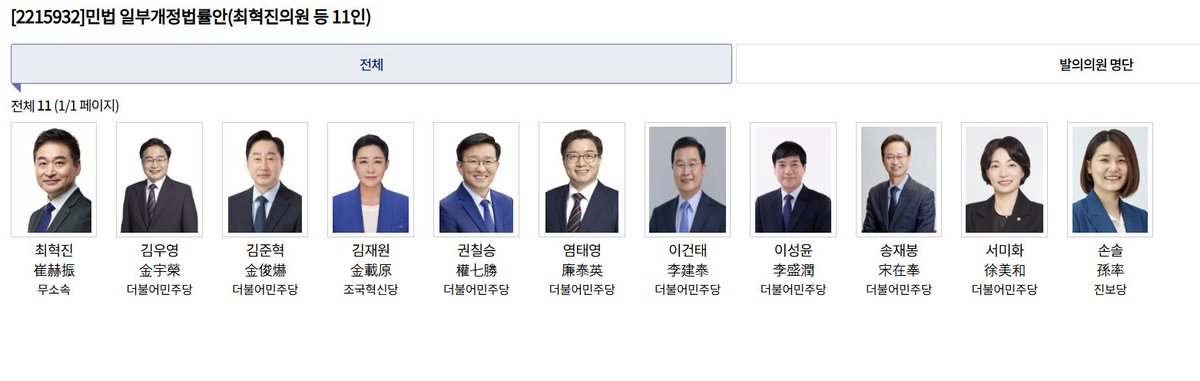
Following this directive, on January 9, 2026, Representative Choi Hyuk-jin (Independent) acted as the lead sponsor, with 11 lawmakers jointly submitting the Civil Code Amendment to the National Assembly.
2. The 11 Sponsoring Lawmakers
Independent
Choi Hyuk-jin(崔赫珍)— Lead Sponsor
Democratic Party
Kim Woo-young(金宇榮)
Kim Jun-hyuk(金俊赫)
Kwon Chil-seung(權七勝)
Eom Tae-young(嚴泰榮)
Lee Geon-tae(李建太)
Lee Seong-yoon(李聖允)
Song Jae-bong(宋在奉)
Seo Mi-hwa(徐美花)
Rebuilding Korea Party
Kim Jae-won(金在元)
Progressive Party
Son Sol(孫率)
3. "Absolute Power" Granted to the State
If this amendment (Bill No. 2215932) passes, the government will gain the following coercive powers over religious corporations:
Compulsory Inspections: Public officials may forcibly audit church ledgers, administrative records, and financial status.
Summon Orders: The authority to mandate the attendance of representatives and officers to force testimony.
Dissolution Orders: The power to revoke incorporation permits based on vague definitions such as "political intervention" or "serious crimes."
4. The Ultimate Threat: "State Confiscation" of Assets
The most shocking aspect involves the ownership of property following a dissolution.
Church assets, built over decades through the sincere donations of believers, will face a strengthened legal basis for "Escheatment (Confiscation by the State)." This carries a destructive force equivalent to a "death sentence" for any religious organization.
5. The Rhetoric of "Separation of Church and State"
While the government cites the "thorough enforcement of the separation of church and state" as its justification, the reality is the exact opposite:
True Separation: "The State must not interfere in religion."
Proposed Bill:"The State shall audit religion, and may dissolve it or seize its assets at will."
By flipping this logic, any religious group critical of the current administration risks being labeled as "politically involved" and systematically targeted.
6. The Climax is "Now"
Overwhelming Majority: The ruling Democratic Party controls the National Assembly, making passage through the Plenary Session almost certain.
Final Line of Defense: The current deliberation within the Legislation and Judiciary Committee is the most critical stage.
The Judicial Wall: If enacted, the battle is expected to evolve into a fierce legal struggle in the Constitutional Court over the "freedom of religion" guaranteed by the South Korean Constitution.
This bill goes beyond mere regulation; it enters a perilous territory where the State holds the power over the "life or death of faith."
Whether the "freedom of religion"—a cornerstone of democracy—will survive puts South Korea at its greatest crossroads since its founding.
Sources:
1. President Lee Jae-myung's Dissolution Directive
The Korea Herald — Detailed report on Lee's December 9 cabinet meeting pressing for dissolution measures under Article 38 of the Civil Act https://www.koreaherald.com/article/10632927
The Korea Times — Editorial analyzing Lee's call for dissolution, questioning whether it meets constitutional thresholds https://www.koreatimes.co.kr/opinion/editorial/20251210/ed-lees-questionable-case-for-unification-church-dissolution
South China Morning Post — Analysis of political risks in Lee's push to dissolve religious groups, noting it is "unprecedented" in Korean history https://www.scmp.com/week-asia/politics/article/3335911/south-koreas-threat-dissolve-corrupt-religious-groups-risks-political-blowback
2. Religious Freedom & Constitutional Framework
U.S. State Department — Official report on international religious freedom in South Korea https://www.state.gov/reports/2021-report-on-international-religious-freedom/south-korea/
Constitute Project — Full text of South Korean Constitution including Article 20 (freedom of religion) https://www.constituteproject.org/constitution/Republic_of_Korea_1987
3. Religious Freedom Concerns & Commentary
Bitter Winter — Analysis of "religious liberty crisis in Korea" and government targeting of religious groups https://bitterwinter.org/a-religious-liberty-crisis-in-korea-1-after-the-2025-elections/
Family Federation News Europe — Analysis of proposed legislation and broader implications for religious organizations https://unificationnews.eu/korea-can-religion-and-politics-be-disentangled/