

In the shadow of a proposed bill that could empower the South Korean government to investigate and dissolve religious organizations for alleged political interference, a deeper malaise in the nation's democracy comes into focus. Targeting groups like the Family Federation for World Peace and Unification (Unification Church) and Shincheonji Church of Jesus, this legislation — currently in its pre-announcement phase until January 16, 2026 — is framed by President Lee Jae-myung's administration as a defense of church-state separation.
Yet, critics contend it exemplifies "revenge politics," where rival factions weaponize scandals to settle scores, using these churches as convenient scapegoats while ignoring systemic corruption that permeates South Korean society. Adding to the irony, President Lee himself faces multiple ongoing corruption investigations from his time as Seongnam mayor and Gyeonggi governor, involving allegations of bribery, breach of trust, and favoritism in development projects — probes he is accused of trying to thwart through sweeping prosecutorial reforms.
This not only highlights divergences in how the U.S. and South Korea interpret separation of church and state but also reveals how Seoul's actions may violate its own constitutional principles, rooted in American ideals, by inverting the doctrine to justify state overreach.
Historical Roots: A Constitution Born from American Influence, Now Strained by Revenge
South Korea's 1948 Constitution, drafted amid U.S. military administration post-World War II, mirrors American democratic frameworks with its emphasis on individual rights, judicial review, and a presidential system. Article 20 explicitly mandates freedom of religion and separation of church and state, echoing the U.S. First Amendment's protections against establishment and for free exercise.
This American imprint was intended to foster a stable, tolerant society after decades of Japanese colonial rule. However, South Korea's political evolution has been marred by a cycle of "revenge politics," where incoming administrations prosecute predecessors, often on corruption charges, perpetuating instability.A stark illustration: Every South Korean president in the last two decades has faced arrest, indictment, impeachment, or worse.
This pattern underscores a facade of democracy, where "vindictive political culture" trumps rule of law, turning governance into a zero-sum game of retribution.
President Lee Jae-myung, who assumed office in June 2025 after Yoon's impeachment, is no exception to this cycle. Even as he accuses religious groups and political opponents of corruption, Lee faces his own trials stemming from pre-presidency scandals, including a combined case on bribery and corruption related to property developments.
Critics argue his administration's aggressive reforms — such as dismantling the powerful Prosecutors' Office and separating investigation from indictment powers — are designed to limit probes into his own affairs, effectively shielding him while pursuing rivals. These moves, finalized in late 2025, have been labeled as efforts to curb "retaliatory" prosecutions, but they raise questions about impartiality in a system already plagued by selective enforcement.
Divergent Views on Church-State Separation: Accommodation vs. Overreach
The U.S. interprets separation through a balanced lens, with the Supreme Court allowing non-coercive religious expression (e.g., Kennedy v. Bremerton, 2022) while prohibiting endorsement. South Korea's "Jeonggyo bunri" under Article 20 demands stricter neutrality, as seen in Constitutional Court rulings on military worship and conscientious objection. But the current bill inverts this: While religions are barred from state interference, the state can probe and dissolve them for alleged meddling, potentially violating religious freedom.
Scapegoating Churches in a Culture of Widespread Corruption
The bill's focus on churches like the Unification Church and Shincheonji smacks of selective enforcement, using them as scapegoats in revenge politics. Politicians from both sides — the ruling Democratic Party and opposition People's Power Party — have been accused of accepting church funds, yet the crackdown targets faiths amid partisan battles. This "about-face" hypocrisy is endemic: South Korea pretends political gifts and special treatment are anomalies, but they are historical norms.
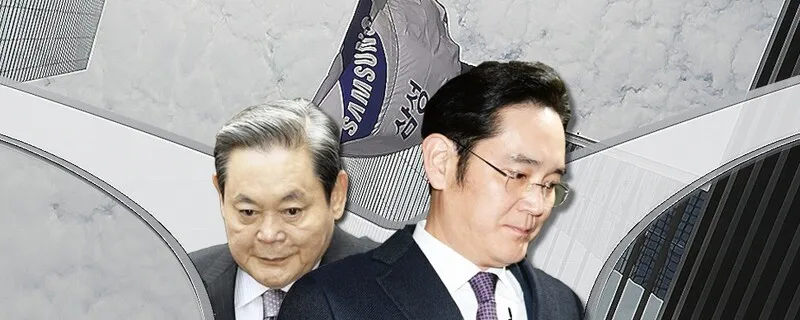
Everyone does it — from tycoons to politicians — yet churches are singled out, perhaps because they lack chaebol economic clout.
Intra-Religious Persecution: Christians Targeting Marginal Groups
Compounding the state's actions is persecution by mainstream Christian groups against the Unification Church and Shincheonji. Protestant organizations, including the United Christian Churches of Korea, have opposed these "marginal" faiths, accusing them of heresy and fueling deprogramming efforts — coercive conversions involving kidnapping and confinement.
The Unification Church reports over 4,000 deprogramming victims, often orchestrated by anti-cult Christian activists. Shincheonji, blamed for COVID-19 spread in 2020, faces raids and opposition from Protestants fearing its growth, with leaked chats revealing political influence concerns. This intra-faith hostility, amid a "religious liberty crisis," amplifies state crackdowns, turning separation into suppression.
Lee's Concerning Ties to Communist China: A Pro-CCP Lean Amid Geopolitical Tensions
Further complicating Lee's push for domestic control is his administration's warming relations with Communist China, raising alarms in Washington about South Korea's alignment in the U.S.-China rivalry. Just days ago, on January 5, 2026, President Lee met with Chinese President Xi Jinping in Beijing, marking his second summit with Xi in two months and the first state visit by a South Korean leader to China since 2019.

During the talks, Lee emphasized elevating Korea-China ties to a "new stage," citing shared history and the need to minimize misunderstandings, while Xi referenced recent Communist Party plenary sessions. Lee also met with Shanghai's Communist Party Secretary Chen Jining, seeking a "public sentiment reset" in bilateral relations.
Critics view these engagements as part of Lee's broader "pragmatic diplomacy," which aims to balance U.S. alliances with closer economic and political ties to Beijing, but many fear it masks a pro-CCP tilt that could undermine South Korea's security partnerships.
Lee's past comments, such as his 2023 "xie xie" (Mandarin for "thanks") remark dismissing involvement in Taiwan Strait tensions as none of Korea's business, have fueled accusations of pro-China leanings, with opponents warning it echoes subservience to Beijing.
U.S. analysts express concern that Lee's perceived pro-China image could complicate negotiations on troop deployments or nuclear cooperation, potentially weakening the U.S.-Korea alliance amid escalating tensions with North Korea and China.
In online forums and conservative circles, Lee's CCP engagements are lambasted as risking South Korea's sovereignty, with some drawing parallels to Hong Kong's subjugation.
This foreign policy shift, critics argue, dovetails with his domestic crackdowns, prioritizing alliances with authoritarian regimes over democratic principles inherited from U.S. influence.
Persecution or Protection? A Call for Realignment
President Lee's push frames the bill as upholding Article 20, but it risks misapplying separation by enabling state aggression against faiths — all while he maneuvers to blunt investigations into his own alleged misconduct and deepens ties with the CCP. In a multi-faith society, this could alienate Christians (30% of the population) and erode U.S.-inspired liberties. As an ally, South Korea's trajectory demands U.S. scrutiny to preserve true democracy over revenge.