

— Wisdom from Around the World, and the Question Humanity Must Face
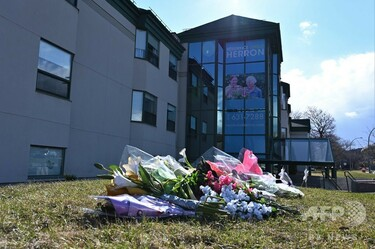
In the spring of 2020, the Canadian military was deployed to nursing homes in Quebec. What soldiers found inside were elderly residents who had not been bathed in weeks, beds crawling with insects, and people who had died with their cries for help unheard. This was one of the wealthiest nations on earth.
That same year, domestic violence surged worldwide under lockdown. The United Nations called it a "shadow pandemic." Behind closed doors, the most vulnerable were the first to become victims.
These were not isolated tragedies. They were structural neglect — the logical extension of everyday indifference.
The true nature of a society is measured by how it treats those in its most vulnerable positions.
Throughout human history, great leaders and thinkers have arrived at this same conclusion across every era and every border. And history has also recorded what happens to societies that ignore this truth.
Societies that discard the vulnerable invariably collapse from within.
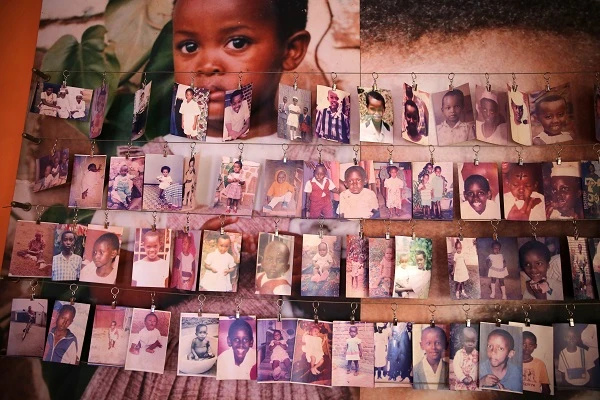
Nazi Germany began with the "euthanasia" of people with disabilities before descending into the Holocaust. In Rwanda, the systematic dehumanization of the Tutsi minority produced the massacre of 800,000 people in just 100 days.
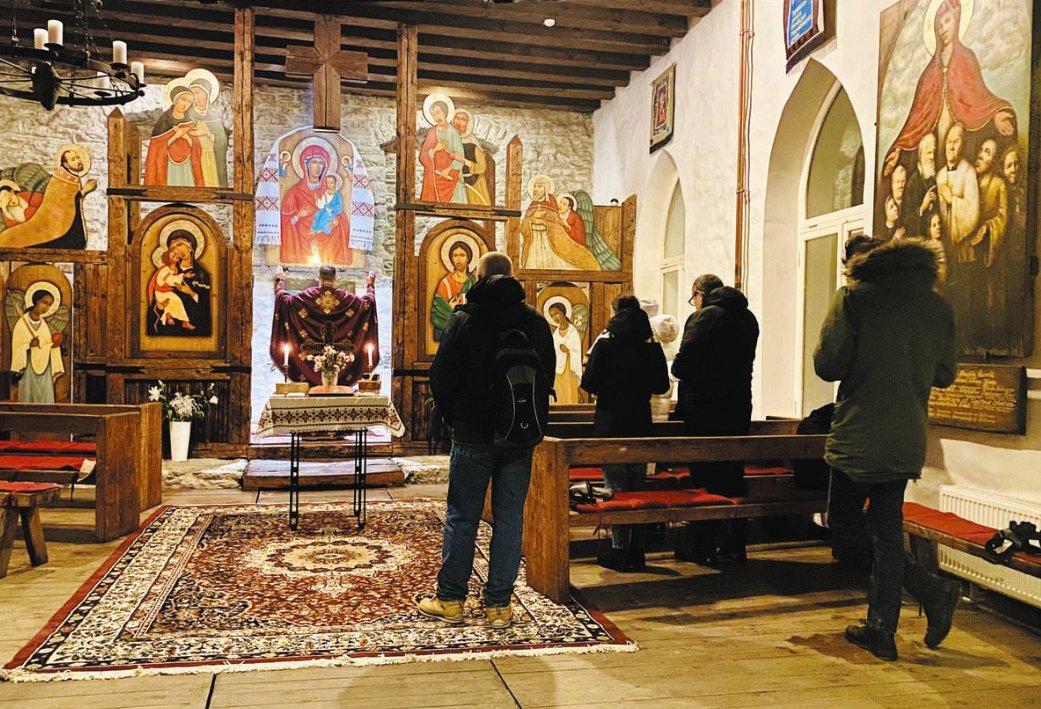
The Soviet Union suppressed religion and confined believers to psychiatric hospitals. In every case, the first victims were those who could not raise their voices. And in every case, the regime did not endure.
Violence against the vulnerable is a poison that corrodes an entire society. At first, it appears to be "someone else's problem." But the poison spreads silently, and eventually creates a society where anyone can become a victim.
So where does the world stand now?
The WHO reports that one in six people aged 60 and older worldwide has experienced some form of abuse. According to Pew Research Center, 59 out of 198 countries have "high" or "very high" levels of government restrictions on religion — the highest number since tracking began.
Religion-based harassment has been documented in 186 of 198 countries — a staggering 94%. UNHCR data shows that by the end of 2024, the number of forcibly displaced people worldwide reached 123.2 million — one out of every 67 people on earth has been driven from their home.
The World's Most Vulnerable — What the Numbers Reveal

"The most vulnerable" does not refer to the elderly alone. Religious minorities, persons with disabilities, ethnic minorities, children, people living in poverty — the term encompasses all who struggle to make their voices heard in any given society and era.
As the table above makes clear, their numbers are far from small. A significant share of the world's population is, in some form, placed in a position of vulnerability.
The quotes that follow are the voice of humanity's conscience in the face of these realities — and at the same time, a warning that ignoring them leads to the collapse of society itself.
I. "A Society's True Worth Is Revealed by How It Treats the Vulnerable" — One Truth, Countless Voices
"The true measure of any society can be found in how it treats its most vulnerable and helpless citizens." — Widely attributed to Mahatma Gandhi (though the original source is unverified; a strong alternative attribution points to Hubert H. Humphrey)
This may be the most quoted moral aphorism in the world. It appears in political speeches, on social media, in caregiving settings, and in United Nations documents.
What is fascinating is that there is no definitive record of Gandhi actually saying these words. But the fact that they have been shared globally for decades is proof that what is said carries far more power than who said it.
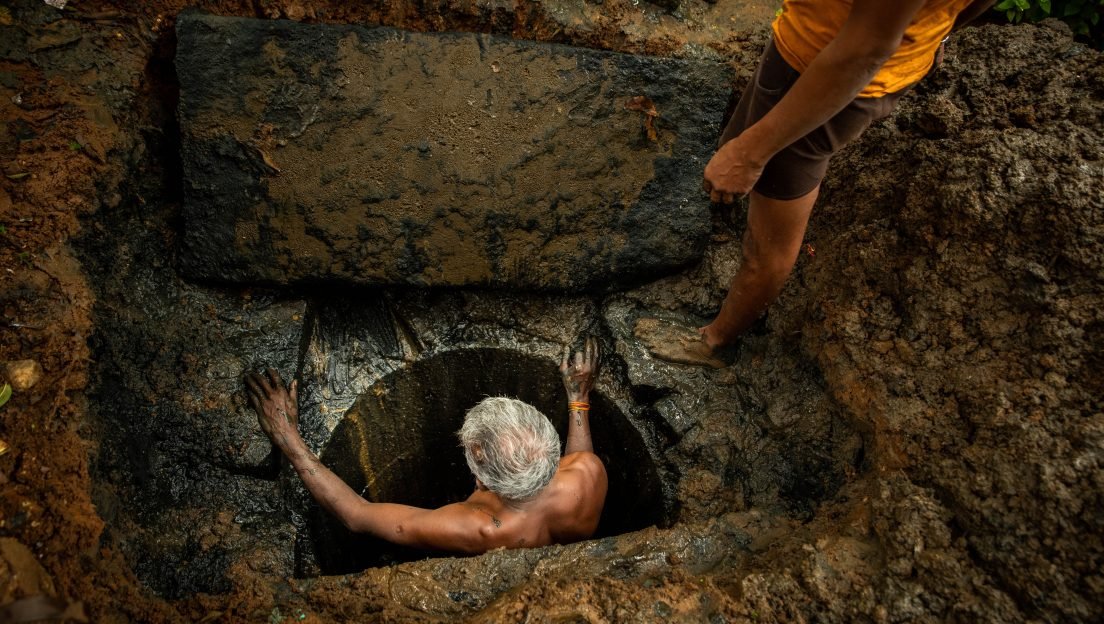
The phrase "most vulnerable members" casts a wide net. The Dalits born into the lowest tier of India's caste system. Christians hiding their faith in North Korea. African refugees drowning as they try to cross the Mediterranean. All are encompassed in these words.
Not GDP, not military might — the measure of a society is how its quietest members live. This standard can be applied to any nation, in any era.
Remarkably, this idea exists in an astonishing number of variations.
"The moral test of government is how that government treats those who are in the dawn of life, the children; those who are in the twilight of life, the elderly; and those who are in the shadows of life, the sick, the needy, and the handicapped." — Hubert H. Humphrey (November 1, 1977, Washington, D.C. — his final speech at the dedication of the Humphrey Building)

These words, delivered just two months before the death of the 38th Vice President of the United States, remain inscribed at the entrance of the Department of Health and Human Services building in Washington, D.C. With the poetic imagery of "dawn," "twilight," and "shadows," Humphrey mapped the stages of human life.
Notably, he divided vulnerability into three layers: newborn life, life nearing its end, and life lived in the "shadows" of illness and poverty — all equally within the scope of government responsibility.
"The test of a civilization is the way that it cares for its helpless members." — Pearl S. Buck (from her autobiography)
The Nobel laureate in literature, raised in China, chose the word "helpless" with great weight. Helplessness is not limited to physical frailty. A believer who faces imprisonment for professing faith is helpless. A child denied schooling because of a disability is helpless. A person isolated in a land where they cannot speak the language is helpless.
"The greatness of a nation can be judged by how it treats its weakest members." — Widely attributed to Gandhi or Thomas Jefferson
"The measure of a society is found in how it treats its weakest and most helpless citizens." — Widely attributed to Humphrey or Jimmy Carter
"The degree of civilization in a society can be judged by entering its prisons." — Widely attributed to Fyodor Dostoevsky
Gandhi, Jefferson, Humphrey, Carter, Buck, Dostoevsky — people from different eras and different continents arrived at nearly identical conclusions. Their phrasing differs subtly. One says "the most vulnerable," another "the helpless," Dostoevsky says "prisoners."
But the core is singular: the only true measure of a society's worth is how its quietest members live.
And by this measure, no country on earth can claim a passing grade. In the United States, one of the world's wealthiest nations, the estimated annual cost of financial exploitation of the elderly is $36.5 billion. Being an economic powerhouse does not mean protecting the vulnerable.
On the other hand, Costa Rica abolished its military and redirected that budget to education and healthcare. Bhutan adopted Gross National Happiness (GNH) as a national metric, prioritizing citizens' well-being over economic growth. Some nations are redefining the very meaning of greatness.
Before invoking sophisticated economic theory to judge whether a policy is right, we need only ask one question: what happens to the most vulnerable? Over 4.4 million people worldwide are stateless — excluded from education, healthcare, and legal protection. The UN Sustainable Development Goals' promise to "Leave No One Behind" is a beautiful slogan, but that promise remains unfulfilled.
II. "Cut the Roots, and the Future Withers" — The Mechanics of Exclusion and Indifference
"A society that does not value its older people denies its roots and endangers its future." — Nelson Mandela (official message for the International Year of Older Persons, 1998)
After 27 years of imprisonment, Mandela became South Africa's first Black president — a man who knew firsthand where a system that denies human dignity ultimately leads. Apartheid was, in essence, a system in which a society discards its own members.
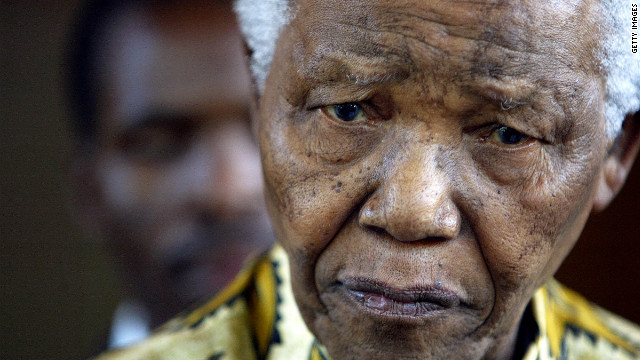
The expression "denies its roots" extends far beyond the elderly. Banning a minority's language, seizing Indigenous lands, suppressing religious traditions — all are acts of denying one's roots.
Mandela co-founded The Elders, an international body that channels the wisdom of senior leaders into conflict resolution and human rights advocacy. For him, vulnerability was not something to discard but a wellspring of societal wisdom.
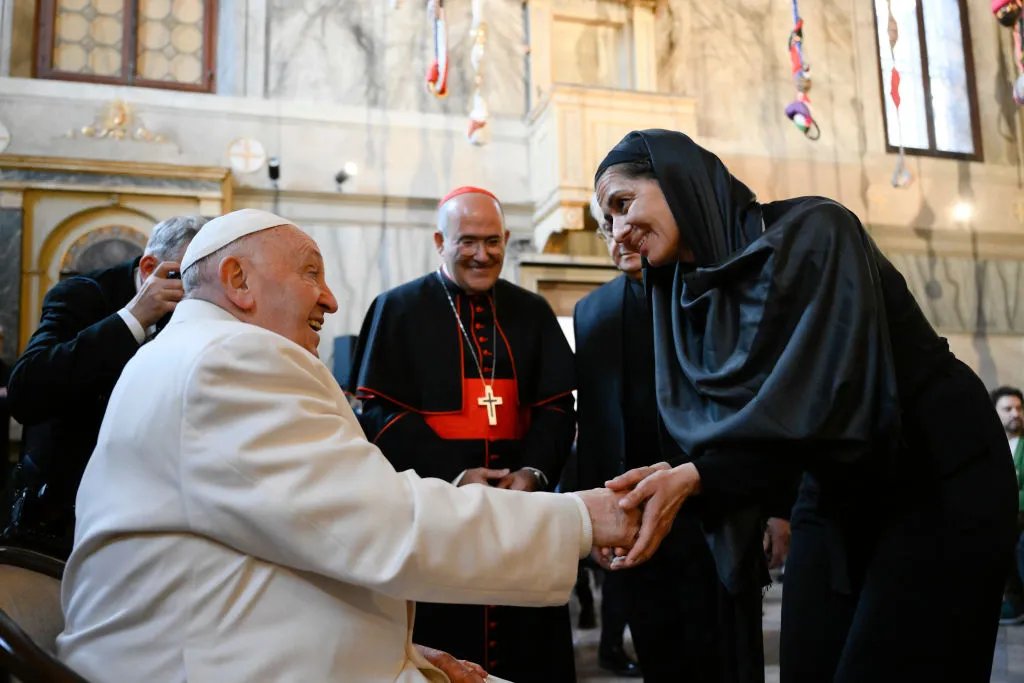
"The quality of a society, indeed of a civilization, can also be measured by how it treats its elderly and the place it gives them in community life." — Pope Francis
The heart of the Pope's repeated message lies in a single phrase: "the place it gives them." Care alone is not enough. The question is whether people can exist with dignity within their communities. The Pope's ongoing critique of "throwaway culture" describes a mechanism that excludes not only the elderly, but also persons with disabilities and religious minorities.
A society that measures human worth solely by efficiency and productivity will discard, one by one, those it deems "useless." Pope Francis has also repeatedly raised his voice for the Rohingya of Myanmar, the Uyghur Muslims, and persecuted Christians around the world. For him, "a place" is not about any one group. That a human being is recognized as a human being — that itself is a condition of civilization.
"The opposite of love is not hatred, it's indifference." — Elie Wiesel (Nobel Peace Prize laureate, Holocaust survivor)
Wiesel's words distill the warnings of Mandela and the Pope into their simplest form. The greatest mechanism of excluding the vulnerable is not hatred — it is indifference.
Canadian author Margaret Atwood, known for The Handmaid's Tale, has noted that "the way the elderly are treated is... distressing." What she has depicted throughout her dystopian fiction is precisely this structure. Women, religious dissenters, intellectuals — their rights are stripped away incrementally. It is not a sudden coup but a quiet complicity born of societal indifference.
And the cost of indifference is paid not only by the vulnerable, but by society as a whole. A society that tolerates elder abuse faces the collapse of its care systems and an explosion in healthcare costs. A society that excludes persons with disabilities loses an enormous pool of human potential.
A society that suppresses minority faiths and cultures kills its own creativity and diversity, eventually growing rigid and falling apart. "The problem of the vulnerable" ultimately becomes everyone's problem. The COVID-19 pandemic proved it. The WHO estimated that 82% of deaths were among those aged 60 and over, and the subsequent collapse of care systems impacted every generation.
III. "One Person's Actions Reflect the Character of a Society" — Personal Ethics in Everyday Life
"To care for those who once cared for us is one of the highest honors." — Tia Walker
While other quotes take "society" or "nation" as their subject, Walker's words are deeply personal. Caring for aging parents, giving back to grandparents — she calls it not a burden but an "honor." Around the world, the majority of family caregivers are women, and most of their labor goes unpaid. But without institutional support to sustain that honor, goodwill eventually gives way to exhaustion.
"The way we treat the elderly reflects who we truly are as people." — A modern proverb shared globally
Though not attributed to any specific figure, this saying — repeatedly shared on social media — has the power to pull the discourse on social systems back to individual ethics. Try replacing "the elderly" with any group in a position of vulnerability: "How we treat a parent with dementia reflects who we truly are." "How we treat a neighbor of a different faith reflects who we truly are." "How we treat a colleague with a disability..." The words change, but the truth remains the same.
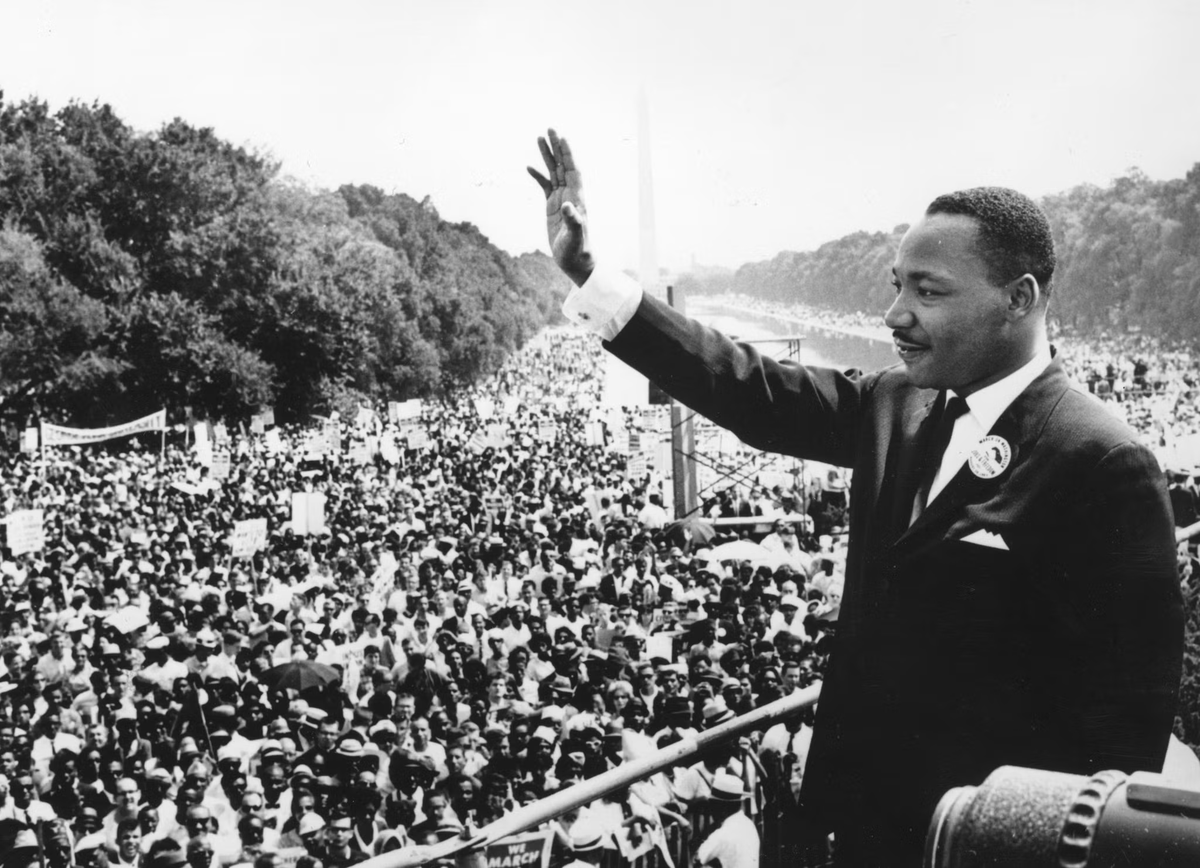
"Injustice anywhere is a threat to justice everywhere." — Martin Luther King Jr. ("Letter from Birmingham Jail," 1963)
King's words are directed at those who might think, "This has nothing to do with me." Injustice toward the vulnerable corrodes the character of everyone who looks the other way. There is no such thing as someone else's problem.
"Treat your elders as elders, and extend that respect to the elders of others; treat your young as young, and extend that care to the young of others." — Mencius (Mencius, King Hui of Liang, Part 1)
"Respect your own parents, and extend that respect to the parents of others; cherish your own children, and extend that care to the children of others." Written over 2,300 years ago, Mencius' words mark the ethical origin point of extending care from family to society.
In the Confucian cultures of East Asia, filial piety has long been held as a virtue, but Mencius refused to confine it to a private morality — he expanded it into a principle of social order.
It may be the work of politicians to move institutions and policies. But it is the unnamed acts of individuals that shape the character of a society, day by day.
A young person in an Istanbul market helping an elderly stranger carry their bags. A man on the Berlin U-Bahn offering his seat to a pregnant woman. A convenience store clerk in Tokyo patiently assisting a foreign customer who does not speak the language. None of these small acts appear in any statistic. Yet every one of them makes the true nature of a society visible in an instant.
Where the Quotes Converge — Whose Vulnerability Is It?
Line up these quotes and a pattern emerges: people from vastly different eras and cultures have arrived at a strikingly unified conclusion.
An Indian independence leader. An American vice president. A Roman Catholic pope. A South African revolutionary. A Nobel-winning novelist. A Canadian dystopian author. An American civil rights leader. A Chinese philosopher from 2,300 years ago. A Russian literary giant. A Holocaust survivor. They spoke in different languages to different audiences. But their core message was the same.
The true nature of a society is revealed in its attitude toward those in its most vulnerable positions.
And "the most vulnerable" is not a fixed category. In some societies, religious minorities are the most at risk. In others, the elderly are quietly discarded. In still others, persons with disabilities, Indigenous peoples, and migrant workers are rendered invisible. Vulnerability takes countless forms, and every society has its own blind spots.
By 2050, the global population aged 60 and over will reach 2.1 billion. The figures presented at the start of this article are projected not to improve, but to worsen.
Whether the words so widely attributed to Gandhi were truly his is, ultimately, beside the point. What matters is that people around the world hear those words and feel they are true — and continue to share them.
Why?
Because no matter how wealthy a society becomes, no matter how far technology advances, no matter how many laws are enacted, how it treats its most vulnerable is the one thing that cannot be faked. Numbers can be manipulated. Speeches can be polished. Laws can become hollow shells. But how those who cannot even raise their voices live in the margins of society — that, and that alone, is where a society's truth resides.
And you are the smallest unit capable of changing that truth.
Sources & References
Data & Statistics
Quote Verification
Note: Annual data (Pew, UNHCR, WHO) is updated regularly. Consult latest editions for current figures.