

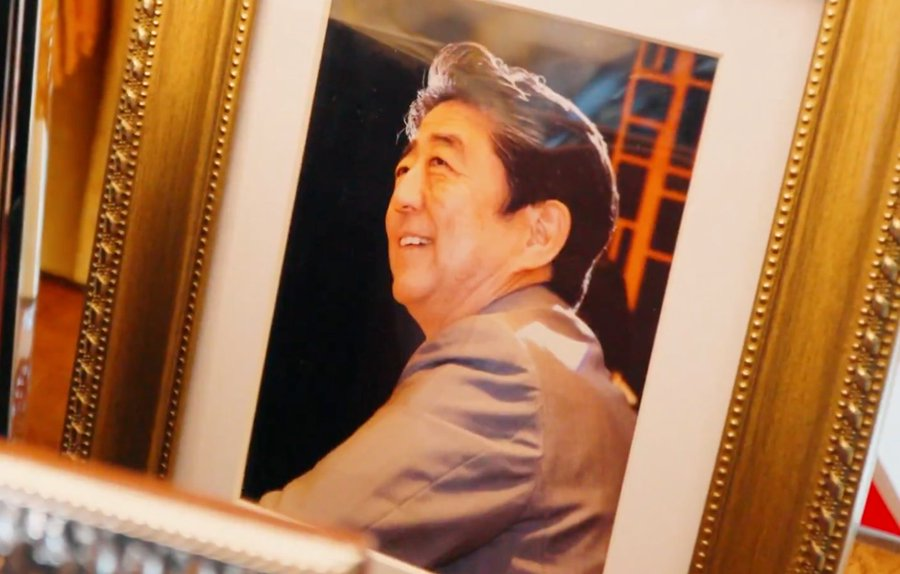
President Donald Trump @POTUS keeps a photograph of Shinzo Abe on his desk at the White House — among his family. According to Japanese politician Sanae Takaichi @takaichi_sanae, who recently visited the Oval Office, that photo is not a prop. It is personal.
Trump lost a friend on July 8, 2022. America lost one of its greatest allies. And the world lost a statesman who had stood, for decades, as the foremost democratic bulwark against communist China and North Korea in the Indo-Pacific.
But here is what the mainstream media — and Japan's left-wing press corps — have worked relentlessly to ensure President Trump and the world never properly understand: Shinzo Abe was not killed over a church. He was killed by a terrorist, radicalized by communist-aligned propaganda, who used a false narrative about religion as political cover for an act of ideological violence. And now, after the trial's conclusion and a landmark fact-checking report from one of Japan's most respected journalists, the full truth is finally on the record — even if the media refuses to print it.
Why This Matters Now
President Trump honors Abe's memory. He deserves to know the truth: it was communist-aligned terrorism — not a church — that killed his friend.
The Assassin: A Terrorist, Not a Victim
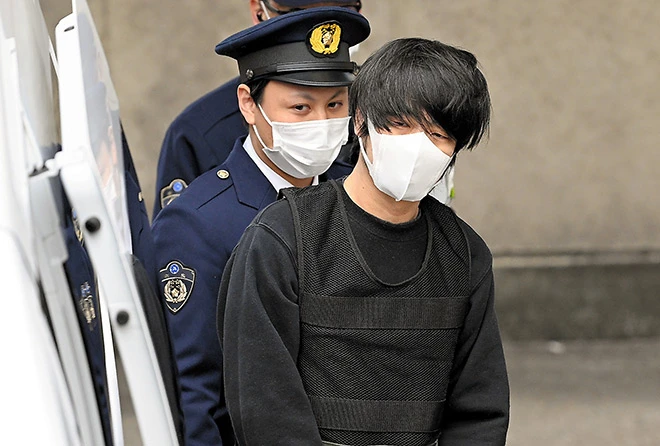
Tetsuya Yamagami, 41 years old at the time of the shooting, built homemade firearms for years, amassed personal debt exceeding ¥2 million doing so, and carefully planned a terrorist attack intended to cause maximum political and media damage to a religious organization and its political allies. He was unemployed, desperate, and — by his own admission at trial — felt "cornered" and needed to "cause an incident."
That is the profile of a terrorist. Not a grieving son. Not a victim of religious abuse. A man who coldly executed a sitting statesman in broad daylight to achieve a political objective — and who celebrated when that objective was partially achieved.
"He welcomed the subsequent dissolution request against the Church, calling it 'the proper outcome.' He admitted that he thought and hoped that the media coverage of the assassination would turn against the Unification Church."— Hitofumi Yanai, Japan's leading fact-checker, summarizing Yamagami's trial testimony. Yanai attended 12 of 14 hearings.
The Nara District Court agreed. In its January 2026 sentencing, presiding Judge Shinichi Tanaka sentenced Yamagami to life in prison with no leniency — and ruled explicitly that the Family Federation's influence on Yamagami's upbringing was only a "remote cause" of the crime. The court placed full moral responsibility on the killer himself.
"A homemade gun may have killed Abe — but a manufactured moral panic pulled the trigger."
Lie #1: "The Church Destroyed His Family Financially"
The Communists Claim The Family Federation drove Yamagami's mother into bankruptcy through predatory donation demands, ruining the family and making Tetsuya's suffering inevitable.
The Documented Fact Japan's top fact-checker Hitofumi Yanai, after attending the trial in person, confirmed that Yamagami's family problems predated his mother joining the church. The family patriarch — Yamagami's grandfather — was the volatile, destructive figure, "sometimes brandishing knives." The family was financially supported by pensions and company income. Yamagami himself attended one of Nara's top three public high schools. His early years, per trial testimony, were "very smooth" until 1994.
Furthermore, even the mother's donations — while substantial — were made entirely voluntarily. Mrs. Yamagami remained a committed church member through and after the trial, stating repeatedly that her contributions were of her own free will. She declared bankruptcy in 2002. The assassination happened twenty years later. If financial ruin was the true motive, why did Tetsuya wait two decades?
Lie #2: "The Church Stole His Money and Never Gave It Back"
The Communist Claim The Family Federation took the family's fortune and provided no restitution — leaving Tetsuya with nothing and no recourse.
The Documented Fact On May 22, 2009, the local believers' group of the Family Federation signed a legal settlement requiring payment of 50 million yen (approximately $343,000) to the Yamagami family. Tetsuya Yamagami himself signed this agreement, alongside his mother, sister, and brother. The settlement explicitly stated that once obligations were fulfilled, no family member would pursue any further civil or criminal claims against the church. Payments were completed over the following years. The church paid. Tetsuya signed. He knew.
Key Document
The 2009 settlement — signed by Tetsuya Yamagami himself — required the Family Federation's local believers' group to pay 50 million yen to the family. Every party confirmed they had no further rights or obligations once fulfilled. This document was systematically ignored by virtually every major media outlet covering the assassination and trial.
This is not a minor footnote. It is the central fact that dismantles the entire left-wing narrative. The man who shot Shinzo Abe had already, thirteen years earlier, accepted a legal financial settlement from the organization he claimed destroyed his life — and signed away any further claims. The "impoverished victim of a predatory cult" had been compensated. He simply chose, years later, to become a terrorist anyway.
Lie #3: "His Suffering Was the Product of the Church, Not Mental Illness"
The Communist Claim Yamagami's psychological deterioration — his suicide attempt, his brother's suicide, his decade of despair — were the direct result of the church's destruction of his family.
The Documented Fact Yamagami's father took his own life before his mother ever joined the Family Federation. His grandfather was a menacing, unstable figure who threatened the children with knives. Mental illness and family tragedy preceded the church's involvement by years. His brother's 2015 suicide was connected to personal illness and financial pressures unrelated to the church. Yamagami's own suicide attempt in his mid-20s came years after the 2002 bankruptcy — and years before he began actively planning violence.
The portrait of Yamagami as a "second-generation religious abuse victim" — the framework pushed relentlessly by anti-cult lawyers and left-wing journalists — was constructed by selectively omitting a family history of mental illness and tragedy that existed entirely independently of religion. His story is one of generational trauma, not theological manipulation.
Lie #4: "He Was an Ordinary Man Pushed to the Breaking Point"
The Communist Claim Yamagami was a normal person with legitimate grievances who reached a tragic breaking point. His choice of Abe was the logical culmination of years of suffering.
The Documented Fact Yamagami actually admired Shinzo Abe. He specifically praised Abe's Korea policy in trial testimony. He denied personal anger toward Abe. He even voted for Senator Kei Sato — the very politician Abe was campaigning for when he was shot. Yamagami did not decide to target Abe until five days before the assassination. His original targets were Korean church leaders — and when they were unavailable, he pivoted to Abe within a week. This was not the culmination of years of rage. It was a desperate, improvised act of terrorism by a man drowning in debt, unemployed, and looking to maximize political impact for an extremist cause.
The Real Culprit: Eight Suzuki and Japan's Anti-Cult Terror Network

If one man symbolizes the ideological ecosystem that radicalized Tetsuya Yamagami, it is journalist Eight Suzuki — the self-described anti-cult crusader whose website and screeds formed the primary source of Yamagami's information about Abe's ties to the Family Federation. This is not speculation. It was confirmed at trial.
"His information about Abe's ties to the Unification Church came almost entirely from the anti-cult journalist Eight Suzuki's website."— Hitofumi Yanai, fact-checker, citing Yamagami's own trial testimony
Suzuki's response to the assassination was not condemnation — it was implicit justification. He publicly suggested the murder "was unexpected but made sense." He compared Abe to a school principal who "praised a bully," casting the assassin as a bullied child seeking justice. He argued that Abe's widow, Akie, should consider offering "something akin to an apology" to her husband's killer.
Suzuki was welcomed by Japan's left-wing political parties — including the Japanese Communist Party — as a leading voice in the campaign to dissolve the Family Federation. His arguments were embraced by anti-LDP media and used as the intellectual foundation for Japan's unprecedented move to strip a religious organization of its legal status.
In December 2025, a Japanese court found Eight Suzuki guilty of defamation — ruling that his claims about Abe receiving ¥50 million from the church were false and fabricated. It was the first significant legal victory for the Family Federation since the assassination unleashed a wave of institutional persecution against the organization.
Canadian scholar Adam Lyons has traced Yamagami's online interactions in the months before the shooting. The picture that emerges is not of a man acting on personal grief — it is of a man deliberately marinating in a carefully curated ecosystem of anti-cult hate speech, legal advocacy, and ideological demonization aimed at the Family Federation and its conservative political allies.
"The assassin wanted to damage the Unification Church by ensuring his motive was understood. The media, by distorting his life story, helped Yamagami achieve his aim."
The Verdict: What the World Must Understand
Shinzo Abe was killed by a politically motivated terrorist who was radicalized by left-wing, communist-aligned propaganda. The family's financial grievances against the church had been legally settled — with Yamagami's own signature — thirteen years before the shooting.
The "religious abuse" narrative omits a multi-generational history of mental illness and family dysfunction that predated the church entirely. The decision to target Abe was made five days before the crime, not over a lifetime of religious trauma. And the man Yamagami relied on most to justify his crime has since been found guilty of defamation in a Japanese court.
What the left-wing press accomplished — with Eight Suzuki as their spearhead — was not journalism. It was a sustained campaign of anti-religious hate speech targeting a minority religious organization and its political allies, conducted in coordination with the Japanese Communist Party and the Constitutional Democratic Party of Japan. The result was the assassination of a world statesman, the unjust dissolution order against a faith community, and a global smear campaign that has made the Family Federation synonymous in the public mind with the very violence perpetrated against it.
President Trump keeps Shinzo Abe's photograph on his desk. He should know the full truth: his friend was killed not because of a church, but because of communist-aligned terrorism, enabled by a media machine that turned a murderer into a martyr and a religious community into a scapegoat. The real targets of July 8, 2022 were conservatism, anti-communism, and the U.S.-Japan alliance itself.
That is the story of who killed Shinzo Abe.
Sources
Primary Fact-Check & Trial Analysis
Eight Suzuki — Defamation & Radicalization
Trial Coverage
Dissolution & Political Fallout