
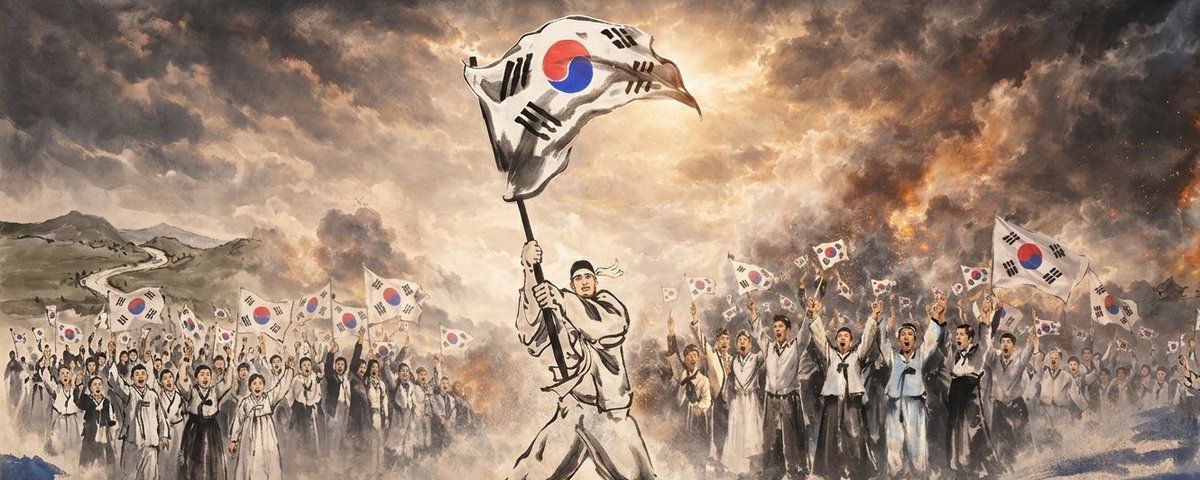
A country that tried to bury it. A faith that only grew deeper. Korea's Christian history offers an answer no government expected.
It Started With Blood
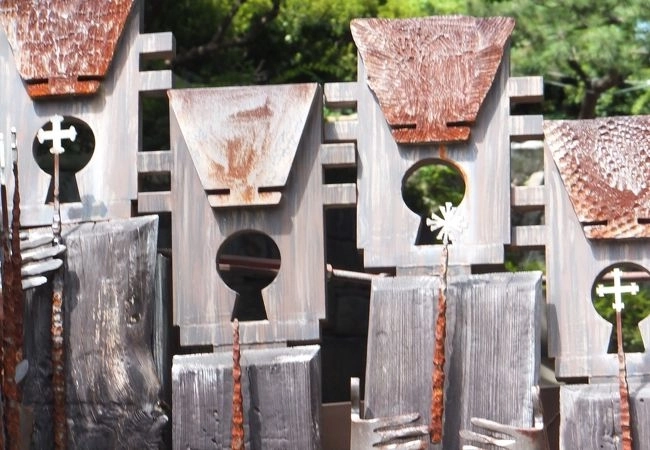
Korea did not welcome Christianity.
It tried to bury it.
In 1784, a Korean diplomat returned from Beijing carrying a new faith and founded the peninsula's first Christian prayer house. This was not a religion imported by missionaries. It was a Catholic faith that Korean intellectuals had sought out for themselves through Chinese texts. The Joseon court responded with systematic persecution.
Three major crackdowns swept the peninsula — in 1801, 1839, and 1866 — leaving more than 8,000 dead. Among them was Kim Dae-gun, Korea's first Catholic priest. He had studied theology in Macau, risked his life to return home — and was executed in 1846 at the age of twenty-five.
The faith did not die.
It only went deeper.
The Jerusalem of the East
In the 1880s, Protestant missionaries arrived. The ground had already been broken by Catholic martyrs. New seed fell into prepared soil.
The missionaries translated the Bible into Hangul and built schools and hospitals. Women gained the right to education. Pyongyang became so dense with churches it earned a name: the Jerusalem of the East.
The turning point came in 1907. At Jangdaehyeon Church in Pyongyang, pastor Kil Sun-ju stood to preach and something broke open in the room. People rose to their feet, confessing sins aloud, weeping. The experience spread by word of mouth, repeating itself in church after church, then across the entire country. Kil Sun-ju would later be called the Father of the Korean Church.
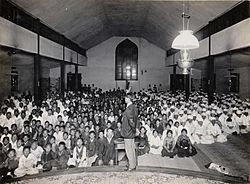
The faith was no longer foreign.
It had become Korean.
Faith as a Weapon

On March 1, 1919, independence declarations were read aloud simultaneously across every province of Korea — a nation fighting for its freedom. The movement was organized largely through Christian networks. Of the thirty-three signatories of the Declaration of Independence, sixteen were Christians — in a country where Christians were less than two percent of the population. Kil Sun-ju was among them.
The thinker Ham Seok-heon also lived through this era. Shaped by Quaker influences, he preached resistance through faith and conscience. His words were read long after his time.
When Japan later demanded that Koreans bow at Shinto shrines and worship the Emperor, many Christians refused. The reason was theological and simple: worship belongs to God alone. Those who refused were imprisoned.
To many Koreans watching, the cross and the Korean flag had become the same symbol.
The Anthem That Begins With God

Korea's national anthem traces directly to this era.
The lyrics of the Aegukga, believed to have been written by Yun Chi-ho — a devout Christian and independence activist — first appeared in print in 1896.
The opening line is a prayer: "Until the day when the waters of the East Sea run dry and Baekdusan Mountain is worn away, may God protect our nation."
The word for God — Hananim — is the same word used in the Korean Bible.
Not metaphor. Petition.
In 1936, composer Ahn Eak-tai wrote a new melody for the anthem while living in Spain. When the Republic of Korea was founded on August 15, 1948, that anthem — born from the faith of independence-era Christians — became the official song of the new state.
A Nation Opened With Prayer

On May 31, 1948, the first session of Korea's Constituent Assembly came to order.
It began with prayer.
The man who led it was Yi Yun-young — a Methodist pastor and independence activist who had participated in the March First Movement of 1919. Elected to the new assembly, he stood before the founders of a republic and entrusted the nation's path to God.
Of the 190 assemblymen, 38 were Christians.The first president, Syngman Rhee, was a Methodist who had found his faith in a prison cell before the Japanese annexation. The Republic of Korea was not founded as a theocracy.
But it was opened, unmistakably, by a people who knew where they had come from.
Refugees Who Carried Their Faith South

In 1950, the Korean War began.
North Korea's communist government had treated religion as an enemy from its earliest days.
The churches of Pyongyang — once the Jerusalem of the East — were closed. Pastors were executed or sent to labor camps. For those who wanted to keep their faith, there was only one direction to go.
They crossed south with nothing.
Houses, possessions, and hometowns were all left behind in the north.
But they did not let go of their faith.
In refugee cities across the south, northern pastors rebuilt churches in ruins.
Tent services became buildings. Buildings became megachurches. The desperate prayers of people who had lost everything took root as a culture in postwar Korean Christianity — fervent, urgent, and deep.
A Faith Rooted in Every Layer of Society
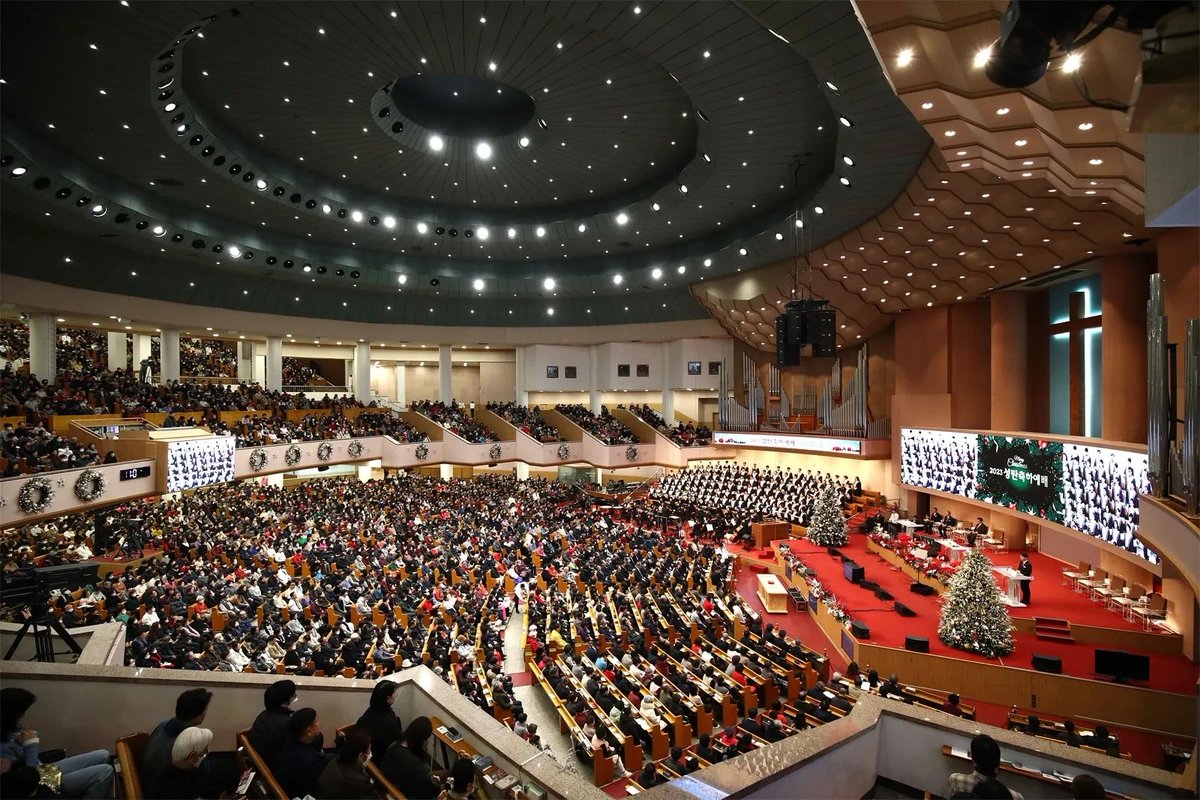
Through war, dictatorship, and democratization, the Korean church kept growing.
By 2000, more than a hundred members of the National Assembly were Christians. Six of the world's ten largest churches were in South Korea. Yoido Full Gospel Church, started under a single tent in 1958, became the largest congregation on earth.
The faith had taken root in every layer of society.
2025 to 2026: A New Kind of Persecution
When former President Yoon Suk Yeol's declaration of martial law shook the country in December 2024, the aftershocks reached the church.
After President Lee Jae-myung's government took office in 2025, conservative Christian leaders found themselves targeted one after another. Raids. Investigations. Arrests.
Rev. Son Hyun-bo, senior pastor of Segero Church in Busan, was arrested for allegedly interviewing a political candidate during a church service — charged with illegal electioneering. His family called it ministry. Son spent five months in detention before his release in February 2026, publicly thanking Secretary of State Rubio and the international community for their attention to his case.
The case of Dr. Hak Ja Han Moon, leader of the Family Federation for World Peace and Unification, is a serious human rights concern of its own. At 83 years old, she was detained shortly after surgery. With deteriorating health and failing eyesight, she remained in custody for approximately six months. She is currently hospitalized for a month of medical recovery.

One legal expert stated plainly: "In post-democratization Korea, there have never been raids on churches, never been arrests of pastors. This is without precedent."
Rising Up, Like the Independence Movement

On April 1, 2026, more than 7,000 people gathered in a large rally opposing proposed legislation that would allow the government to dissolve religious organizations.
Just as ordinary people took to the streets in the March First Independence Movement, Koreans are once again raising their voices. The government, meanwhile, is moving to strengthen its legal tools for controlling religious bodies.
A state that tries to silence those who stand up for their faith. The pattern is one hundred years old.
The Roots Are Too Deep
Korean Christianity has survived beheadings, an era of struggle for independence, war, and decades of dictatorship.
It is still here.
The boundary between faith and state power is being tested again. But every time Korean Christianity has met a wall, it has grown deeper roots.
Across the DMZ, in what was once called the Jerusalem of the East, Christians are still sent to labor camps and the name of God is still forbidden to speak.
History has always stood with those who raised their voice — not those who stayed silent.
Sources
Started With Blood
The Jerusalem of the East
Faith as a Weapon
The National Anthem
A Nation Opened With Prayer
2025 to 2026