
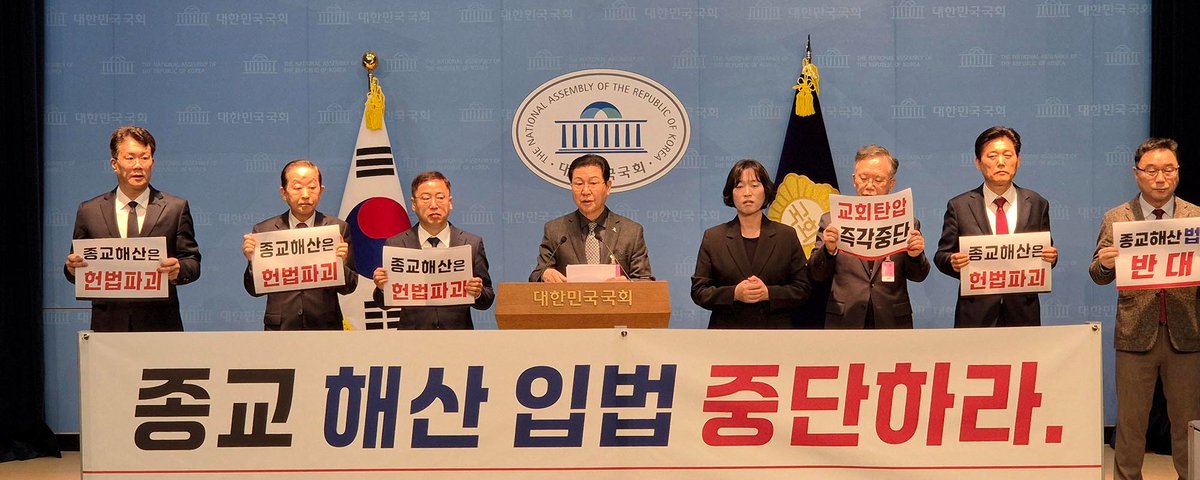
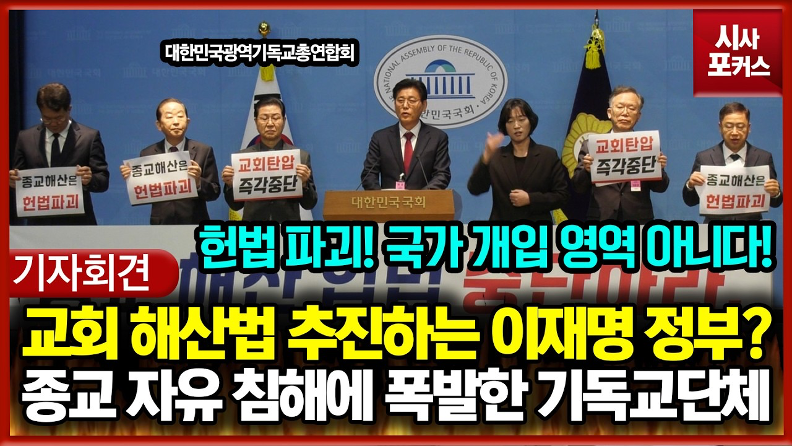
On March 19, 2026, a coalition of South Korea's most prominent Christian leaders held an emergency press conference at the National Assembly Press Center. One by one, pastors from across the country stepped to the podium and delivered a message that would have been unthinkable in a modern democracy: their government is pursuing a law that mirrors the religious persecution playbooks of communist regimes.
The target is Bill No. 2215932 — a proposed amendment to the Civil Code, introduced by Representative Choi Hyuk-jin on January 9, 2026, that would empower the government to dissolve religious organizations, conduct warrantless church inspections, and confiscate all religious property for the national treasury. While the bill claims to target the Unification Church and Shincheonji, the pastors at the podium warned the language is so broad it could be turned against any church in the nation.
The full press conference was broadcast by 시사포커스TV (SisaFocus TV). What follows are the key statements from each speaker — translated from the original Korean — with the context that makes their alarm so urgent.
Rev. Jeong Young-jin (정영진 목사)
Representative Chairman, Korea Wide Christian Federation (대광기총) | Former President, Busan Christian Alliance

Rev. Jeong opened the press conference with the statement that would define the entire event:
"Not long ago, a church closure law — one that exists in no other country in the world — was introduced in our nation. To be more precise: communist countries have many laws similar to church closure laws, but among free democracies, only our country has one."
He drew a direct line between the bill's authors and history's most notorious dictators:
"These kinds of laws are historically created by people like Hitler, Stalin, and Kim Il-sung."
Rev. Jeong warned that the law's consequences would extend far beyond its stated targets. Using a biblical parable, he compared the bill's architects to the thornbush that declared itself king — warning that those who shelter under its authority will inevitably be pierced by its thorns.
"If the church closure law is enacted and enforced, several churches will certainly be shut down. But remember this... Cain killed his brother Abel, but that was not the end. The earth opened its mouth to receive Abel's blood, and Cain was cursed upon the earth."
His message to the lawmakers was stark:
"The church closure law does not block the church — it blocks God. The anti-discrimination law destroys individuals, families, and society. We will not be silent until these evil laws are abolished."
Rev. Lee Gu-il (이구일 목사)
President, Chungnam Christian Federation (충남기독교총연합회) | Seosan First Methodist Church (서산제일감리교회)
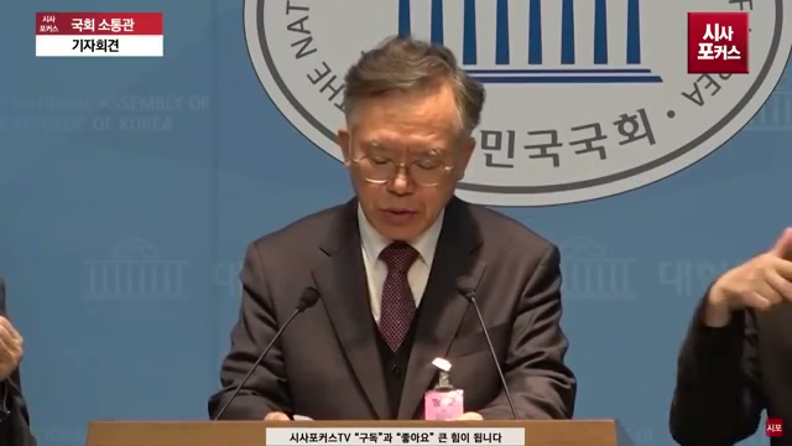
Rev. Lee delivered the most systematic legal critique of the bill, breaking his opposition into three core arguments:
First — the end of religious freedom:
"The moment the state gains the authority to dissolve religious organizations, religious freedom is effectively over. It means the state will decide which religions are allowed to exist and which faith communities may continue. From that moment, religion is no longer a free community — it becomes something whose existence is determined by the judgment of those in power."
Second — the state cannot judge heresy:
"The question of heresy is not for the state to decide. Heresy is a matter of theology and doctrine — it must be judged within the church community. The moment the state begins to judge heresy, it gains the power to determine what is right and wrong in matters of faith. That is not the starting point of a free nation — it is the starting point of a faith-control state."
Third — the blade will turn:
"Today, it may target a specific religion. But tomorrow, it could be a church that criticizes government policy. The day after, it could be a religious community that speaks out on social issues. This is the greatest danger the moment state power holds the authority to dissolve religions."
He concluded with a declaration that drew the battle lines:
"Separation of church and state is not a principle for controlling religion — it is a principle of freedom that prevents state power from interfering with religion. If the government and political establishment proceed with this bill, the Chungnam Christian Federation, together with the Korea Wide Christian Federation and churches across the nation, will stand against it to the end to protect the religious freedom guaranteed by the Constitution. We will not retreat. We will not be silent. Religious freedom is not subject to negotiation."
Prof. Kim Jong-geol (김종걸 교수)
Special Professor, Korean Baptist Theological University | Advisor to Korea Wide Christian Federation
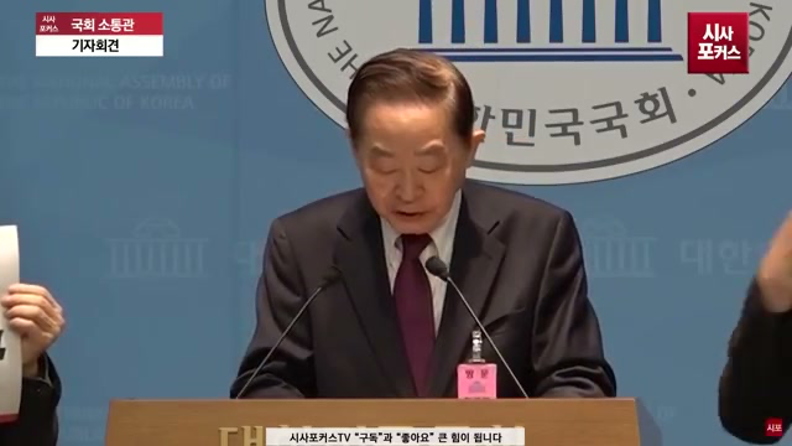
Prof. Kim shifted focus to the companion legislation — the Anti-Discrimination Bill reintroduced by Progressive Party lawmaker Son Sol — which he argued is part of the same coordinated assault on religious institutions:
"The Anti-Discrimination Bill contains extremely dangerous provisions. In current Korean society, there are many vulnerable minorities who need more urgent protection and support than sexual minorities. Yet this bill prioritizes a group whose identity has not even been clearly established."
He warned that passage of the bill would make churches that teach traditional doctrine into criminal organizations:
"If the Anti-Discrimination Bill passes, Korean churches and Christians who oppose same-sex marriage will be reduced to abnormal groups. The church's teachings will be treated as anti-human-rights hate speech. This will ultimately spread anti-Christian sentiment throughout our society."
Prof. Kim connected both bills as a two-pronged attack: one to silence Christian teaching, the other to shut down Christian institutions.
Rev. Shim Ha-bo (심하보 목사) — The Coalition's Formal Declaration
General Moderator, Seoul Christian Council | Reading the official statement of the Korea Wide Christian Federation
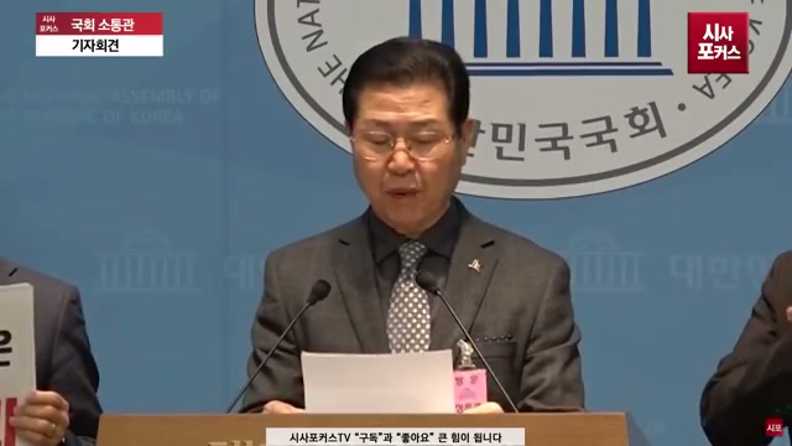
Rev. Shim read the coalition's official statement — a point-by-point indictment of Bill No. 2215932. The statement named the bill directly: "Civil Code Amendment Bill, Bill No. 15932, introduced by Representative Choi Hyuk-jin" — and called it an "anti-religious, unconstitutional" act that the federation would resist "with the resolve of martyrs."
On warrantless inspections:
"The amended Article 38-2 allows authorities to enter churches without a warrant, inspect ledgers, and investigate personnel based merely on 'reasonable grounds to suspect' violations. This is a direct violation of the constitutional principle of warrant requirements. It means government officials infiltrating worship services to monitor sermons and surveil congregants' activities — the construction of a religious surveillance state. We define this as a modern-day religious inquisition."
On property confiscation:
"The amended Article 80 explicitly states that the assets of religious corporations whose permits are revoked shall be transferred to the national treasury. Church property is formed from sacred offerings given to God — voluntary donations that constitute private property. The state's plan to forcibly confiscate this is a violation of Article 23 of the Constitution protecting property rights, and its malicious intent to uproot the church is self-evident."
On the President's role:
"President Lee Jae-myung, through his press conference, labeled religious political participation as 'rebellion' and spoke of enhanced investigations and sanctions against Protestant Christianity. When the head of the executive branch criminalizes a specific religion and presents investigations as policy guidelines, this is a serious threat to the principles of separation of powers and religious freedom."
The statement concluded with an ultimatum:
"If our legitimate demands are not accepted, this federation — together with 60,000 churches and 10 million believers across the nation — will wage a fierce resistance movement that does not shrink from pursuing the fall of the regime. We solemnly warn you."
The Communist Precedent: Why Their Alarm Is Justified
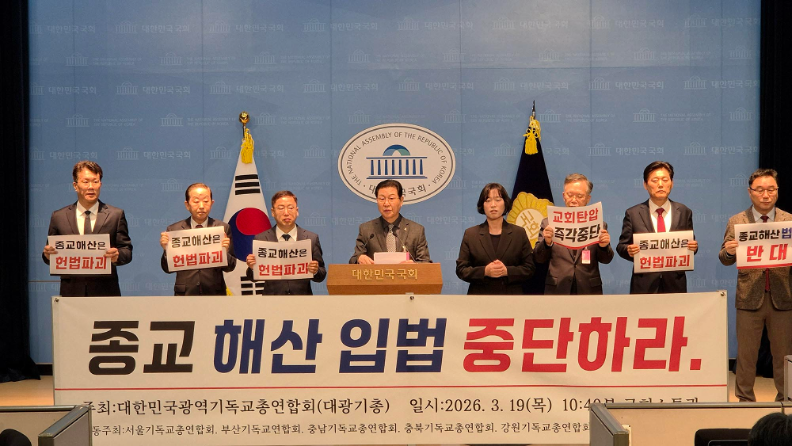
When Rev. Jeong said "this law exists only in communist nations," he was stating a historical fact. Every major provision of Bill No. 2215932 has a direct precedent in communist legislation:
Warrantless Church Inspections
Soviet Union (1918): Lenin's Decree on Separation of Church from State required religious groups to "admit without restriction persons authorized by the Soviet to inspect and check the property" — no warrant, no advance notice. The South Korean bill's Article 38-2 uses nearly identical language.
China (2018): The Regulations on Religious Affairs expanded inspection authority to multiple government departments — public security, state security, urban construction — all without warrant requirements. Beijing's Zion Church (10,000 members) was banned and its property confiscated after refusing to install government surveillance cameras.
Dissolution for "Political Activity"
Cuba (2015): The government declared 2,000 churches illegal in a single stroke, ordering 100 demolished for "counterrevolutionary propaganda" — the exact equivalent of the South Korean bill's "political activity" trigger. Methodist and Baptist properties were expropriated.
North Korea (1946): The state created the Korean Christian Federation as the sole legal representative of Christianity. All Christians were required to join or face accusations of disloyalty. Church leaders who refused were arrested, imprisoned, or executed. Pyongyang — once called "the Jerusalem of the East" with over 2,000 churches — was left with virtually none.
Total Property Confiscation to the State
Soviet Union (1918): "All property in Russia now owned by churches and religious organizations is henceforth the property of the people." In 1922, 4.5 million gold roubles of church valuables were seized under the pretext of famine relief — only 1 million actually went to the starving. By 1939, only 500 of 54,000 churches remained open.
Vietnam (1975): After the communist victory, all religious properties in the South were confiscated. 90% of Buddhist pagodas were transferred to a compliant state-created organization. Only 5-10% were ever returned. 200 Catholic schools were expropriated, Protestant seminaries seized, hundreds of churches destroyed.
China (2018): Pastor Wang Yi of Early Rain Covenant Church in Chengdu was arrested with 100+ members in a night raid. Church outlawed, schools closed, all property confiscated. Wang Yi sentenced to 9 years. In Xinjiang, approximately 16,000 mosques have been damaged or destroyed.
The Five-Step Pattern
Across every communist regime, the mechanism is identical:
1. Require registration
2. Authorize warrantless inspections
3. Define normal religious activity as illegal
4. Dissolve the organization
5. Transfer all assets to the state
Bill No. 2215932 contains every single one of these elements.
The World Is Watching
The international community has already responded. CAP-LC, an ECOSOC-accredited NGO, filed a written statement with the UN Human Rights Council in Geneva on January 19, 2026, denouncing the religious liberty crisis in South Korea. Bitter Winter, the leading international religious freedom publication, published detailed analyses calling the proposed law comparable to "the Chinese model" of religious control. The Daily Caller ran its coverage under the headline: "A Holy War Declared: The Grave Threat to South Korea's Constitutional Liberty."
Legal scholars have noted the bill violates the International Covenant on Civil and Political Rights (ICCPR), to which South Korea is a signatory, by failing every one of Article 18's requirements for restricting religious freedom: precision, necessity, legitimate aim, and proportionality.
What Comes Next
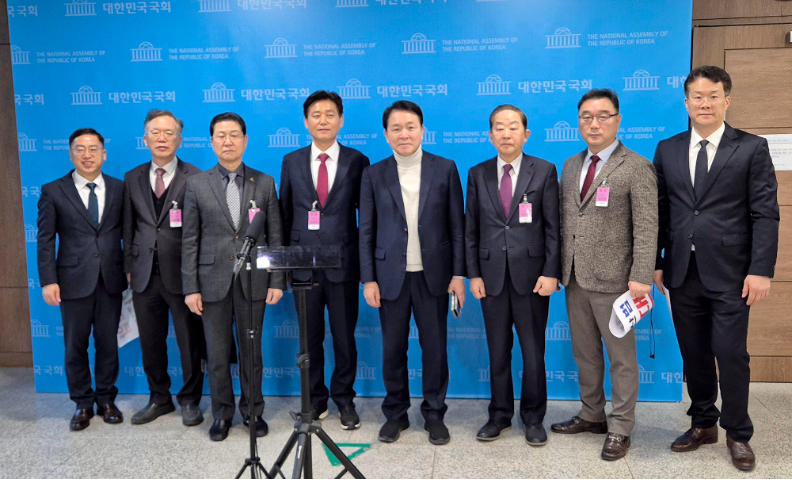
The Korea Wide Christian Federation has drawn its line. Constitutional lawsuits are being prepared. Mass mobilization has been pledged. The pastors who stood at that podium on March 19 were not making threats — they were making promises.
As Rev. Jeong Young-jin told the assembled press:
"The church closure law does not block the church — it blocks God."
And as Rev. Lee Gu-il declared:
"We will not retreat. We will not be silent. Religious freedom is not subject to negotiation — it is the foundation of the Constitution of the Republic of Korea."
Sources
· 시사포커스TV: "교회 해산법 추진하는 이재명 정부?... 선 넘는 종교 자유 침해에 폭발한 기독교단체" (YouTube, March 19, 2026) — Primary source video with full press conference
· Christian Today Korea: "대광기총 '교회폐쇄법, 교회 아닌 하나님 막아서는 일'" (March 19, 2026)
· Christian Today Korea: "이재명 정부, 결국 교회 향해 칼 빼드나?" (December 2025)
· Bitter Winter: "How to Kill a Religion — South Korea's Proposed Church Dissolution Act" (January 2026)
· Bitter Winter: "South Korea — A Law to Dissolve Churches at Will" (February 2026)
· Bitter Winter: "Religious Liberty Crisis in South Korea Denounced at the United Nations" (January 2026)
· The Daily Caller: "A Holy War Declared: The Grave Threat to South Korea's Constitutional Liberty" (January 2026)
· Korean Christian Leaders Conference (KCLC): Formal Statement on Bill No. 2215932 (February 5, 2026)
· CAP-LC: Written Statement to UN Human Rights Council, Geneva (January 19, 2026)
· Soviet Decree on Separation of Church from State (January 20, 1918) — Marxists.org
· China: Regulations on Religious Affairs (2018) — ChinaLawTranslate.com
· U.S. Commission on International Religious Freedom (USCIRF): Country reports on China, North Korea, Vietnam, Cuba
· Australian Strategic Policy Institute (ASPI): "Cultural Erasure" — Xinjiang mosque demolitions satellite analysis