
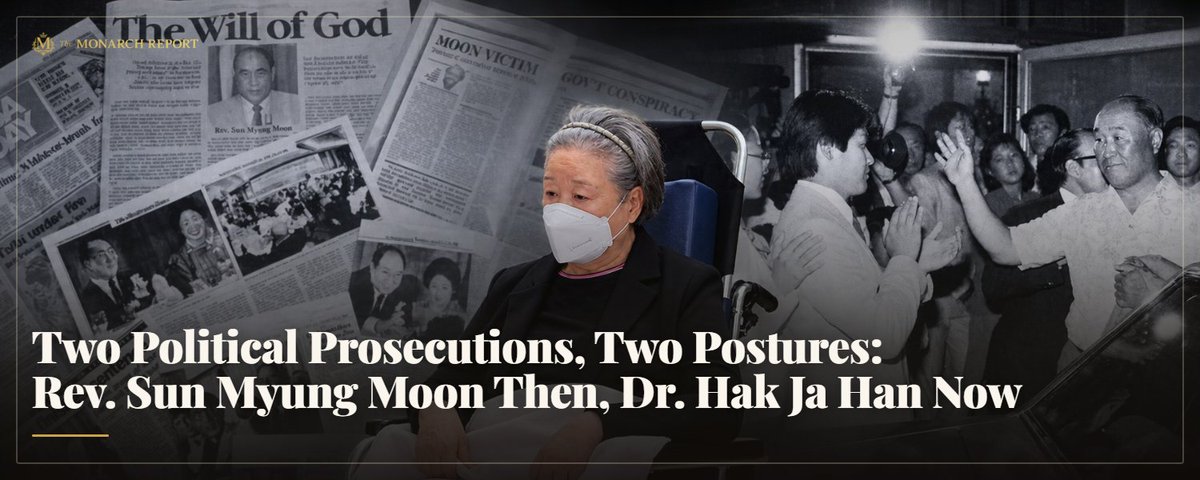

Forty-four years separate the two criminal cases that have most tested the Unification movement against state power. In 1981 the U.S. government indicted Rev. Sun Myung Moon.
On August 31, 2026, the Seoul Central District Court handed down a first-instance verdict against his widow, Dr. Hak Ja Han, and sentenced her to two years in prison. The charges differ. So does the answer the movement has given.
1981: they did not stay silent
They did not stay silent, and they did not accept the charges. From the day of the indictment they treated it as an attack on the church itself and ran an organized public, legal, and interfaith campaign.
Immediate reaction, October 1981.

Rev. Moon was indicted on October 15, 1981, on tax-fraud and conspiracy counts involving interest and stock the government said was his personal income. Church officials immediately called the indictment "wholly without merit," a "religious witch hunt," and harassment of a minority religion. U.S. church president Mose Durst said it had "no merit and no substance whatsoever." Rev. Moon's lawyer said the same.
Rev. Moon flew back from Korea to face arraignment rather than stay abroad.
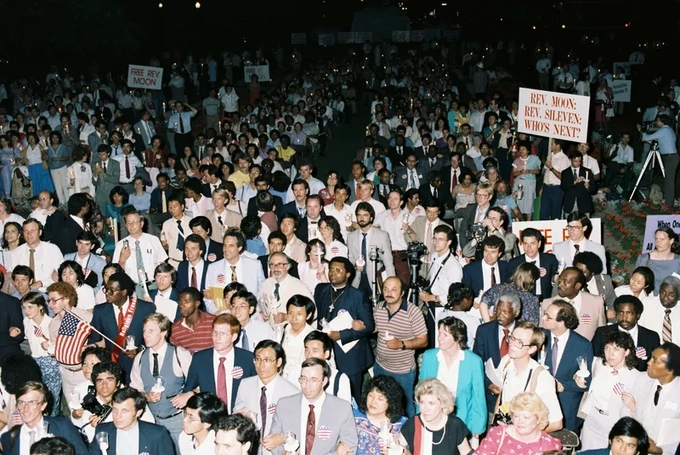
On October 22 he pleaded not guilty. The same day the church staged a large, planned rally across from the courthouse in Foley Square. More than 5,000 supporters sang patriotic songs; Rev. Moon spoke and framed the case as racial and religious bigotry: he would not be there, he said, if his skin were white and his religion Presbyterian.
Durst called him "the most moral man in America." The speech was later reprinted as a full-page New York Times advertisement.
Legal and public posture.
They posted large bail bonds through church-related entities, surrendered Rev. Moon's passport with a limited exception for a Korea trip, and fought the case in court as a matter of whether funds in his name were church assets held in trust rather than personal income.
After conviction in May 1982 they continued to insist he would be "fully vindicated" and described him as "the most abused and misunderstood religious leader of the 20th century." They appealed through the courts; the Supreme Court declined review in 1984.
PR and coalition campaign, especially 1984 to 1985, while he was in prison.
This was not a quiet legal defense.
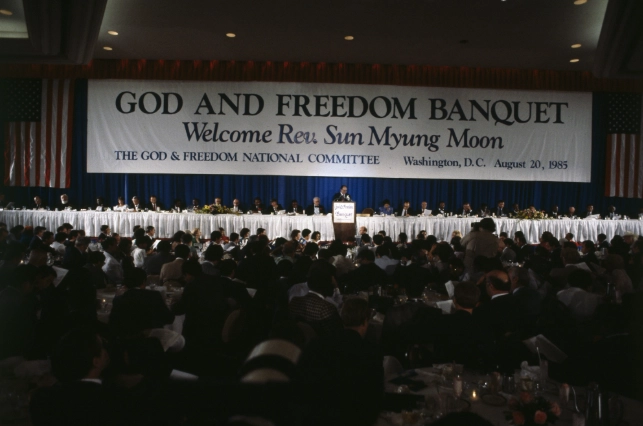
The U.S. church mailed booklets, letters, and videotapes to roughly 300,000 Christian leaders and collected petitions. They hired outside help, including a PR firm and high-profile legal names such as Laurence Tribe in later stages, and built a coalition that included Jerry Falwell, Joseph Lowery, Harvey Cox, Eugene McCarthy, elements of the ACLU, and others who cast the case as a religious-liberty threat.
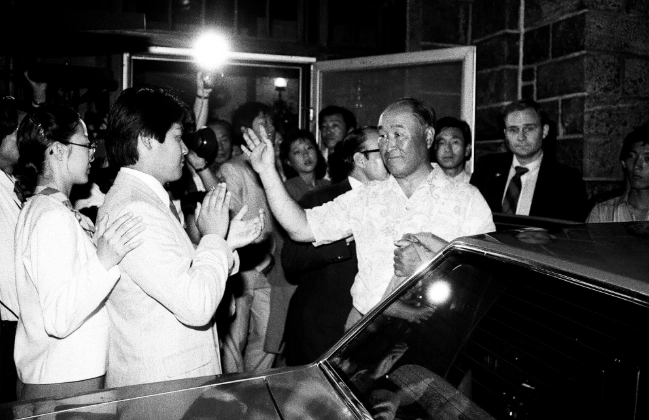
Newspaper ads compared the tax issues to those of other public figures. After Rev. Moon's release in August 1985, clergy and civil-rights figures held events calling the prosecution persecution and asking for a pardon.
Summary of actions.
Public denial and persecution framing from day one. Mass rally at arraignment and paid newspaper ads. Full criminal defense and appeals. Nationwide mailing and petition drive to clergy. Interfaith and political coalition work, and later professional PR and lobbying around the conviction and imprisonment.
They never treated the indictment as something to accept quietly. They contested the facts in court and contested the motive in public, arguing that holding church money in the founder's name was comparable to practices in other religions and that the case was selective. The government, and the jury, disagreed; the church's public line did not change.
2026: a first-instance verdict, and a quieter answer

Dr. Han is not guilty of the crimes attributed to her.
She has denied authorizing or participating in any unlawful activity throughout. August 31 was a first-instance ruling, not a final one. Her legal representatives have said they will appeal, and the organization has stated that it cannot accept the ruling.
The movement's public voice, however, has been softer than the record of 1981 would suggest. When the arrest warrant was issued in September 2025, the church said it humbly accepted the court's decision and apologized for causing concern. On the day of the verdict it said it deeply apologizes for causing "big concerns and disappointment to the people," and only then said it would appeal. Apology preceded defense. In 1982 there was no apology at all.
What is actually at issue
The other difference lies in the structure of the case. What is at issue is conduct in which a church executive's private interest was involved (though not every executive charged in this case acted out of private interest). The person who committed the wrongdoing was that executive.
The question, therefore, narrows to a single point: did Dr. Han know, and was she briefed and did she approve?
What was offered on that point was the testimony of the executive who committed the wrongdoing. No core physical evidence establishing it was presented in court. Prosecutors sought thirteen years; the sentence was two. That gap says something quiet about where the proof stood.
So the questions are not the same as in 1981. Then, the issue was whether funds in the founder's name were his or the church's, a question that treated leader and institution as one. Now, the issue is what a leader could have known about a subordinate's acts, a question that pulls the two apart. Different questions call for different courtroom strategies.
But a difference in legal strategy is not the same as a difference in posture. And the posture is plainly different.
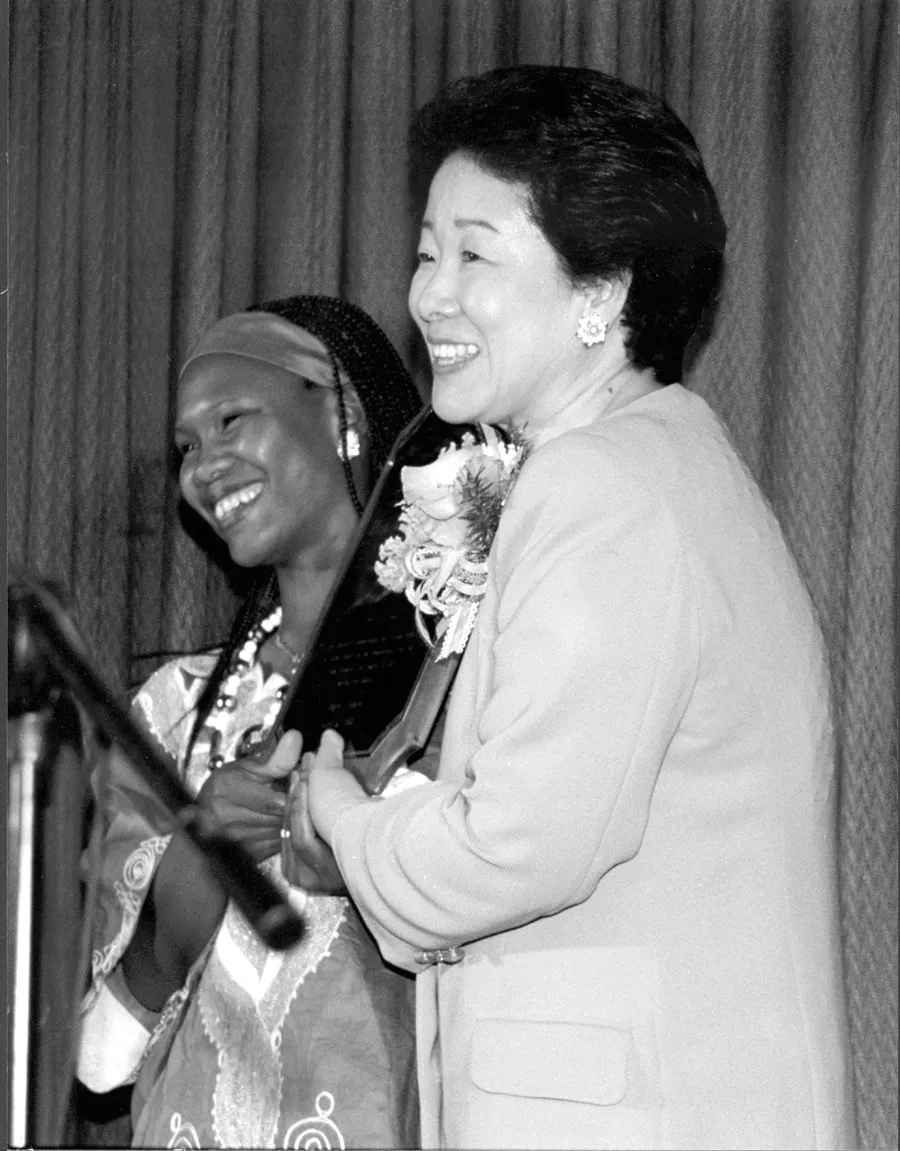
Dr. Han has walked the world as the Mother of Peace and has given her life to the work of world peace. That person has now been convicted without core physical evidence. This is not the problem of one spiritual leader.
In 1981, clergy of other faiths did not treat Rev. Moon's prosecution as someone else's affair.
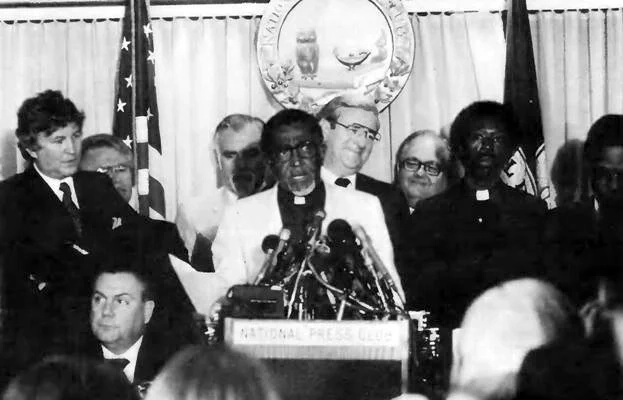
They felt that they could be next, and that is why people of incompatible theologies stood on the same platform. Jerry Falwell and figures associated with the ACLU on the same side was not something any other issue could have produced. What joined them was not sympathy for the Unification Church. It was the imagination to see that when one faith is targeted, the next target is your own.
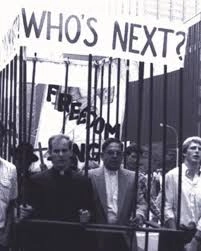
Dr. Han is not the only religious leader in Korea currently answering to prosecutors, and the pattern of who is being investigated has not gone unnoticed by believers outside her church. This is the moment for the religious world to speak with one voice. This is the moment to stand with her.
In 1981 the movement understood that a case fought only in the courtroom is a case half fought. The appeal ahead will test whether that understanding still holds.