

Christian, Muslim, Jewish, Hindu — clergy of every faith converged on one woman

They didn't come for a conference. They didn't come for tourism.
More than 70 religious leaders from five continents flew to South Korea. To visit a single woman.
She is 83 years old. The meeting took place in the visitation room of a detention center.
And these clergy were not from the same faith. Christian bishops, Islamic leaders, Jewish rabbis, Hindu holy men — spiritual figures from across every religious divide gathered for a single purpose. The woman they call "Holy Mother Han" and "True Mother" — Dr. Hak Ja Han Moon, leader of the Family Federation for World Peace and Unification (the Unification Church) — had been held in pretrial detention for 158 consecutive days since her arrest in September 2025.
Why would clergy of different faiths and nationalities cross oceans for one woman? The answer lies in what is happening inside South Korea right now.
A Crackdown the World Isn't Hearing About
Dr. Han was arrested in September 2025 in connection with a political funding scandal tied to the former administration of President Yoon Suk Yeol. She faces charges of embezzlement, bribery, illegal political donations, and destruction of evidence - all which have yet to be proven with physical evidence. The Family Federation has categorically denied all allegations.
But her case is only the tip of the iceberg. Since the transition from the conservative Yoon administration to the liberal government of President Lee Jae-myung, a wave of raids and detentions targeting religious organizations has swept across South Korea. Most of the world's media has not reported it.
▼ Key Cases
The common thread is unmistakable: every target supported the previous conservative administration. Critics call it a political purge disguised as anti-corruption. President Lee himself has publicly used terms like "heretical religious organizations" and "pseudo-religions," and ordered the "eradication" of specific groups. When a head of state assumes the authority to judge which religions are legitimate and which are not, it strikes at the very foundation of religious freedom.
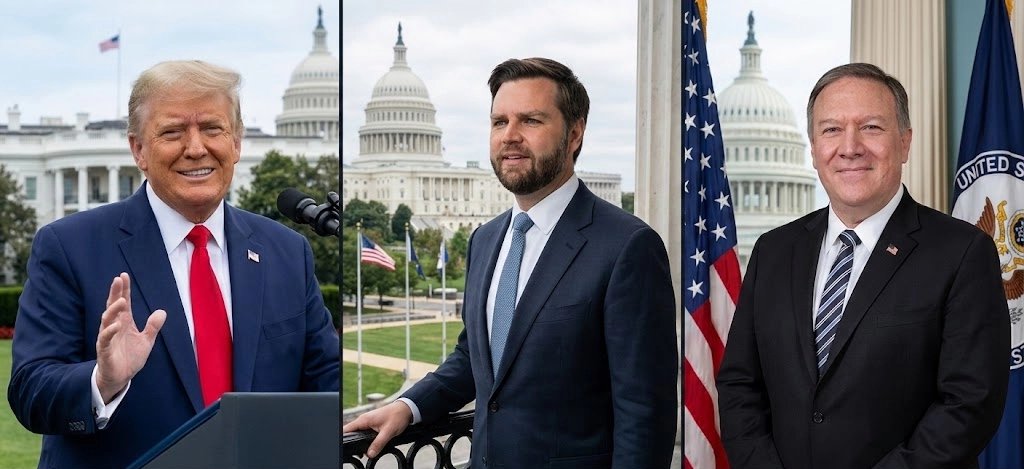
The international response has been swift. Former U.S. Secretary of State Mike Pompeo called the situation "deeply troubling." Vice President J.D. Vance raised concerns directly with South Korea's Prime Minister at the White House. President Trump himself referenced "very vicious raids on churches" in South Korea — an extraordinary statement from the leader of an allied nation regarding another country's domestic law enforcement. In January 2026, a formal statement was filed with the UN Human Rights Council in Geneva warning of a rapidly escalating religious liberty crisis in South Korea.
What They Did, What They Saw
The visit was organized as part of the 2026 World Clergy Leadership Conference National Prayer Rally, hosted by the World Christian Leadership Conference (WCLC) and other organizations. On February 25, the clergy arrived in Seoul and attended a special lecture at the Korean Religious Council hall in Pildong on the theme of "Korea as a Chosen Nation and Its Mission." The following day, a delegation led by Bishop Luonne Rouse visited Dr. Han at Seoul Detention Center.
On February 27, they traveled to Imjingak, on the edge of the Korean Demilitarized Zone, where they held a special prayer service at the Unification Observatory, praying for an end to the division of the Korean peninsula and for peaceful reunification. They departed on February 28. The itinerary itself tells the story: this was not merely a prison visit, but a pilgrimage for peace in a divided nation.

Johannes Ndanga, president of the Africa Christian Council International (ACCI), spoke after the visitation. "I recalled the words of Rev. Sun Myung Moon at the founding of the Family Federation in 1954: 'The whole world will come to see Korea.'" He continued: "Just as people follow in the footsteps of Jesus to visit Israel, people from around the world are now coming to Korea. I could not help but feel that what happened to the innocent in the time of Jesus resembles what is happening today."
"I went in with a heavy heart. But it was Dr. Han who encouraged us — speaking words of guidance to the leaders, walking the path of God's will without wavering. Korea and the world will surely come to understand what this means."— Johannes Ndanga, President, Africa Christian Council International
The Petition
Bishop Rouse was emphatic: "This is not about defending one organization. It is a call rooted in the universal values of justice and conscience." The joint petition contains three core demands:
■ Humanitarian treatment and health protections for an elderly detainee in her 80s
■ Protection of universal religious freedom and freedom of conscience
■ A spirit of reconciliation over retribution for the sake of social cohesion
The petition bears the signatures of all 70 clergy members. It will be formally submitted to South Korean judicial authorities and shared with international human rights bodies.

Declining Health, Growing Alarm
At 83, Dr. Han has nearly lost her eyesight and requires assistance to walk and eat, yet her defense team says she is not receiving adequate support in detention. A temporary release to treat injuries from a fall was granted but the court rejected her request to extend it, sending her back to detention. Five days later, the world's clergy arrived at her door.
During a previous visitation, Dr. Han told her visitors:
"Do not pray for me. Pray for Heavenly Parent and for the world."
That selflessness — asking the world to look beyond her own suffering — is precisely what moved clergy of every faith to rally behind her. They call her "Holy Mother Han" and "True Mother" not as a formality, but because they witnessed a spiritual authority that endures even from inside a detention cell.

Why Their Visit Matters
South Korea's constitution guarantees religious freedom. The country has long held itself up as a model of democracy in East Asia. That is precisely why the arrival of 70 clergy from around the world carries such weight.
What they are asking is not only about the release of Dr. Hak Ja Han Moon. It is a fundamental question: Can a nation that calls itself a leader of global democracy continue to detain an 83-year-old religious leader under conditions the international community considers inhumane and politically motivated?
They came with a petition. They came with prayers. And they will return home. But the message their presence leaves behind is unmistakable: the fact that clergy of every faith and nationality gathered for one woman tells the world just how critical the state of religious freedom in South Korea has become.
Because when a democratic government decides which faiths are legitimate and which are criminal, it is no longer prosecuting a religion — it is dismantling the very principle that makes democracy possible.